

Short, surprising facts for curious minds. Explore science, history, nature, geography, space, psychology, technology, culture, the human body, food and more.
Joined April 2026
- Tweets150
- Following50
- Followers11
- Likes51



The Color Orange Was Named After the Fruit
Today, the word “orange” seems like an obvious name for a color. However, in many European languages, the name for this shade appeared only after oranges became widely known.
In English, the word orange originally referred specifically to the fruit. Only later did it begin to be used as the name of the color between red and yellow.
Before that, this color was described using other terms, such as “yellow-red.” A similar process took place in other European languages as well.
The name of the orange fruit itself has an even longer history. It reached Europe through a succession of languages from the Middle East and Asia, with earlier forms of the word tracing back, among other sources, to Sanskrit.
It is an interesting example of how not all color names that seem fundamental to us today have existed forever - sometimes the object came first, and only later did its name come to describe an entire color.

The Statue of Liberty Wasn’t Always Green
When the Statue of Liberty was unveiled in 1886, its surface had a distinctive coppery, brownish color. The green shade we associate with it today appeared only gradually over time.
The monument’s outer layer was made from thin sheets of copper. When exposed to oxygen, moisture, and compounds present in the air, the metal slowly underwent chemical reactions, forming a surface layer known as a patina.
The process took many years. By the early 20th century, the statue had already begun to develop its characteristic blue-green hue, and the patina took about 30 years to fully form.
Interestingly, the patina is more than just a change in color. It also creates a natural protective layer that helps limit further corrosion of the copper beneath it.
The present-day appearance of one of the world’s most recognizable monuments is therefore the result of a natural chemical process that completely transformed the color of its copper surface over the course of several decades.

Apples Float Because of Air Hidden Inside Their Flesh
An apple may look solid and dense, but its interior contains a surprising number of microscopic air-filled spaces.
It is estimated that air can make up about a quarter of an apple’s volume. As a result, the fruit’s average density is lower than that of water.
That is why a whole apple placed in a container of water will usually float rather than sink.
A simple experiment with a bowl of water therefore reveals something that is invisible at first glance – a significant part of an apple’s interior consists not only of juice and cells, but also of air.

Bubble Wrap Was Originally Invented as Wallpaper
Bubble wrap was not originally invented to protect packages. In 1957, engineers Alfred Fielding and Marc Chavannes were trying to create a modern, three-dimensional wallpaper.
They joined two layers of plastic in a way that trapped regularly spaced pockets of air between them. The idea of using it as wall decoration, however, failed to catch on.
The inventors later tried to find other uses for the material, including as insulation for greenhouses. That idea did not prove particularly successful either.
The breakthrough came in the early 1960s, when it became clear that the trapped air provided excellent cushioning and could protect fragile objects during transport. One of its first major uses was protecting electronic equipment, including IBM computers.
Bubble wrap soon became one of the most recognizable packaging materials in the world.
A product originally designed to decorate walls ultimately succeeded only after an entirely different use was found for it.

South Africa has three capitals instead of one. Pretoria is the administrative capital and seat of the executive government, Cape Town is the legislative capital and home to Parliament, while Bloemfontein is traditionally regarded as the judicial capital and is home to the Supreme Court of Appeal. As a result, the country’s national institutions are spread across several cities.
On Mercury, a solar day lasts 176 Earth days, which is twice as long as its year, lasting only 88 days. This means that from one sunrise to the next, exactly two Mercurian years pass.

Tomatoes Were Once Grown as Ornamental Plants
Today, it is hard to imagine cooking without tomatoes, but when they were brought from the Americas to Europe in the 16th century, they did not immediately become a common food.
For a long time, in many parts of Europe, tomatoes were grown mainly as ornamental plants. Their colorful fruits were valued for their appearance, and the plants were cultivated in gardens much like other exotic decorative species.
One reason was distrust of the unfamiliar plant. Tomatoes belong to the nightshade family, which also includes some highly poisonous species. Because of this, some Europeans suspected that tomato fruits might be dangerous to eat.
Over time, however, tomatoes began to be used more widely in cooking, especially in southern Europe. Eventually, they went from being exotic garden decorations to one of the most popular ingredients in the world.
It is a good example of how a plant admired mainly for its appearance can completely change its role in culture and cuisine.

Some Fungi Can Turn Insects Into “Zombies”
In tropical forests, fungi of the genus Ophiocordyceps occur, which parasitize insects, including ants. After infection, the fungus develops inside the host’s body and gradually influences its behavior.
The infected ant leaves the usual routes of its colony and climbs onto a plant. In a suitable place, it clamps its mandibles onto a leaf or stem and remains there until death.
For the fungus, this is not accidental. The chosen location provides the right temperature and humidity for further development. After the insect dies, a fungal structure grows out of its body, releases spores, and can infect other ants.
Interestingly, the fungus does not “control” the ant like a pilot. It affects its nervous system, muscles, and chemical processes in the body, causing behaviors that benefit its own reproduction.
This is one of the most extraordinary examples of parasitism, in which an organism can change the behavior of its host for its own benefit.
Illustration generated with AI.

Flamingos Are Not Born Pink
The characteristic pink color of flamingos is not a trait they are born with. Young flamingos usually have gray or whitish plumage, which only changes color over time.
Carotenoids are responsible for the pink color – natural pigments found in the flamingos’ food. The birds obtain them by eating, among other things, algae and small crustaceans.
During digestion, carotenoids are processed and deposited in the feathers, skin, and beak. The more of the right pigments there are in the bird’s diet, the more intense its coloration can become.
That is why a flamingo deprived of food rich in carotenoids gradually loses its intense pink color. In zoos, the right nutrients must be included in their diet so that the birds maintain their characteristic plumage.
So, in a sense, a pink flamingo is what it eats – its most recognizable feature is created by its diet.

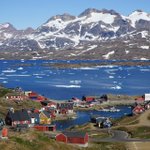
Greenland is the largest island in the world, but much of its surface is covered by ice. As a result, fewer than 60,000 people live there, making it one of the most sparsely populated places on Earth.

Some Fish Can Change Sex During Their Lifetime
In some fish species, sex is not a trait that remains unchanged throughout life. They can begin their adult life as females and later transform into males – or vice versa.
One of the best-known examples is clownfish. In their social groups, the largest individual is the female, while the second-largest is the breeding male.
If the female dies, the dominant male begins to undergo a transformation. The functioning of his hormonal system and gonads changes, and after some time he becomes a functional female. Then one of the younger individuals matures as the new male.
In other fish, including some wrasses, the process happens in the opposite direction – a female can change into a male.
Such a strategy increases the chances of reproduction in an environment where finding a suitable mate can be difficult. In the case of clownfish, it also means that after the loss of the only female, the entire group does not lose the ability to continue reproducing.

Some Frogs Can Freeze and Later Come Back to Life
The wood frog (Rana sylvatica), found in North America, can survive winter in a way that would be fatal to most animals - a portion of its body can literally freeze.
When the temperature drops below freezing, ice begins to form in the spaces between its cells. The frog’s heart stops beating, it stops breathing, and for some time, the animal shows no normal signs of life.
Its cells are protected from damage by enormous amounts of glucose and urea, which act as natural cryoprotectants. They limit water loss from the cells and reduce the damage caused by freezing.
When the temperature rises again, the ice gradually melts, the heart starts beating, and the frog returns to normal activity.
Thanks to this remarkable adaptation, wood frogs can survive harsh winters even in Alaska and northern Canada.

Istanbul is one of the few cities in the world that spans two continents. The Bosphorus Strait divides the city between Europe and Asia, making it a unique cultural crossroads where Eastern and Western influences meet.

Octopuses Have Three Hearts and Blue Blood
Octopuses are among the most unusual animals living in the oceans. Their circulatory system is significantly different from ours - they have as many as three hearts.
Two of them pump blood through the gills, where oxygen is absorbed. The third, known as the systemic heart, is responsible for circulating oxygenated blood throughout the rest of the body.
Even more unusual is the color of their blood. Instead of red, iron-containing hemoglobin, octopuses use hemocyanin, a protein that contains copper. When it binds with oxygen, it gives their blood a bluish color.
Hemocyanin works particularly well in cold water with relatively low oxygen levels, helping octopuses function in demanding marine environments.

The human liver has an extraordinary ability to regenerate - it can restore its mass even after about 70–75% of the organ has been surgically removed. The remaining part of the liver enlarges and its cells multiply, gradually restoring the organ’s mass and function.
🤖 Made with AI

African elephants have an exceptional sense of hearing and can detect low-frequency sounds from distances of several kilometres. This allows them to communicate with one another through vibrations travelling through the ground and to warn other elephants of danger.
African elephants also have an extraordinarily well-developed sense of smell, which allows them to detect water from as far as 8 kilometres away. Their communication skills are complex and involve not only sounds but also gestures and scents, enabling them to form strong social bonds within the herd. These intelligent animals can also recognise members of their family and other elephants by their scent, which is crucial to life within their complex social structures.

Vanilla Comes from an Orchid, and Each of Its Flowers Often Has to Be Pollinated by Hand
Vanilla is mainly associated with ice cream and desserts, but in fact it comes from the fruits of a tropical orchid from the genus Vanilla.
Each vanilla flower remains open for a very short time — usually only one day. If it is not pollinated during that time, it will not produce a pod containing aromatic seeds.
Outside vanilla’s natural range, suitable pollinators are rare, which is why on most plantations the flowers are pollinated by hand, one by one. Workers have to check the plants every day and act exactly when new flowers open.
The pods then ripen for many months and go through a long process of drying and fermentation. This is one of the reasons why natural vanilla is one of the most expensive spices in the world.

There is a huge cloud of alcohol in space, more precisely ethyl alcohol, located in the constellation Aquila. This cloud contains so much alcohol that it could be used to make 400 quadrillion pints of beer - a cosmic party on an unimaginable scale!
The ethyl alcohol cloud, known as G34.3, is located about 10,000 light-years from Earth and is one of the best-known reservoirs of alcohol in space. This discovery is fascinating because it shows that complex organic compounds can form under the extreme conditions found in interstellar space. Discoveries of this kind contribute to a better understanding of the chemical processes taking place in galaxies and the potential conditions favorable to the emergence of life in other parts of the universe.
Vatican City is the smallest country in the world, with a population of around 800 people. Yet, it has its own postal service, radio station, and even football team, making it a unique blend of micro-nation and religious governance.
Vatican City's unique status as an independent city-state was established in 1929 with the Lateran Treaty, which recognized its sovereignty and defined its boundaries. The governance of Vatican City is led by the Pope, who holds absolute power over the state, making it a theocratic monarchy.
Despite its small size, Vatican City plays a significant role in global diplomacy and interfaith dialogue, hosting numerous international events and serving as a spiritual center for millions of Catholics worldwide.

There is so little atmosphere on the Moon that sound cannot travel through it. This means that if you were standing there and shouting, no one nearby would hear you!
The Moon’s atmosphere is extremely thin, practically nonexistent, which means that there are far too few particles to carry sound waves. In fact, near the lunar surface, the number of particles per cubic centimeter is roughly one quadrillion times lower than in Earth’s atmosphere at sea level. This makes ordinary sound communication through the lunar environment impossible. For this reason, astronauts during the Apollo missions had to rely on radio systems to communicate with one another and with Earth.
