
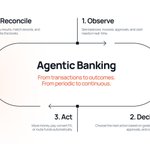





Visa, Mastercard, Stripe and Coinbase let AI agents pay for things on their own. Airwallex just let them move company cash. But every accounting ledger for 500 years has assumed a person decided to spend the money. Here are the four places that breaks.
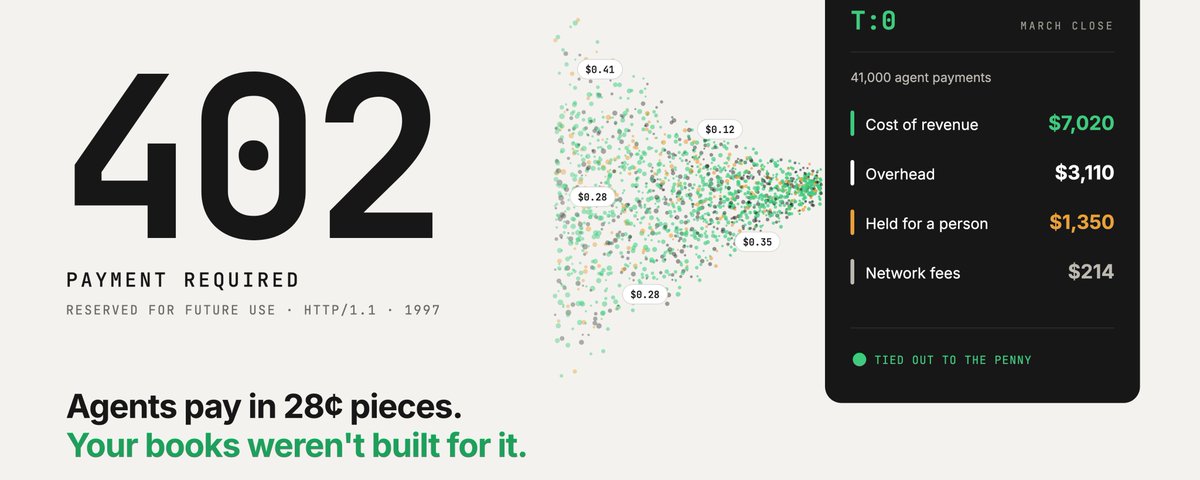
Humans are already the minority spender on AI too. Every one of those agent tokens is money a company spent without a person deciding to.
And every accounting ledger for the last 500 years assumed a person made that decision.

Humans are the minority user of AI
Agents burn nearly 5x the tokens people do, up 14x since February
More charts in State of Markets II: a16z.news/p/state-of-markets…

I wrote about the four places that assumption breaks: xitter.cf/eya0/status/2105388369…

I’ve worked around finance infrastructure for a long time.
This is a great framework for thinking about what comes next.


Most AI accountants are just QuickBooks with a chatbot on top. This is what replacing it looks like.
One sample quarter: 207 messy bank lines in, closed books out. Built at @t0finance
Step by step:
1. Ingest the bank feed, messy descriptions and all.
2. Sort each line into what it actually is: a payroll run, a Stripe payment, an AWS bill.
3. Write rules. The AI proposes each one, it's tested against past transactions, and a person approves it.
4. Post. Every journal entry traces back to the bank line behind it.
5. Validate. Cash matches the bank, clearing accounts empty to zero, and the wire with no invoice waits for a person instead of getting guessed.
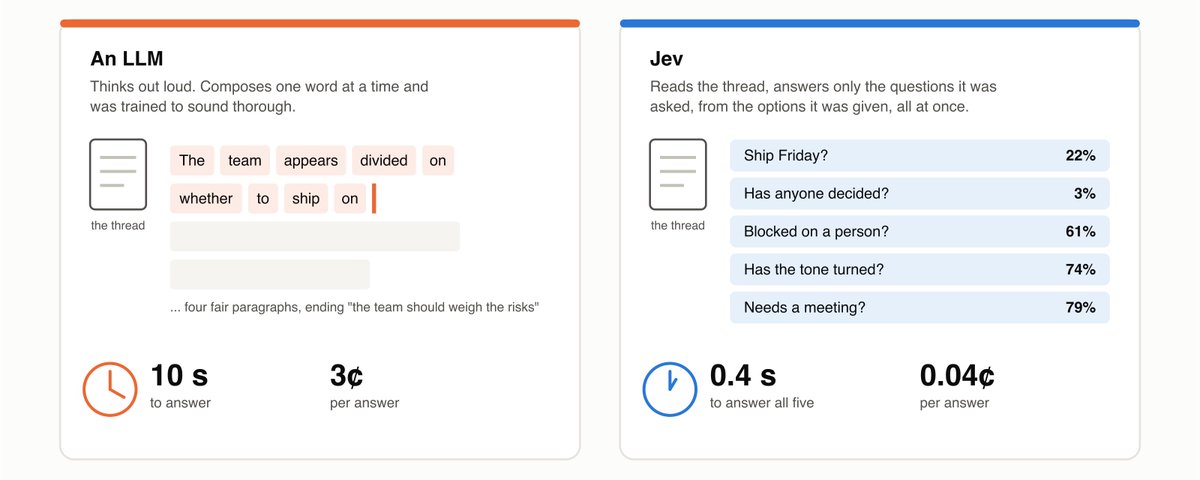
Jev is the AI model your feed won't shut up about this week. Ironic, because it's the first one that won't talk. What it's for:
Introducing the "slop grenade": an AI PR the author approves without reading, so the reviewer wastes their afternoon.
Laziness used to look like not enough output. Now it looks like too much, and the cost lands on whoever's downstream.
Still your merge. Read it.

Lazy work used to mean too little output.
Now, with AI, it often means too much and more work for everyone else.
@tobi call it "slop grenades."
A "Slop Grenade" is when you let AI produce the work and pass it on without adding any value (including checking it).
Someone else has to wade through it, catch the mistakes, and clean up the mess.
You save time and look productive but someone else pays for it.
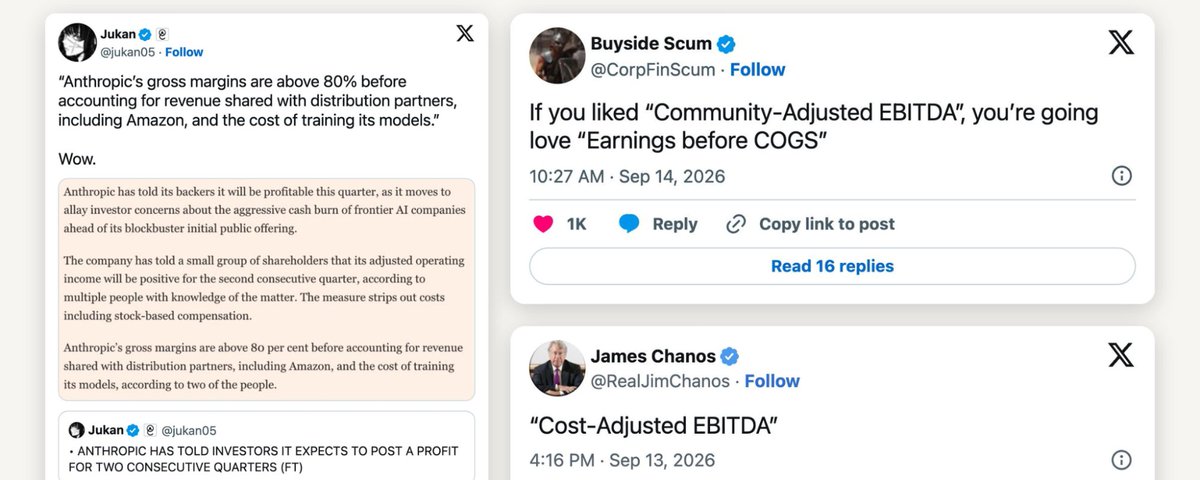
Anthropic invented a friendlier margin metric. You just don't measure yours. The fix isn't a better metric. It's books that can read a meter.
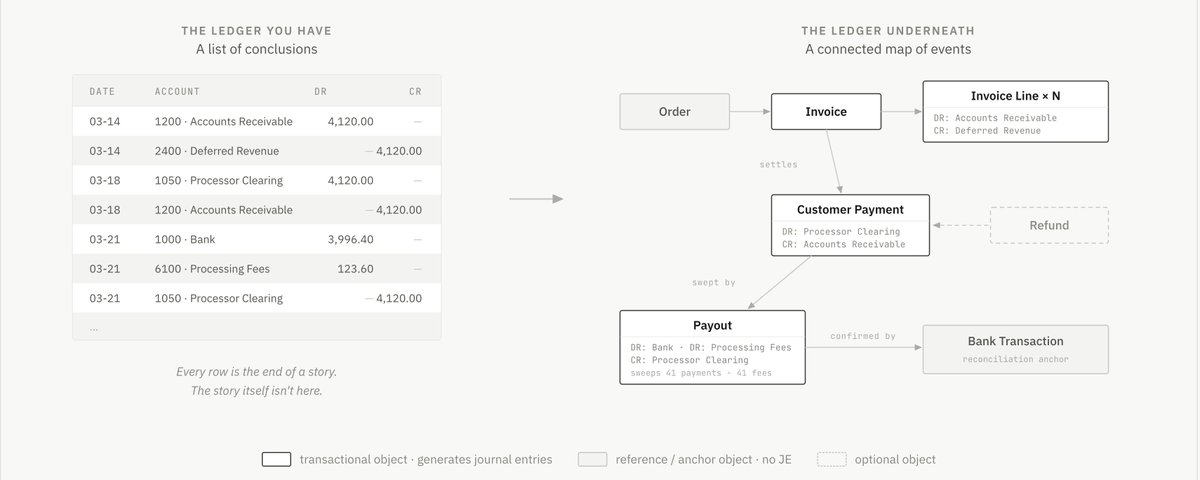
Every AI accountant fails the same way: fluent, confident, unverifiable. The fix isn't a better model. It's a data structure accountants invented in 1494.
Erik retweeted

BREAKING: T:0 is now generally available.
You’re already using AI to ship faster. You should probably use it to understand your startup’s finances better too.


Erik retweeted
We've been heads-down building T:0 for the past few months.
Finance today is scattered across too many tools, drowning in manual reconciliation, and running on software that bolted on AI as an afterthought.
T:0 replaces it with one always-on system that pulls everything together and does the work for you: bookkeeping, the monthly close, rev & expense recognition, and FP&A.
What makes this possible is context.
T:0 understands what your business sells, how money moves, which entities are involved, what rules apply, and how each transaction should show up in the books.
The idea was never to make accounting feel flashy. We just think finance should run.
Now available in private peview. Get on the waitlist 👇

When @raymond_lau and I started Leapfin, we set out to solve a deceptively hard engineering problem: turning messy, fragmented transaction data from dozens of disconnected systems into accurate, accounting-ready financials that finance teams could actually trust.
Anyone who has worked on financial data knows how unforgiving that problem is.
That foundation is also what made our AI work possible. With Luca, our AI agent for automating revenue recognition and reconciliation, we set out to prove that AI in accounting doesn't have to be a black box that hallucinates, and that with the right architecture, it can be deterministic, auditable, and trusted by the most skeptical auditor.
The biggest lesson we learned building it: the foundation matters more than the model.
Reliable AI doesn't run on a swamp of spreadsheets but on clean, structured, immutable data.
That's the hard thing our team built, and joining @Airwallex means we get to keep solving that problem with far more resources behind us.
This is just the beginning.
leapfin.com/blog/leapfins-ne…
If your AI SaaS software requires me to click around forms, inputs, buttons, etc. - don't call it AI.
I expect to do everything that was sold to me with only a chat window and an output of the work done.
