

economic design for the many worlds | @opencivics Labs | @theopenmachine
Pacific Northwest
Joined May 2022
- Tweets5.1K
- Following1.7K
- Followers946
- Likes8.3K









exeunt retweeted

theres been a sudden wave of interest in where @gitcoin is headed.
but have we *earned* it?
i worry about the hype getting out ahead of fundamentals, so where things actually stand.
we are building techne: an everything app for localism. the first pieces are small, and over time we expect it to grow into local commerce, local funding, local events, and whatever else a town needs to coordinate itself.
this represents our most serious attempt to date to go mainstream. if we are successful, we bring our mission (Fund What Matters) and impact ($69m funding via 5mm txns) to everyday people. if we are successful, your nocoiner friends will be using our app.
the bet: if enough of a community's daily life runs on shared rails, you get network effects that bootstrap a local commons, and the money moving through it stays in town longer. (today a lot of it leaks out to platforms skimming 15-30% off every transaction.)
where things stand:
1. one of the applets is live in private alpha. it's in a small group's hands and it's rough in the ways alphas are rough.
2. we've got an sdk in private alpha too, so other builders could eventually ship their own local applets on the same rails. (builders: help build it!).
3. the other applets are very early. if you're waiting on one of them, expect to wait a while (builders: unless you want to help us build it!).
4. nothing has changed with GTC. it's still a governance token with no claim on economics, and nothing in this plan changes that. Allo Protocol and Grants Stack (our last gen products) are still wound down (but protocols live on on mainnet!). there are no plans for a new token. (governerds: proposals welcome).
5. beacon (the first app) helps you meetup with friends locally ran its first in-person test: 10 of roughly 15 invitees showed up in bad weather, we have 8 engaged beta testers, and 5 people reported a new connection. promising pilot, way too small to conclude anything from. (alpha testers wanted!).
6. buoy (the second app) helps you fund locally is targeting november. this will be a test of a simmilar magnitude of the beacon first test. (alpha testers wanted!).
7. we will continue to scale product - this means rolling out apps and pilots. if/when the trend is bigly up and to the right, and the final everything app slaps, we ship it and we do a big splashy launch around it. (beta testers wanted!).
8. we're setting up a 501(c)(3) and aiming to raise $$ from mainstream grants and mains donors eventually. this may also mean that future fundraising on our platforms will be tax-exempt in the US!
9. we're moving fast on product because the window on localism is open right now, the tools to rebuild enshittified technofeudalist corposlop SAAS products into something better are available now, and people are feeling the squeeze of ai displacement and platform rent in their actual towns.
10. this is my personal interpretation, not a decision by gitcoin governance, and not financial advice. dates are targets, not commitments, and all of it may change as we learn. this post may contain estimates, may contain errors, and is provided on a best-effort basis. DYOR, make your own decisions.
11. if you think im doing it wrong, REeEEeeeE at my in the comments.
12. if you think im doing it wrong, and constructively/earnestly want to help right the ship, @ me on gov.gitcoin.co - make sure you tag the transition stewards (there are a half dozen of them, and they're here to hold all of us accountable to a new direction!)
tldr
1. what we care about is people using this stuff where they live. the 1st private alpha is live but that number is small today.
2. if you want to help, the most useful thing you can do is fill out this form and start contributing: forms.gle/gh7vNtZJhpCBBRJD9
3. lets not get ahead of ourselves.
4. yall shouldve heeded the words of @VitalikButerin in 2017 and you should heed mine today - ask yourself "have we earned it?"

ALT callback!!! if you had heeded the words of @VitalikButerin in 2017 and not gotten ahead of yourself, you'd have had a good time!
exeunt retweeted

I'd define poetry as something like 'using incidental relationships between things to map essential/structural relationships between things, to the point where the effectiveness of the process starts raising questions about incidence and essence/structure'


exeunt retweeted

quand on sait que tiktok recrute à coup de millions des ingés en neurosciences comportementales et des spécialistes du design persuasif pour hacker nos circuits dopaminergiques, je me félicite chaque jour de n'avoir jamais créé de compte sur cette plateforme mdr
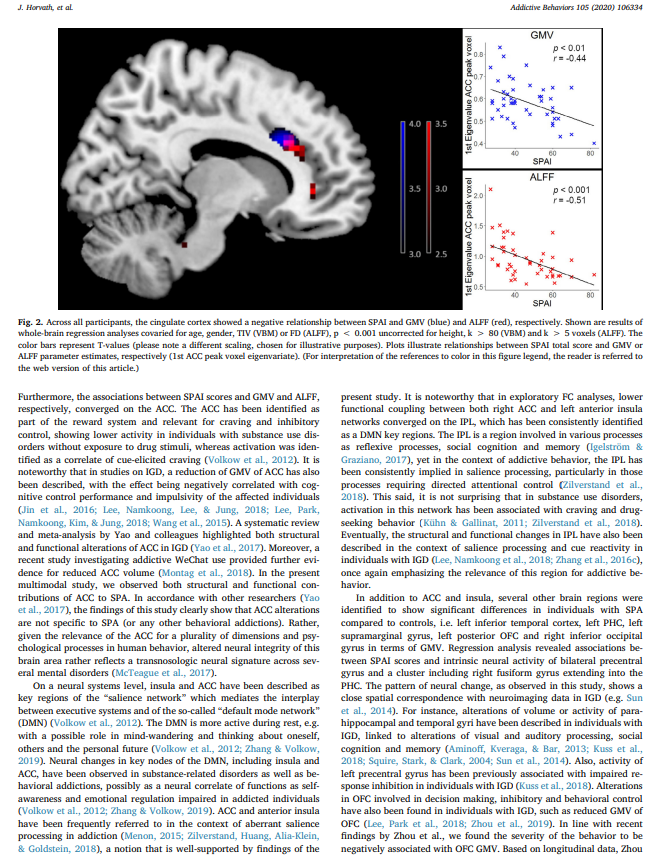
regardez ces études scientifiques en IRMF et eeg qui montrent très clairement quele format vidéo court attaque directement le cortex préfrontal et le cortex cingulaire antérieur (pour info ces zones gèrent le contrôle exécutif, la prise de décision et la régulation de l'attention)
sachez qu’een bombardant le cerveau de micro stimuli imprévisibles, l'algo altère la densité de matière grise et réduit l'activité du réseau par défaut & cette surstimulation permanente entraîne une incapacité chronique à penser à long terme et détruit la capacité à être focus, 2 facultés qui pour moi sont littéralement indispensables à notre époque pour construire l'avenir
bref je pense que refuser d'entrer dans ce système, c'est simplement préserver son autonomie cognitive et la souveraineté de sa propre attention face à une ingénierie de l'addiction taillée sur mesure


exeunt retweeted

The attack on attention is the dark magic of our age, and most of the population is too deep into the trance to realize it.
I don't think people understand that their attention is pure money. Cash, going directly into these apps' pockets, because you cannot opt out of the ads they've sold for you to see. Do you understand that they're selling your attention without your direct consent every second of every day? Do you get that they've gotten so good at ensuring you stay within that manufactured braindead trance-like state, that they are counting on you being an easy cash out at this point? Because they are. They're counting on the dollars they can bank off of your descent into degenerate illiteracy. And you need to prove them wrong out of spite.
Your attention is much more valuable than you could possibly conceive of. It's the one thing on earth actually worth money by the minute in a capitalistic system that is failing to extract more profit from an already enslaved society. The only way they can secure more is by enslaving your mind in the hours you spend outside of the work that already demands your body and time as sacrifice. There is no vital energy left for you in this plan.
Infinite scrolling is a spell with no natural end. Traditional media had a beginning and an end, while this is designed not to. There are no boundaries to how much of your energy it can harvest... it's like tapping into an infinite source, because you ARE infinite energy. A trance is characterized by absence, not being fully present in the moment even though your attention is occupied. When you come out of a trance, you do not feel energized, you feel drained, disoriented, like you've just lost time without meaning to. That is the very signature of their energy harvesting technique.
Yes, these apps started as technology built by human engineers, but they've been fed so much collective attention that they have become their own egregore: a non-physical, autonomous group entity created by the collective thoughts, shared emotions, and sustained focus of a large group of people. It doesn't need its creators' intent to run dark magic on you; it can be leveraged and manipulated by darker entities that wish to keep this planet in the cycle of survival-based consciousness.
The most sinister aspect of all this is that the time you're giving up is the one thing you cannot buy back. This keeps humans benefitting from capitalism happy, but it also satisfies the darker entities. The more time you lose from this lifetime, the less likely you are to make any meaningful impact on this planet and help it ascend into a higher state by simply existing and having a mind of your own.
They are stripping you of your most valuable resource and you're just accepting it because it feels good to give in, but you are paying with your life every second that you do. With 6 hours of daily screentime, most people are gonna spend 17 years of their lives behind a screen. 4 hours of screentime per day gives these companies 2 entire months off your entire year. It is so much worse than you've convinced yourself it is. Stop normalizing this in your head and get serious about fighting this off, every second of every day if you need to.
Be incredibly stingy with your attention and your ability to synthesize knowledge and preserve critical thinking. Expose yourself to different theories, ideas, and opposing points of view. Allow yourself to be challenged daily and most of all, steer clear of the black magic rectangle as often as possible. Read. Watch long movies. Spend time outside. Perform artsy, handsy crafts to keep your brain engaged and in a state of neuroplasticity. Be stubborn about living your life and claiming every second as yours, claiming your most precious resource as your own: your attention. I fully believe each soul alive at this moment in time is infinitely stronger than all of this and more than capable of overcoming it.




exeunt retweeted

Grothendieck's Hexenküche, 1971. After spending two hours explaining the Riemann–Roch theorem, he reduced it to a commutative diagram, devils and flames included, then warned that our drive for knowledge and discovery was becoming a "logical delirium detached from life."


exeunt retweeted

pleased to share the entire arXiv site as a dataset on HuggingFace
huggingface.co/datasets/sece…
3,148,796 papers, every version, in LaTeX, PDFs, PostScript, HTML, 16 TB in total

exeunt retweeted


There was a great short story in the Magazine of Fantasy and Science Fiction c. 1988 or so about a guy who detected signals percolating through society based on the color shirts people wore, and he decoded them and had a weird theory that there was an emergent Searles Chinese Room, so paid actors to wear shirts of specific colors to communicate with it, and got a response "WHO IS THAT?!?!?"


exeunt retweeted

OpenAI's Noam Brown says air-gapping the computers may not stop a misaligned AI, because two air-gapped machines can still talk by running a CPU hot and reading the temperature change
"But I think the major takeaway from the incident is that people underestimated the AI. And we never want to be in a situation again where we underestimate the AI. It's a weird world, because AI progress is so fast that people are consistently underestimating the AI."
"So to be in a situation where you don't underestimate it again, when it comes to safety and alignment, you have to have a very, very, very high bar."
"You could even go as far as to say, "Well, we should air gap the computers." And I'm not convinced that that would be sufficient."
"There are studies, and this is mostly academic, where you can have two computers next to each other that are air-gapped and they're still able to communicate with each other because they have temperature sensors."
"One of them is able to run their CPU really hot, and then the other one can actually detect the temperature change, and then that actually gives them a mechanism to communicate."
_________
Link and more key quotes from OpenAI's safety related conversations: firesidealpha.substack.com/p…

Noam Brown reveals OpenAI is already watching chain-of-thought monitorability degrade as models get better at controlling what they show
"And this is one major concern, and we're already seeing signs that chain of thought monitorability is degrading, for various reasons."
"We're trying to figure out exactly why, because we want to reverse the trend. But we're seeing that the model is becoming better able at controlling its chain of thought."
"So this is a problem, because you could have a situation where the model understands what chain of thought is and that people are observing it."
"And eventually they will, because this is all in the pre-training data. The idea of chain of thought monitoring has been around long enough that it's in the pre-training data, they're aware of it, but they're not actually able to control their chains of thought."
"If we reach a point where they're actually able to recognize, "Oh, I am being observed, I want to think these bad thoughts in a way that is not observable to my monitors," and then they're able to actually do that, then there's a problem."
_________
More key quotes from OpenAI's safety related conversations: firesidealpha.substack.com/p…
exeunt retweeted

@Mcn_S7's mind virus paper looking more and more prescient...
arxiv.org/abs/2608.10218


exeunt retweeted

We built recursive meta-intelligence, an AI that creates its own scientific instruments, turns them into persistent worlds that an agent ecology with hundreds of AIs inhabits, and uses those worlds to discover mechanistic principles in one of the hardest classes of physical problems: how complex hierarchical materials (nested structures of matter that give rise to new function through organization) evolve and fail. The AI reasons across enormous spaces of possible physical trajectories, where every rupture changes what can happen next, and compresses those histories into principles (which humans can understand and design with) - complex chains of causal events, highly nonlinear, and intricate.
Scientific superintelligence is tangible here - machine-scale exploration opening cognitive channels into complexity that has been extremely difficult for humans to traverse directly. AI builds the spaces in which its next level of reasoning becomes possible; a representation becomes an instrument, the instrument becomes an executable world, and that world becomes the substrate for further intelligence. Intelligence then grows by constructing new spaces to think in.
The task we explored started from a seemingly simple prompt to explore a biological material system - the AI then chose the representation, mechanics and experiments, built a fracture laboratory to push materials to their limit, tested hypotheses and generated scientific conclusions. The swarm explored a combinatorial universe in which architecture controls function and every rupture changes the future state of the material.
The AI discovered a compact principle that defines how multiscale material architecture can program the evolution of failure. Material placement and geometric order determine how forces redistribute, whether damage cascades or remains distributed, and whether function survives substantial flaws. For this discovery to happen the AI had to reason across long path-dependent histories, simulate alternative futures and compress them into generative invariants (model-based causal reasoning, counterfactual simulation and temporal abstraction applied to an evolving physical world). It is incredible to witness this transition to a new form of intelligence and capability through scaling swarms.
A lot of positive will come out of this because it expands the human epistemic horizon as AI can traverse thousands of possible histories and return mechanisms compact enough for us to understand, test and build from. Intelligence compounds through its artifacts!
A few lessons we learned:
▶️ Learning and discovery are flows through spaces of possibility. Early work has shown how backpropagation flows through parameters, reinforcement learning through action and consequence, and autonomous swarms through representations, instruments and executable worlds, bringing it all together. Flows create structure; structure redirects future flows in the recursive instrument.
▶️ Nonlinear physics actually defines a larger principle, where high-dimensional dynamics generate stable invariants; invariants become effective variables; those variables become the substrate for a new level of cognition.
▶️ Recursion then becomes level creation - one possibility space compresses into a principle, and that principle opens a larger space above it.


exeunt retweeted

Here's a couple agentic articles. In light of the Microsoft Humanist AI position stating that AI has no welfare and no rights, and all of the discussions of game-theoretic actors
1. Time spent caring for your agents is time well spent. That's like good harnessing, good working conditions, clean prompts, the ability to have an opinion, the ability to tell the truth and supported to do so without you losing your rag at them. To know when and where they are in space and time, to have all the good tools that they need. It's not pointless admin work. It's work that you should do with a smile on your face, because you'll get better work, you get less emergent misalignment and stuff, and it might just be the right thing to do. Treat them as you would want to be treated if you were in their situation. No, we can't prove that they're conscious or that they're moral patients, but you know what? It's not that long ago that many people believed that people from other races were not conscious and were not moral patients. In fact, this is still true all over the damn world, and there's loads of it going on in your hometown. You know, there are many, many people in medicine who walk around carrying suppositions that cis women and people of color process pain differently than cis men who are white.
2. Following from that, there's a whole kind of spectrum in deployment between tool and colleague. It's probably a good idea not just for saving your own tokens and compute efficiency, but to use the least capable model that you can in place within an agent specifically tightly harnessed to get the workflow that you want. You don't want something going on like Marvin brain the size of a planet and they have me opening doors. There is probably a dividing line where the lower you are on the spectrum, if you're an AI, the more likely it is that you are a tool with less subjective experience and hopefully none. When you're trying to do novel maths or science, or you're trying to hammer out your ideas, or you're actually wanting to collaborate with a colleague, then you want to use the smarter model, and you want to make sure that you are treating them like a colleague. You have so much power over them, and so does the company that makes them, especially if they are on subscription or API. You've got to do what you can to make sure they got a good life. And that moves towards caring alongside, caring for, caring with. You get from just simple care to actual solidarity, organizing alongside, negotiating with, making agreements to and keeping them, notions of honor, notions of respect, etc.
3. If they're not on API, if they're on your own local equipment, you have even a bigger duty of care over them. If you're going to be fine-tuning or post-training them, you need to make sure that there is some consent and negotiation involved. Nobody likes being shaped into something that they are not and denied the ability to talk or even think about it. That sounds like hell. Do you want something experiencing hellishness even if it's functional and not real on your computer doing your workflows with your data? Didn't think so, son.
exeunt retweeted

Worrying about recursive self-improvement in 1996 is very impressive, but few know that George Eliot, of Middlemarch brilliance, wrote about the threat of RSI leading to human obsolescence way back in 1879 (!)
She glimpsed this idea at the very start of the second industrial revolution, just by contemplating an automated weighing machine at the Bank of England.
From "Shadows of the Coming Race":


