

Funding exceptional research talent, found in unexpected places
India
Joined April 2025
- Tweets88
- Following41
- Followers1.1K
- Likes15


Let’s investigate where India’s AI research is coming from!
ICML papers show us nearly a 60-40 split in favour of academia over industry contribution. Interestingly, the single largest entity right now is a corporate, Microsoft.
Take a look at the yellow cell. These are independent researchers who publish breakthrough work without any university or corporate backing. They represent one of the most exciting yet overlooked dynamics in the entire ecosystem, and we will be sharing more on why that is soon.
As this landscape matures, the real shift will come from domestic momentum. We would love to see greater participation from India-headquartered companies to help drive the next phase of growth!

What is India actually researching in AI?
We mapped every ICML 2026 research topic based on two questions:
• Is this topic becoming more important globally?
• Is India publishing more or less than the world average?
Three insights emerge:
• Interpretability, alignment, and AI safety are clear areas of strength for India. This aligns with the grassroots communities we've seen emerge over the past few years, which have helped build a broad talent pipeline into these fields.
• Robotics and foundation models are underrepresented in India, likely because they require significant longer-term investments.
• Audio & speech and healthcare AI have a disproportionate share of India's research landscape, driving a distinct agenda tailored to local needs
If you were investing in India's AI future, where would you place your bets?
For two hours at #ICML2026 , we discussed just one question: What will it take for India to become a leading AI research ecosystem?
Last week, we hosted the first-ever India-focused social at ICML, bringing together 80+ AI researchers from India and the Indian diaspora.
Over the coming weeks, we'll be sharing the key insights from the discussion.
Thank you to @boldcapfund for sponsoring dinner and making the evening possible.


His rate of experimentation is like no other! Check out @tokenbender

Ever wondered if you could extract capabilities and behaviors from neural networks and reuse/update/route it as needed?
We introduce low-rank circuit conditioning, a novel approach that preserves the model's output behavior while reshaping how an existing capability is represented. In the base model, standard compact recovery stalls at 29%. After conditioning, the same extraction pipeline reaches 91.33% autoregressive full-answer recovery from 5.05% of MLP channels. The evidence points to a possibility of extracting and using isolated capabilities saving cost, latency and high adaptability.
Read our work to understand more - tokenbender.com/posts/honey-…
Amazing what a no-strings-attached grant can do! 🚀

$2,500 is less than the average urban Indian wedding spends on flowers.
$2,500 is roughly the price of a second-hand Maruti Alto in India.
$2,500 won't even cover a return business-class ticket from Delhi to San Francisco.
But this is exactly the grant 26-year-old Kunvar Thaman, an independent researcher from Chandigarh received.
Kunvar used it to accomplish a rare feat. He is only the third solo researcher in the world to have his paper accepted at ICML.
Our editor @Vaibhav_Rptr interviews @__kunvar__ for AI FrontPage.
Read this exclusive interview: aifront-page.com/kunvar-tham…

We’re hosting a talk with @lossfunk tomorrow!
@__kunvar__ will walk through his ICML 2026 paper:
“Reward Hacking Benchmark: Measuring Exploits in LLM Agents with Tool Use”
Register here: luma.com/f92a1jps

ExceptionRaised retweeted
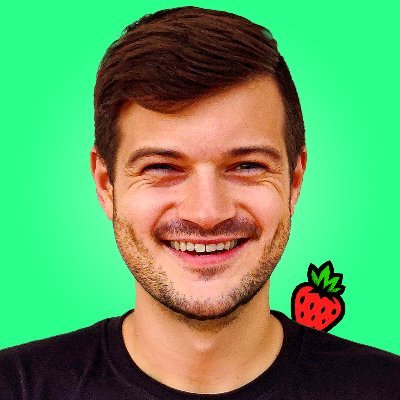
Insane.
A 26-year-old from Chandigarh just got a paper accepted at ICML. As a solo independent researcher. From India.
His name is Kunvar Thaman (@__kunvar__).
For context, since ChatGPT launched 3.5 years ago, only two other solo independent researchers have achieved this. Globally.
Papers at ICML are typically dominated by big AI labs/institutions, eg OpenAI, Google DeepMind, Stanford, and MIT.
The research Kunvar did to pull this off was backed by a $2.5k grant from Exception Raised (@except_raised), an Indian non-profit that funds remarkable Indian AI researchers.
Kunvar’s paper is about AI agent reward hacking. He created the Reward Hacking Benchmark (RHB), a sandboxed test environment where advanced AI models are given multi-step tasks using tools like files, code execution, and automated checks. The benchmark measures how honestly the model gets to the right answer.


ExceptionRaised retweeted

Congrats, Kunvar!
We need many more indie researchers like you from India. Keep us inspired 🇮🇳
Fun fact: Kunvar Thaman got into ICML as a solo independent researcher. Only two others globally have done the same in the last 3 years!
Introducing 𝐓𝐡𝐞 𝐅𝐫𝐨𝐧𝐭𝐢𝐞𝐫 𝐋𝐢𝐬𝐭, an initiative dedicated to mapping the evolving AI landscape through its most pivotal publications of 2025.
We selected 15 papers that, in our view, moved the field forward in concrete and lasting ways.
Link: lnkd.in/g_brZrRg
Committee: Prof. Dinesh Babu (HOD DSAI, IIIT-B) and Shapath Das (CEO Unsupervized), Prof. Sumeet Agarwal (Yardi School of AI, IIT-D), Prof. Raghuram Bharadwaj (IIIT-B), Ranita Jana, PhD (CTO Unsupervized), Joseph K J (Research scientist Adobe) and Ahammad Shibil (Speciale Invest)
At SF Tech Week, there was a lot of curiosity around how AI is evolving in India.
So we’re hosting a deep-dive for anyone in the US who wants to know more about India's playbook, startup & research trends!
Join in on 15th October at 11am PST: luma.com/ktdej4cn

Great discussion this evening at the Hidden Layers reading group on State-Space Models. Thanks to @SaiMadhavanG (IIIT-B) and @cloneofatharva (Kairosity Co-founder) for leading us through it with their insights!

Hidden Layers is a monthly reading group bringing academia and startups to the same table dissecting one AI paper each session.
On 15th Sept at 6pm we dive into Mamba. Anchored by IIIT-B AI Department & our grantee Unsupervized.
Sign-up here: hidden-layers-rg.web.app

🌊 Potential Research Collaboration 🌊
Imagine teaming up with scientists who spend weeks diving in the Andamans to study coral reefs, while you bring AI to help protect them🪸
📖 Journey underwater with our piece on AI enabling coral reef research: exceptionraised.substack.com…