

EML is a Ugandan civic technology initiative working in the areas of access to information, accountability and innovation. https://xitter.cf/t.co/oLKIRBEK29
Kampala, Uganda
Joined February 2017
- Tweets2.2K
- Following318
- Followers1.4K
- Likes353




Pinned Tweet
What does it take for institutions to listen?
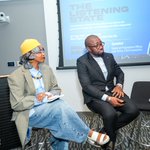
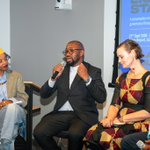
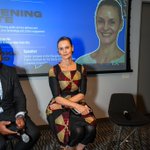
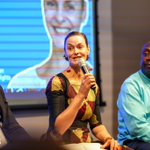
During the United Nations General Assembly 2026 (UNGA 81), we held #TheListeningState, bringing together people working across civil society, law, philanthropy, research, media, and civic technology to deliberate on what it takes for institutions to listen after citizens speak.
The conversation covered public services, civic space, community power, litigation, evidence, technology, and accountability.
Enjoy this highlight capturing some of the conversations, ideas, and moments from the event and the ways speakers challenged everyone to rethink trust, power, and the relationship between citizens and institutions.
Giving people a voice isn't enough if institutions aren't ready to listen and respond. Listening should lead to response, accountability, and action.
A huge thank you to all our speakers, including
Tawanda Mutasah, President & CEO, American Jewish World Service, Jackie Dugard, Senior Lecturer in the Discipline of Human Rights @ishrcolumbia, @RolandEbole Regional Programme Officer East Africa @FordFoundation, @zenandebooi, Member @PeerDefense (PDP), our event MC @upendomoja, and @mkatagaya.
#WeShapeGov #UNGA81
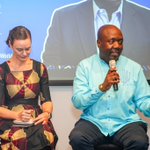
During #TheListeningState, Roland Ebole, Regional Programme Officer for East Africa at the @FordFoundation, spoke about one of the hardest questions facing civil society today: how do you make institutions listen when traditional pressure is no longer enough?
Drawing from his work across East Africa, he said states often become more responsive when pressure reaches either power or resources.
He pointed to examples from Tanzania and Kenya, where civil society found new ways to use financial and institutional pressure to push governments into engagement.
#WeShapeGov #UNGA81

Roland also spoke about how donor support needs to change in politically restricted environments. He called for more flexible approaches, including technical support, fiscal sponsorship, basket funds, and stronger community-based support.
His submission made one thing clear: civic action is changing, and the ways we support it must change too.
#WeShapeGov #UNGA81 #TheListeningState

Roland Ebole, Regional Programme Officer for East Africa at the @FordFoundation, reflected on how his understanding of social change shifted when he moved from frontline activism into grantmaking.
Earlier in his career, Roland investigated human rights violations, challenged governments publicly and took part in street-based activism.
But working as a funder exposed him to a much wider ecosystem of change. He saw organisations using litigation, research, convening, fiscal sponsorship, advocacy, protection, and direct engagement with governments.
#TheListeningState #UNGA81 #WeShapeGov

There are different platforms in which work is done, and no single strategy is enough on its own. Movements need people in the streets, but they also need lawyers, researchers, communities, conveners, funders, and organizations working quietly behind the scenes.
Change is often produced by the strength of the ecosystem, not by one method alone.
#TheListeningState #UNGA81 #WeShapeGov

Jackie Dugard, Senior Lecturer at @Columbia's @ishrcolumbia and Visiting Professor of Law at @WitsUniversity, reflected on one of the most important lessons of her career.
She worked with a community in Phiri, Soweto South Africa, to challenge the use of prepaid water meters in an underserved community. The case succeeded in the High Court, partially succeeded in the Supreme Court, and ultimately failed in the Constitutional Court. But the legal loss did not mean the struggle had failed.
#TheListeningState #UNGA81 #WeShapeGov

Through the litigation process, the community had been heard, organised and mobilised. The political pressure that followed meant the prepaid meters were not reinstalled.
For Jackie, this became a lasting lesson about rights-based mobilisation.
A case can lose in court and still change public debate, strengthen community agency and influence how institutions respond.
#TheListeningState #UNGA81 #WeShapeGov

For Tawanda Mutasah, President and CEO of American Jewish World Service, the question of public trust eventually comes down to something very practical: does the state deliver?
Reflecting on his experience growing up in Zimbabwe, Tawanda recalled the optimism that accompanied independence in 1980 and the expectation that a new political era would bring freedom, rights and opportunity.
But over time, that hope was increasingly tested by the gap between promises and people’s everyday experiences.
#TheListeningState #UNGA81 #WeShapeGov

His central point was, “If a state is delivering, people will trust it.”
Trust is shaped in the places where people meet government in everyday life, in hospitals, schools, public infrastructure, sanitation and other essential services.
Institutions do not build credibility through words alone. They build it when citizens can see, experience, and rely on public systems that work.
#TheListeningState #UNGA81 #WeShapeGov

@zenandebooi, Youth Legal Coordinator at the @PeerDefense challenged the idea that trust can be built without first addressing the conditions that undermine it.
Drawing from her work with black rural communities in South Africa, she argued that discussions about trust must begin with recognition of communities’ rights to land, resources, dignity, agency, and self-determination.
#TheListeningState #UNGA81 #WeShapeGov

South Africa’s Constitution recognises protections for people whose land tenure remains insecure because of discriminatory laws from the past. Yet, as Zenande explained, many rural communities continue to experience uncertainty over land that has historically been controlled by the state.
For her, this raises a fundamental question: can institutions ask communities to trust them while the rights at the heart of that relationship remain unresolved?
Her remarks reminded us that trust cannot simply be requested. It has to be reflected in how institutions recognise rights, share power, and engage with the people whose lives are directly affected.
#TheListeningState #UNGA81 #WeShapeGov

.@KyraDarnton, President and Executive Producer of @RetroReport and #TheListeningState host, reflected on why strengthening access to quality information matters.
She shared an experience from when she was five years old and living in Lagos, Nigeria. Her father, then a reporter for The New York Times, was arrested, beaten, and expelled from the country. At the time, her biggest concern was missing a school project. But when the family was later reunited in Kenya, her father asked her a question that stayed with her:
“Why don't you think for a minute about how the people in Nigeria are going to get access to good information?”
That moment shaped an understanding that has stayed with her throughout her career: access to reliable information is not something everyone can take for granted.
#TheListeningState #UNGA81 #WeShapeGov


Retro Report produces short documentaries used in schools to encourage young people, particularly students in grades 6 through 12, to think critically, engage with history and current events, and care more deeply about the world around them.
Reflecting on why she was drawn to support #TheListeningState, Kyra said our mission resonated with her immediately.
Her remarks spoke to why access to credible information matters, not only in helping people understand the world around them, but in enabling them to engage meaningfully with the issues and institutions that shape their lives.
#TheListeningState #UNGA81 #WeShapeGov


Sandra Coliver (@SandyColiver), EML Board member and lawyer, opened #TheListeningState with key remarks on leadership, community, and the impact of combining technology with meaningful public engagement.
Drawing from decades of experience as a human rights lawyer, activist, educator, and former leader within the Open Society Foundations, Sandra reflected on the people and organizations she has encountered throughout her career.
#UNGA81 #WeShapeGov

At the heart of her remarks was a powerful reflection on our approach to community engagement through the Faayo platform and the Citizen letters, where citizens share their experiences of public services, contribute recommendations, and generate evidence that can be analysed, visualised, and presented to government as a basis for constructive dialogue and action.
It was a fitting opening to an evening centred on evidence, innovation, partnership, and the belief that stronger communities are built when people are not only heard, but their voices are translated into action.
#TheListeningState #UNGA81 #WeShapeGov


On 23rd September, we hosted the first-ever #TheListeningState during #UNGA81 in New York City at @RetroReport, a conversation on strengthening public service delivery and governance through data, civic technology, and citizen engagement.
The evening was anchored on three questions: what rebuilds trust between citizens and the state; whose voice counts as aid shrinks and technology shifts; and what the next decade of support for public institutions should look like.
Over two hours, funders, African leaders, and practitioners worked through them together. What emerged was a shared conclusion: voice alone does not move institutions. What moves them is voice carried on evidence, aimed at the place where a state actually feels it.
#TheListeningState #WeShapeGov


Discover how a single line, posted every morning for two years, became one of Uganda's most persistent accountability campaigns.
This week on #WeShapeGov, we host @NadaAndersen, the Founder and CEO of StarLeo Advertising and a former President of the Uganda Advertising Association.
In this episode, she explains:
■ The Micro Mission: How one line, posted every morning since the day her friends were arrested writing protest placards, became a campaign that has run for over two years.
■ Document Everything: Why activism that lives only on social media achieves nothing, and the dated photo portfolio she is sending to the ministry over a road unfinished for ten years.
■ The Fifty-Letter Method: How registered mail puts a legal obligation on any institution to respond.
■ The Beer Crate Years: The Uganda she found in 1993, when ministers drank alongside ordinary people.
Watch the full conversation on YouTube: youtube.com/watch?v=0SUAyImO…
#WeShapeGov

Today at @RetroReport, New York, we're convening #TheListeningState at #UNGA81, bringing funders, African leaders, and practitioners together around what it takes for a state to listen to its citizens and respond.
Anchored on three questions: what rebuilds trust between citizens and the state; whose voice counts as aid shrinks and technology shifts; and what the next decade of support for public institutions should look like.
Follow the conversation here and on our channels through the evening.
#WeShapeGov

Evidence&Methods Lab retweeted

We're delighted to see Leitner Center alum and former Crowley Fellow, @zenandebooi, featured in an upcoming UNGA side event hosted by the @evidence_method Lab on Wednesday, September 23, 2026.
Zenande will join a distinguished panel discussing "The Listening State". RSVP below!


What rebuilds trust between citizens and the state, and what erodes it?
Dr. Jackie Dugard, senior lecturer at @ishrcolumbia
brings a rights perspective to the gap between what states promise and what citizens actually receive.
Are you in New York for #UNGA81? Register to be part of the conversation happening on 23 September at @RetroReport, New York evidenceandmethodslab.org/ev…
#TheListeningState #WeShapeGov

As aid shrinks and technology changes, whose voice still counts?
It's one of the questions anchoring #TheListeningState, and @mandeep_tiwana1, Secretary General @CIVICUSalliance, joins us to speak to this and more.
Register here: evidenceandmethodslab.org/ev…
#UNGA81 #WeShapeGov

One question will run through the whole evening: what does it take for a state to listen to its citizens and to respond?
Guiding us through it is our MC, Mwanase Ahmed, Coordinator of the Pan African Solidarity Network.
#UNGA81 #TheListeningState #WeShapeGov