
Technologist, sports enthusiast, connector of the dots
Toronto
Joined December 2010
- Tweets311
- Following135
- Followers83
- Likes107





Contextual Task Analysis: The Missing Piece in Your User Experience Puzzle by Darko Stankovic bootcamp.uxdesign.cc/context…


Third, cultivate surprise and learn to embrace it. If the course of action you have chosen – i.e. your model – produces an outcome that you didn’t expect, don’t get upset and throw out the experiment. Instead, learn from it and adjust your model.
Second, never dismiss strong feelings that you have but cannot explain. In areas in which your qualitative capacity is nascent, your feelings will run ahead of your ability to explain them to another person – largely because you cannot yet explain them to yourself.
Former P&G Chairman and CEO A.G. Lafley – one of the best CEOs in the world during his tenure – once told me: “The analysis never tells you the answer. The best it can do is inform your judgment in a helpful way.
First, I hope it is now clear that decision making is not only about equations and symbols. We must use all of our senses as we form opinions and make decisions. Numbers can help to describe sensory experience, but they cannot serve as a substitute for it.


6 Ways to Reduce Cognitive Demand When Designing UX by @AlexanderRadahl uxplanet.org/6-ways-to-reduc…

Playful design: Designing for ludic engagement by Frederique Christina in @uxdesigncc uxdesign.cc/playful-design-d…

The fetishisation of UX design by @_amyrogers in @uxdesigncc uxdesign.cc/the-fetishisatio…
Totally bummed. Bike stolen. It’s going to be tough finding a replacement. If anyone has an angle on a bike for a guy 6’ 1. Please let me know.
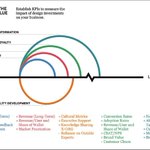
Designing for Qualities and Quantities of Your Business - Impact Signal impactsignal.com/designing-y…

Happy for the chance to contribute to this -- Implement and Mature Your User Experience Design Practice - infotech.com/research/ss/imp…

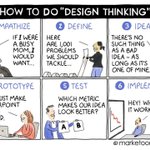
Gaining a consensus and getting buy-in to decisions is tough. Elevating the needs of users can help speed up decisions. That is why successful organizations use Design Thinking as a faster way to gain consensus. link.medium.com/KSekZtHiqfb
