
Faculty at VCU School of Medicine Systems immunology, lipid biology, chronic inflammatory disease
Joined November 2017
- Tweets504
- Following778
- Followers741
- Likes2K





Personal update: The Brown Lab is up and running at Virginia Commonwealth University where I've joined as a faculty member in the Microbiology and Immunology Department.
I will be launching a research program focused on understanding the molecular mechanisms that prevent chronic inflammation and promote its resolution. This will include work on sphingolipid-immune interactions, extracellular vesicle biology and HLA-associated mechanisms in diseases such as IBD and spondyloarthritis.
The Brown Lab will be recruiting talented scientists to fill multiple positions. Feel free to reach out directly if this research area interests you.
Eric Brown retweeted

New work with @CarolineUhler is out in @NatureComms! We developed StriMap, a deep learning model to predict TCR–peptide–HLA interactions, and used it to uncover bacterial peptides that activate an ankylosing spondylitis-associated TCR.
nature.com/articles/s41467-0…
Eric Brown retweeted

🧬 New work from @Schmidt_Center researchers @KaiCao181389, Orr Ashenberg, and Director Caroline Uhler introduces StriMap, a structure-informed deep learning framework for modeling TCR-peptide-HLA interactions TCR-peptide-HLA interactions.
🔗 Explore: strimap.com

New article out on something I've been thinking about for awhile studying arthritis and lipids. Is the lipid paradox really a paradox?
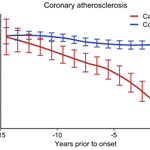
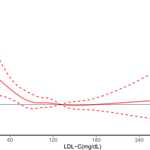
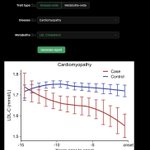
Across every chronic inflammatory condition studied, namely rheumatoid arthritis, sepsis, cancer, and chronic infection patients with the lowest LDL have the highest mortality. This is called the “lipid paradox.” The standard explanation centers around reverse causality. Illness or inflammation itself suppresses cholesterol synthesis, so low LDL marks severe disease rather than causing harm.
To me, that explanation is incomplete. It assumes LDL has purely a metabolic function and each particle has equally inert cargo, neutral until proven harmful. The assumption is wrong. What is missed is context and immune function of LDL itself. Circulating LDL has critical roles in innate immunity, detoxification and tissue repair. The LDL cargo and context mean more than the concentration. And the key role of LDL in immunity and tissue repair is often overlooked.
ericmichaelbrown.substack.co…

Eric Brown retweeted

Sugar and Carbs vs. Fat: Both Sides Get It Wrong
I wasn't going to cover this study, but the reactions explain why we can't fix our diets.
tuckergoodrich.substack.com/…
Mentions:
@garytaubes @nicknorwitz @MarioNawfal @Outdoctrination @ericmichbrown @markeatsmeat
#lcl6

Eric Brown retweeted

The Hidden PUFAs Inside Rodent High-Fat Diets
A fantastic post by @ericmichbrown on how shoddy much of the science around the obesogenic "High Fat Diet" in rodent studies is.
@trikomes @TuckerGoodrich
ericmichaelbrown.substack.co…
Most mouse studies claiming a “high-fat diet” (HFD) effect in rodent studies are not actually testing saturated fat. They’re testing a processed rodent chow loaded with oxidized omega-6 lipids from poor quality lard and soybean oil. Nearly every obesity, metabolic syndrome, inflammation, or chronic disease study using the standard HFD model relies on a diet with a distorted fatty acid profile; high omega-6 PUFA, low omega-3 PUFA, and high in lipid peroxidation products. This article breaks down what the rodent HFD really contains and why labeling it as “high in saturated fat” misleads nutrition science.

Starting to write more. Mostly for myself- there are too many ideas stuck in my head and in drafts. I'll be sharing what I’m learning about nutrition, lipids, immunity, and other biology topics. Can follow along here: ericmichaelbrown.substack.co…
Eric Brown retweeted

The Lipid Brain Atlas is out now! If you think lipids are boring and membranes are all
the same, prepare to be surprised. Led by Luca Fusar Bassini with Gioele La Manno's lab, we mapped membrane lipids in the mouse brain at high resolution.
biorxiv.org/cgi/content/shor…

Eric Brown retweeted

Bacterial sphingolipids promote anti-inflammatory responses:
Bacteroides sphingolipids delivered by OMVs persist w/in mammalian immune cells & promote IL-10 secretion via mevalonate pathway to drive anti-inflammatory responses
cell.com/cell-host-microbe/a…

Our most recent work on sphingolipids is now published in @cellhostmicrobe! cell.com/cell-host-microbe/f…
Here we discovered a mechanism by which bacterial sphingolipids in outer membrane vesicles promote anti-inflammatory responses in immune cells, through activation of the mevalonate pathway and cholesterol biosynthesis, which was essential for IL-10 secretion. This discovery was the product of many years of teamwork with @emilytemple_, and others in the @TheXavierLab and Clary Clish's metabolomics group at the @broadinstitute. Here’s a thread on what we found, how we found it and and why it matters 🧵👇
I think it's also important to note that this work is also built upon not only our previous work from the 2019 publication but also the work of a few other people crazy enough to dedicate time to study bacterial sphingolipids. This includes those in the Ley Lab and Johnson lab who have both published some seminal work in this area. This includes this recent study showing visual spatial lipidomic data of bacterial lipids in host tissue. cell.com/cell-host-microbe/f…

While we got an answer on how our sphingolipids could induce tolerance and anti-inflammatory responses, there is still much work to be done to understand bacterial sphingolipids and really bacterial lipids in general. We are only beginning to understand and untangle how host and microbe interact as a holobiont with structural lipids in the membrane usually taking a "backseat" to those analyzing other lipids modulated and produced by the microbiome such as short chain fatty acids or bile acids. As we reviewed last year, there is an incredible diversity of bacterial lipids and their host responses or interactions waiting to be discovered. Much of this could aid in explaining some of the complex diet-microbiome-host-immune interactions we see in humans. I look forward to seeing many more follow up studies in the future! cell.com/cell-host-microbe/f…
