

Website: https://xitter.cf/t.co/fXslcuCV6H Git: https://xitter.cf/t.co/Jjh6Pbshb5 Gyrocopters: https://xitter.cf/t.co/Cb6U0p0riH
UK
Joined February 2022
- Tweets212
- Following366
- Followers284
- Likes1.8K
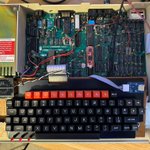


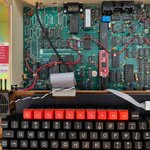


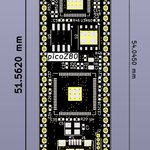
Virtual ADFS and Econet, econet being served by PiEconetBridge running on a Linux server over pico6502 WiFi.
Photo to show no magic, just one little board replacing the 6502 Processor.
Last video shows compatibility with the Tube, running Elite on the PiCoPro.
As per picoZ80, once I get to a checkpoint, will publish latest schematics and firmware on git. Documentation updated at eaw.app/pico6502/
#retrocomputing #BBCMicro #6502 #RP2350 #pico6502 #picoZ80

pico6502 update: the RP2350 isn't just standing in for the 6502 in this BBC Model B any more — it's emulating the peripherals too. Four short demos, nothing else changed inside the Beeb:
1️⃣ Virtual Intel 8271 FDC + DFS, booting from a virtual disc image on the Pico's flash. No real drive, no FDC chip.
2️⃣ Virtual MMFS, loading Elite straight from the board.
3️⃣ The Model B running as a BBC Master: MOS 3.20, shadow RAM and 128K, playing Meteors. Same 1981 motherboard, Master-class memory map provided by the Pico.
4️⃣ Virtual CMT — a cassette image "loading" with the proper tape ROM flow, minus the Ferguson 3T27.
Everything you see — ROMs, RAM, FDC, filing systems, tape — lives on a single RP2350 plugged into the 6502 socket. Config/screen video in the next post.
[pico6502 URL]
#retrocomputing #BBCMicro #6502 #Acorn #RP2350 #pico6502
How the pico6502 is set up: no jumpers, no re-flashing. Connect over USB/WiFi and the config screen lets you choose the machine profile (Model B / Master MOS 3.20), which ROMs sit in each sideways slot, shadow and sideways RAM, and which virtual devices are enabled — 8271 + DFS, MMFS, CMT — along with the disc and tape images to mount. Change it, reset the Beeb, done.
This is the same framework as picoZ80, so the debug shell and bus-cycle tooling carry straight across.
[pico6502 URL]
#retrocomputing #BBCMicro #6502 #RP2350 #pico6502 #picoZ80
pico6502 works. An RP2350 in the 6502 socket, running Galaxians and Chess on a BBC Model B and BASIC on an Apple 1 Replica. The PIO timing bug that was stalling execution is fixed and the bus cycles are clean.
Next: custom BBC drivers for the FDC, hard disk, Econet and sideways RAM/ROM.
What it is: a drop-in CPU replacement built on the picoZ80 framework, so it brings the same ICE debug shell with it — you can halt the machine, inspect memory and single-step from a serial console while the host is running.
What was wrong: the 6502 has tighter bus timing than the Z80, and the PIO state machines driving PHI2, R/W and the data bus were a few nanoseconds out of phase with the host. Reads worked, execution didn't. The fourth image is the LA5016 capture that finally showed it, with PHI0/PHI1/PHI2, SYNC, R/W and the bus lines side by side.
What's next: the BBC side gets interesting once the CPU is trustworthy. Because the RP2350 sits between the software and the hardware it can present peripherals the machine never had, so the plan is virtual drivers for the 8271/1770 FDC, a hard disk, Econet and sideways RAM/ROM, then on to the Master 128 with its 65C12.
Project: eaw.app/pico6502
#pico6502 #retrocomputing #6502 #BBCMicro #Apple1 #RP2350

pico6502 — first update in over a year.
The RP2350 6502 board is now in a BBC Model B, reading memory from the real bus with the ICE debug shell running over USB: disassemble, dump, hold/step/breakpoint, memtest, bus diag, SD card load/save — the same shell that grew up on picoZ80, now with a 6502 back end. The recording shows it dumping and disassembling the MOS ROM live, then single stepping the CPU.
Where it stands: memory reads are solid, execution has a PIO timing issue on the Beeb's 2 MHz bus that I expect to clear shortly. After that come BBC drivers on the pico6502 side — disk, sidewise ROM/RAM, Econet and the rest.
It's 65C12-compatible too, so the BBC Master 128 is the next target once the Model B is running.
eaw.app/pico6502
#retrocomputing #6502 #65C12 #BBCMicro #Acorn #RP2350 #pico6502


Same Amstrad PCW8256, same board and monitor, genuine Zilog Z80 vs picoZ80, captured on a Kingst LA5016 at 500 MHz (2 ns resolution), median over several thousand cycles.
Every signal that drives the PCW's DRAM — /MREQ, /RD, /WR, /M1 — lands within ~10 ns of real silicon, most within 5 ns. /M1, the strobe the PCW gate array is fussiest about, is at +50…52 ns vs +54 ns real. /MREQ width is a full 500 ns memory cycle, same as the Zilog.
Results are identical at 340 and 350 MHz core clock, so the timing comes from the cycle logic, not the clock.
The two departures are deliberate: /IORQ is 12 ns early (I/O cycles the gate array re-phases anyway), and address setup is longer than a real Z80 — the ASIC always sees a settled address.
To the resolution of a 500 MHz analyser, the memory bus is real silicon.
eaw.app/picoz80
#retrocomputing #Z80 #RP2350 #picoZ80 #Amstrad #PCW8256


picoZ80 v2.6a 5V.
Here it is working in the Amstrad PCW8256. The 3V3 v2.5 also works adequately, in fact, all my machines operate with 3V3 or 5V. I think there will be edge cases requiring 5V but all future picoZ80's I'll keep at 5V for as near 100% compatibility with a real Z80 as possible.


I’ve been asked a few times if I’m using AI and if it helps.
I tried using Grok on the picoZ80 PIO in 2025 to avoid learning pio assembler in depth as I hadnt the time, Grok is great but as it’s not ‘hands on’ and probably outside of it’s training, I ended up learning pio assembler and coding most of the pio assembler myself.
In March 2026 I tried Claude Code and initially it was useful to enhance or debug, updating documents and enhancing build systems, but recently it has started accelerating development. Think of the bright young grad from uni, full of energy but lacking experience, guide it well and be prepared for some stupidity and a lot of debugging but overall I am impressed and it is greatly enhancing picoZ80. My framework and designs have been onboarded by Claude, it is proving a most helpful companion.
Obviously there is the conundrum regarding Retro and modernity, should Retro be all transistors and 74xx or a blend of modern tech, good question, picoZ80 though would take a few more years given my available free time, so I choose Claude to expedite the project.
I have 5 x v2.6 arriving in days and if all goes well and I have stable Amstrad PCW9512/8256 machines using this updated design, I will order 100 from JLC (part procurement has taken 2 months!!) and make them available on Tindie at cost (~25-30gbp), so if your interested, I will advise on X when available.
picoZ80 powers a Sharp X1 Turbo II
Whilst waiting for the 5V level shifted version of the picoZ80, decided to upgrade another of my collection, a Sharp X1 Turbo II, with picoZ80 v2.5 (3v3 version).
First try, running in Physical mode, works flawlessly and Galaga runs as smooth as the original Z80.
Now to add an X1 Persona and driver to add virtual capabilities.....

picoZ80 / RFS / TZFS updates now on git (source:git.eaw.app/eaw, releases:git.eaw.app/eaw/pico/release…), documentation updated (eaw.app/).
Will update the schematics/PCB for v2.6 (5V level shifted version) once proven.

picoZ80 still being rapidly developed. Now works in the MZ80K/MZ800 and PCW8526/ZX Spectrum to follow.
To ensure maximum compatibility, an updated version is being assembled with full 5V drive capability.
I have 14 different machines now using their own dedicated picoZ80, the Z80 is dead.... long live the Z80.


picoZ80 on the Sharp MZ-80K — a full deep-dive
The RP2350-based drop-in Z80 replacement is now running on the MZ-80K, and it transforms what this 1978 machine can do while leaving you free to keep it as original as you like.
One CPU socket, the whole Sharp MZ ecosystem
Dropped into the Z80 socket (IC46), picoZ80 gives the MZ-80K access to all the MZ-80A / MZ-700 / MZ-1500 virtual interface cards. The machine that shipped with cassette storage and a few KB of RAM can now reach software and peripherals that never officially existed for it.
RFS — ROM and SD, a huge library on tap
It runs RFS, with a plethora of programs held both in ROM and across 10 RFS disks on SD card. BASIC variants, assemblers, FORTRAN, Pascal, FORTH, compilers, games — booting instantly without hunting for tapes.
Real floppy support, two controllers
Boot from either a T3444M or an MZ80AFI floppy controller:
• T3444M — for all MZ-80K disks
• MZ80AFI — RFS CP/M, to read and write all your existing MZ-80K CP/M disks
Tape read/write works smoothly too, even in virtual mode. The net effect: the MZ-80K becomes dramatically easier to live with day to day.
Originality preserved — your choice
You can configure picoZ80 to keep the MZ-80K purely physical: all onboard RAM, ROM and hardware doing the real work, with virtual interfaces added only where you want them. Maximum authenticity, modern convenience on tap.
A serious debugger, in-situ
The built-in debug shell is immensely useful for working on real programs as they run on real hardware: live disassembly, assembly, breakpoints, single-step or step-N, with every step showing the full Z80 instruction and its output. The capture here shows a break at PC=0A5D with the complete register state.
For a Z80 enthusiast, picoZ80's repertoire is hard to overstate.
#retrocomputing #Z80 #RP2350 #picoZ80 #MZ80K

Git repo now updated including automated setup scripts for Windows 10/11, Linux and macOS, documented at eaw.app/picoz80.
Just download the setup script, run it, and it'll pull all the needed software and repos.
One caveat about the Amstrad PCW9512: the drivers are complete, but the machine shows signal instability that results in occasional crashes.
A few things likely contribute. My test machine had a Sprinter board upgrade which I've since removed, so that may be part of it. But the bigger factor is the PCW's design philosophy: built to a price, with no buffering (no 74LS244/LS245). The Z80 signals are loaded near their limits across long PCB lands, which can cause voltage drop. Devices like the ASIC may not be fully TTL-tolerant, and the lack of buffering also leaves the bus more susceptible to EMI.
The picoZ80 now has programmable bus slew, drive, pull-up/down and Schmitt input, which helps mitigate this. The trade-off is that the PCW9512 doesn't lend itself to easy probing: the HVT CRT and the logic board's proximity to the HVT board make access difficult.
In due course I'll be testing with a PCW8256, which is far more accessible. If the same instability shows up there, I can probe and properly evaluate the cause.
Adding tri-state level shifters to the picoZ80 is electronically straightforward; the limiting factor is PCB size. I may add them if the space constraints can be resolved.
All other machines are stable.
#retrocomputing #Z80 #RP2350 #picoZ80 #Amstrad #PCW9512


Newest picoZ80 target: the Tatung Einstein TC01 — second non-Sharp host persona. RP2350 drops into the Z80 socket with cycle-accurate PIO bus timing; an emulated WD1770 FDC boots Elite straight from a disk image. Also shown: the ICE debug shell, the ESP32 web GUI, and the board installed on the TC01 mainboard.
eaw.app/picoz80/
#retrocomputing #TatungEinstein #Z80 #Elite #RP2350 #picoZ80
Latest picoZ80 target: Amstrad PCW-9512, the first non-Sharp host persona. RP2350 drops into the Z80 DIP-40 socket with cycle-accurate PIO bus timing, and an emulated uPD765 FDC boots LocoScript 2 from a CPC DSK image on SD — bypassing the physical floppies entirely.
eaw.app/picoz80/
#retrocomputing #picoZ80 #Amstrad #PCW #Z80 #RP2350


picoZ80 powered MZ-1500 BASIC now has network drives. Using the virtualised Celestite LAN card and a network file server via USB LAN and WiFi.


