

Emini trader, humble student of Angels and Demons. Risk Disclosure: https://xitter.cf/t.co/nBfCsBmvja
Florida, USA
Joined April 2009
- Tweets91.5K
- Following1.6K
- Followers8.4K
- Likes35.4K
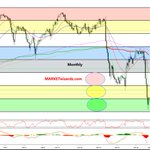


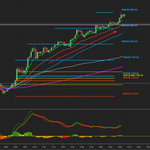


screenrec.com/share/FEX15o8Q… NQ death defying bounce.


Amazing take 👇👇👇 Step to the plate men and do our job.

You've probably seen the video. A young Frenchwoman in Paris, in tears, begging looters to stop. "Why are you doing this? That's not what we stand for."
Some accounts are mocking her. "She voted for it."
I won't. Because what you see on her face is not stupidity. It's a disease that has infected the entire West, and it has a name: suicidal empathy.
The term comes from Gad Saad, an evolutionary behavioral scientist at Concordia University in Montreal. A man who fled the Lebanese civil war as a child, and who knows what it looks like when a society falls apart. His new book, Suicidal Empathy: Dying to Be Kind, is the follow-up to The Parasitic Mind. Here is the thesis, and why it concerns every one of us.
Empathy is one of the best things about us. It evolved for a reason: to care for our children, our kin, our tribe. It was calibrated for a world where the people you felt for were the people around you, and where empathy always came paired with its counterweight: the instinct to protect your own and to recognize a threat.
Suicidal empathy is what happens when that mechanism misfires. When it fires at the wrong targets, in the wrong amounts, with no brake. When we feel more for the criminal than for his victim. More for the stranger who breaks the rules than for the citizen who follows them. More for how compassionate we look than for what our compassion actually produces.
Where does it come from? Four layers.
First, biology. Empathy is a spotlight, as the psychologist Paul Bloom put it. It lights up the one face in front of you and leaves everything else in the dark. The crying migrant on the boat is visible. The thousands of future victims of a broken system are statistics. A spotlight is a terrible tool for running a country.
Second, our own civilization. The West is the civilization that put the victim at the center of its morality. Christianity taught us to care for the stranger, the poor, the weak. It was one of the greatest moral revolutions in history. But cut off from its other half, justice, responsibility, the duty to protect your own, it turns into something else.
Third, ideology. In The Parasitic Mind, Saad described idea pathogens, ideas that hijack our reasoning. Suicidal empathy is the emotional counterpart: an ideology that hijacks our compassion. It sorts the world into oppressors and victims, then demands unlimited empathy for whoever ranks as the victim, whatever they do.
Fourth, status. In the age of social media, empathy has become a display. Posting "refugees welcome" costs nothing and earns applause. The bill goes to someone else: the working class, the suburbs, the women walking home at night.
The results are everywhere. Criminals treated as victims of society. Sexual assaults by migrants met with lenient sentences. Self-defense branded as aggression. Borders treated as cruelty. Saad's conclusion is simple: a society dies when it would rather display infinite tolerance than use its survival instinct.
Now the part I'll add myself, and that few people dare to say.
On average, women score higher than men on measures of empathy. It's one of the most consistent findings in psychology, across cultures, and it makes perfect evolutionary sense: for most of human history, the survival of children depended on it. It's a strength.
But it means an ideology that weaponizes empathy will hit women harder. And the data shows it: in country after country, young women have moved sharply to the left of young men, especially on immigration.
This is where men have a responsibility.
Not to mock. Not to lecture. Not to say "she deserved it." Empathy has always needed a counterweight, and that counterweight was the protective instinct: the one that draws lines, says no, and stands between the threat and the people it loves.
Men abandoned that role. They were told it was toxic, and many believed it. So they stayed silent at the dinner table, at work, with their partners, sisters, daughters and friends.
That has to end. Men have to have this conversation, honestly and with respect: compassion that cannot say no is not compassion. It's surrender. And the first to pay for it are women.
Many women already understand this better than anyone. Some of the bravest voices in this fight are women, precisely because they are the first to feel the danger in the street.
A civilization rests on a balance: compassion and strength, openness and borders, mercy and justice. When one side swallows the other, the foundations crack. What we are watching in Europe is what happens when empathy has no counterweight left.
Look at that young woman again. She isn't the enemy. She's what this ideology made of a generation that was told kindness would be enough.
Our job is to make sure she's the last generation that has to learn it this way.


Markets are not random. By the time we backtest enough sample size, markets will be in a new mode. It’s a difficult game to be sure.

Why does almost everyone fail at trading?
Almost everyone fails at trading.
What is the path to success that avoids it?
No matter how they analyze charts, and even if they have a system with an edge, people still fail.
There is an unavoidable law behind this.
It is a law because most people fail not by chance but by necessity, in a pattern backed by an overwhelming number of cases.
That means, paradoxically, stepping outside these patterns is the way to avoid failure and move toward success.
In this post, I will explain them.
First, the main reason most people fail is that they think only about profit.
Almost everyone starts trading because they want to make money, so their focus is on “how much can I make” and “I want to make more.”
They decide their position size “based on how much they want to make,” trade “without setting a stop loss,” hesitate to cut losses when they need to, and pray that the position will be saved instead of cutting it.
When you decide your position size based on how much you want to make, you also take on the risk of losing that much.
The market is full of randomness, and winning forever is impossible.
People who trade with that kind of position size do not expect to lose money, so they are not ready to lose it, and when the chart moves against them, they cannot accept the loss, freeze without doing anything, and end up taking a loss far beyond what they can tolerate.
These behaviors are the same as consistently repeating a strategy with a terrible risk-reward ratio, and if you keep doing them, you will “always” fail, no matter the chart or the market.
That is because you will “always” run into losing trades somewhere.
When you collect a large sample size of these behaviors, those results show up as a certainty, and that is one reason so many people inevitably fail.
People who notice this then think, “Risk management is the most important thing.”
That is not wrong, but at this stage they have not yet reached the core of the problem.
No matter how much risk management you do, if you do not understand why consistent trading leads to success, it only buys time until ruin.
The true purpose of risk management is “to run a system with an edge safely over the long term, build the sample size you need, and extract the edge.”
“That risk management itself needs to produce a statistical edge.”
In other words, the costs you expect must produce positive expectancy over a large sample size, and “they must truly function as costs.”
Many traders say, “Losses are a cost,” but most use that phrase only as consolation for a losing trade, and their losses rarely function as truly necessary costs.
So what is a truly necessary cost?
Whether your losses become truly necessary costs depends on “what profit you are aiming for, at what probability, with that cost.”
This is what turns the activity into a “business.”
You are like a restaurant owner who manages labor, rent, and ingredient costs properly while aiming for profit that exceeds them.
One day’s sales do not decide your success.
A day with few customers does not define your failure.
As you can see, what trading requires is very simple.
It is “a small edge and a large sample size.”
You do not need a perfect strategy or system, and in a market driven by randomness, you will never find one no matter how hard you look.
When the returns from repeating your actions under fixed rules exceed the risk, your capital grows.
It is that simple.
It does not matter whether your risk-reward ratio is 1:1 with a 55% win rate or 1:2 with a 40% win rate.
What matters is whether there is positive expectancy over a large sample size.
Once you have a system with positive expectancy, a trader’s job is to draw out its performance.
Seeing trading through probabilistic thinking like this is extremely important.
The market is full of randomness, so any strategy can lose on a single trade, and even a careless entry can win.
To succeed in this world, you need to build this foundation and understand how to apply it to trading.
But understanding it is still not enough to succeed.
That is because using the laws of probability requires a sufficient sample size, and the problems you face while collecting it are the very problems that block your success.
Even if you calculated the right labor, ingredient, and rent costs, chose where to open your restaurant, and estimated how to run it at a profit, the restaurant will go under if the staff you hired start buying luxury ingredients that blow the budget, demand outrageous wages, or ignore every instruction the owner gave, just because no customers came that day.
You are both the owner and the staff.
No matter how great your rules or how strong your system’s edge, if you refuse to collect the sample size needed to extract that edge, you cannot succeed.
The fundamental problem you face in trading lies in this consistency, and at its root is “the belief that places value on winning and losing.”
This belief stirs up intense emotions about every win and loss in front of you and keeps you from doing what trading truly requires.
It is hard to explain everything in a single post, so this has been a rough explanation, but I have covered the key points, so I think you now have a general picture.
Many traders overreact to the win or loss in front of them and believe that winning the trade in front of them decides their success, but you can now see how wrong that is.
Succeeding in trading is completely different from what most people think.
I post about these important aspects every day, so go back and read my posts and threads.
The answers you need should be there.
And if going back through them is too much trouble, I have also published a book that explains this in detail, so please read it.
It should make clear what you really need to do.


E retweeted

Two years ago Alex McPherson weighed 110 pounds.
He had lost 55 of them. They admitted him to a hospital, and that December surgeons took out his entire large intestine.
Tonight he walked onto a field in Athens with no time left on the clock and kicked a 34 yard field goal to beat the number one team in the country.
Auburn 27, Georgia 24.
Here is the whole thing.
McPherson is from Fort Payne, Alabama. He has two brothers who kick too, and one of them, Evan, kicks for the Cincinnati Bengals. In high school Alex made a 61 yard field goal, which is still the Alabama state record.
At Auburn he was close to automatic. One season he went 13 for 13. Not a single miss, all year.
Then he got sick, and at first he had no idea what it was.
"I thought I just had the flu or a stomach bug or something going on. My weight was down. I had lost 20 pounds."
It was ulcerative colitis, and it was severe.
"That week I began to feel sick, I would run to the bathroom 15-20 times a day."
He played one game that entire season. One.
Here is him describing the bottom of it.
"I lost 55 pounds at that point. I was 110 pounds when I got admitted to the hospital."
Then came the operation, and here is what he says about it now.
"It changed my life."
"I wouldn't be here or playing football again without the surgery."
So he had to build a body back from almost nothing and then learn to kick with it. For most of the next season he was held to short attempts while his strength came back. They gave him a national courage award that December.
This past summer he said this.
"I think I'm kicking as good as I have since before I got sick."
Now look at what this guy has actually done. In his career he has attempted 87 extra points and made 87 extra points. He has never missed one. He once put six field goals through in a single game, which tied the Auburn school record.
And tonight, with the clock at zero, against a team that was ranked first in the country and had not lost, in their own stadium, with Auburn an eighteen and a half point underdog, he had a 34 yarder to win it.
He made it.
Now the honest part. A 34 yard field goal is a kick he is supposed to make. Kickers make those. Nobody should pretend the distance was the hard part.
The hard part was everything in front of it.
Two years ago he was lying in a hospital at 110 pounds and a surgeon was removing an organ from his body. Tonight he jogged out in front of a stadium full of people who wanted him to miss, put his foot through it, and walked off the field having beaten the best team in the country.
