






Enrique Manjavacas retweeted

Impressive workshop on 21st April in the Digital lab. Many thanks to Enrique Manjavacas Arevalo @emanjava for keeping 18 participants focused on Intro. and coding Large Language Models in the Humanities for the full 3 1/2 hrs!


Enrique Manjavacas retweeted

¡¡Salud y República!!
Friday is the 92nd anniversary of the proclamation of Spain's Second Republic.
We’re proud as ever that our Away shirt pays tribute to those who fought to defend democracy & we’d love to see friends & fans posting their shirts. ✊

ALT Noah Adejokun

ALT Lirian Santos
Enrique Manjavacas retweeted

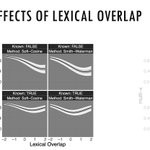
I promised my co-authors @FolgertK and @emanjava that I’d tweet about our paper at @CompHumResearch but I forgot. Have to hurry because it’s in like 15 mins but the paper is about lexical diversity and it’s *checks notes* really good. You can read it here:
ceur-ws.org/Vol-3290/short_p…
Enrique Manjavacas retweeted
Some two months ago, GysBERT joined its historical English sibling MacBERTh (yes, both are puns on names of plays, how cultured of you to notice) on Hugging Face thanks to @emanjava. You'll find it here: huggingface.co/emanjavacas/G…

Enrique Manjavacas retweeted
You didn't wake up this morning thinking 'I wonder who's using distributional semantic models to study historical morphosyntax' but an overview is here nonetheless. Co-authored with @srbdts, who's original work is featured, and @emanjava, and published in @JHistSyntax.
This Post is from an account that no longer exists. Learn more
Enrique Manjavacas retweeted

Thanks to @lauren_bliksem, @emanjava and @huggingface, working with historical language models has become just mind-bogglingly easy:

ALT Picture illustrating how the historical language model MacBERTh can be imported from huggingface.
New paper showcasing our historical language model for English on a number of tasks. Check it out! Joint work with @lauren_bliksem

Adapting vs. Pre-training Language Models for Historical Languages by @emanjava and @lauren_bliksem jdmdh.episciences.org/9690

Enrique Manjavacas retweeted

Adapting vs. Pre-training Language Models for Historical Languages by @emanjava and @lauren_bliksem jdmdh.episciences.org/9690
Enrique Manjavacas retweeted

Accepted Papers 🎉 #ACL2022 Workshop: 🌸 Challenges & Perspectives in Creating Large Language Models
Entities, Dates, and Languages: Zero-Shot on Historical Texts with T0 openreview.net/forum?id=BRzI…

Enrique Manjavacas retweeted

This paper is the joint effort of several people working at different universities, institutes and libraries: @versae @christopher, @clefourrier, @stefan_it_, @vanstriendaniel, @emanjava. We are thankful to @BigscienceW for supporting us!🌸
Enrique Manjavacas retweeted
Can we use pre-trained Large Language Models to study historical texts with no fine tuning?
In our paper, our working group on historical texts at @BigscienceW investigate zero-shot information extraction on multilingual historical texts with LLM.
arxiv.org/abs/2204.05211🌸
A 🧵

Pleasure to present our work on MacBERTh at the @TMLeiden research meeting together with @lauren_bliksem Great vibes and great feedback from the group!

Presentation in the @TMLeiden research meeting by @lauren_bliksem and @emanjava about their BERT model for historical English, called MacBERTh.
Project website including a link to the model in the @huggingface repository: macberth.netlify.app/

Enrique Manjavacas retweeted
People of the world, and specifically people who like historical texts: @emanjava and I are finally launching the 'MacBERTh' project website, with -- and here's the cherry on the cake -- a link to the model in the Hugging Face repository!
macberth.netlify.app/
Just presented this bit at the amazing CHR conference (together with @lauren_bliksem). Paper available online already. Check it out!

We are very pleased, pleased to death even, with the computational approach by @lauren_bliksem and @emanjava to the development of the phrasal expression "to death"
📰 Adjusting scope: a computational approach to case-driven research on semantic change
📎ceur-ws.org/Vol-2989/long_pa…

Excited to join the workshop on modeling linguistic change organized at the @UZH_ch :-)

linguistics twitter, tune into our hybrid workshop on all things modelling on Nov 15-16 at @UZH_ch! all info on prepcomp.uzh.ch/en/Events/Mo…
Today I presented my (not really) latest work on Computational Intertextuality at the LATECH workshop (EMNLP) #emnlp #latech_clfl
In this paper (aclanthology.org/2021.latech…), we proposed to base the computation of inter-annotator agreement indices on a statistical model. (1/3)


... which can help improving future experimental settings and ultimately better understanding the process. An aspect that is crucial in a topic like literary intertextuality. (3/3)