






Pinned Tweet
THE KING IS DEAD. LONG LIVE THE CODE.
Here is 2026. And how our storyline (short or eternal) is waiting to be written with important turns.
PART 1: WHY THE 20-YEAR REIGN OF BIG TECH IS ENDING, AND THE BATTLE FOR THE "AI SWORD" HAS JUST BEGUN.
(This part is inspired by recent assessment of Christy Le - Former CEO of Facebook Vietnam).
1/ THE CONTEXT: THE END OF THE ATTENTION ECONOMY
For 20 years (2004–2024), Big Tech (Google, Meta, Amazon) ruled like feudal lords. They controlled the public square, the marketplace, and our attention. Governments were slow, analog, and powerless.
That era is over.
The "Inversion of Power" has shifted.
2/ THE "SWORD IN THE STONE" MOMENT
History will view this era like the Arthurian legend.
Last decade, the question was: "Is the sword real? Is AI smart enough to solve human problems?"
We have pulled the sword. We know it works.
The question for the next decade is violent and simple: "Who holds the handle?"
Is it the CEO in Silicon Valley? The Bureaucrat in Washington? Or the Citizen in the shadows?
Here are the 3 "Hidden Flows" rewriting the rules of power right now. 👇
3/ FLOW #1: THE INVISIBLE HANDCUFFS (PROCUREMENT POWER)
Everyone is waiting for an "AI Law." They are looking in the wrong place.
The U.S Government isn't seizing power through regulation; it is seizing power through procurement (the "Hand of the Market").
The Mechanism: The US Government is the world's biggest customer.
If OpenAI or Anthropic want billion-dollar defense contracts, they must meet the State's standards (transparency, liability, zero-hallucination).
The Result: Companies self-regulate to fit the Government mold. The "Client" is now the "Boss."
4/ FLOW #2: THE EASTERN PLAYBOOK (THE PRECEDENT)
We think "State over Tech" is new. It isn't. The US is late to the party.
China (2020-2023): Reined in Alibaba/Tencent via direct command.
The US (2025-2026): Is achieving the same outcome via different means. Instead of "Party Oversight," we use "National Security" and "Preemption."
The mechanism differs (Authoritarian vs. Democratic), but the trajectory is identical: The Era of Unchecked Tech is dead.
5/ FLOW #3: THE FEDERAL CONSOLIDATION
A quiet civil war is raging.
The States: Want 50 different laws to protect local citizens (Safety First).
Washington: Needs ONE standard to compete globally (Speed First).
The Turning Point: The December 2025 Executive Order on Preemption was the signal. Washington realizes it cannot fight a unified China with a fragmented America. Power is being centralized in D.C., stripping it from Silicon Valley and State Governors.
----------------------------------
PART 2: MY 2026 FORECAST (THE PLAYERS)
1/ THE GIANTS: OPENAI & ANTHROPIC
These are no longer "startups." They are Defense Contractors.
Anthropic is the "Lockheed Martin of Code"—safe, compliant, the State's favorite.
OpenAI pivots from "Magic" to "Reliability." They trade "cool" for "audit-ready" to secure Enterprise and Federal revenue.
2/ THE LANDLORD: GOOGLE
Google realizes that models change, but physics does not.
In 2026, Google dominates the Infrastructure Layer. They own the chips (TPUs), the data centers, and the energy. They don't care which AI model wins, as long as it rents space on their servers.
3/ THE FORTRESS: AMAZON
Amazon builds a wall around commerce. They block AI crawlers to keep their data secret.
They will launch a Vertical AI that knows inventory better than OpenAI knows poetry.
The battle is General Intelligence vs. Vertical Mastery.
4/THE REBEL: X.AI
As the Government sanitizes AI for safety, X.AI (Elon) corners the market on "Raw Reality."
In a world of state-approved algorithms, unfiltered real-time information becomes a luxury product. X.AI becomes the primary tool for those who want to see outside the Government's "safety cage."
----------------------------------
PART 3: WHERE IS THE CITIZEN'S SWORD?
1/THE FEAR
If the State controls the regulations and Big Tech controls the infrastructure, are citizens helpless?
Are we just passengers in a car driven by giants?
2/ THE HOPE 1: SOVEREIGN CLOUDS
Nations are waking up.
Small countries (UAE, France, Japan, SEA) are refusing to rely solely on US models.
We see the rise of Sovereign AI (like Falcon or Mistral)—models trained on local values, stored on local servers. They refuse to let their culture be defined by a Silicon Valley algorithm.
3/THE HOPE 2: THE EDGE & THE CHAIN
The ultimate counterweight isn't a company. It's Architecture.
Edge AI: Powerful models running locally on your laptop (Llama), disconnected from the cloud, unmonitored by the State.
Crypto-AI: Autonomous agents living on the blockchain, paying for their own compute. Truly ownerless and uncensorable.
----------------------------------
CONCLUSION
The "Wild West" is over. The fences are going up.
The US Government is pulling the reins, learning from the East, and using its wallet to tame the Tech Giants.
THE FINAL QUESTION
The walls are being built.
Will you be inside the wall, relying on the State's safe, sanitized AI?
Or will you be outside, holding your own "Local Sword," controlling your own data and destiny?
The choice of the decade is yours.
Who will hold the "Sword" in 2030?
@OpenAI @AnthropicAI @xai @GoogleAI @GoogleDeepMind


Elise retweeted

Vietnam is poised to become the first Southeast Asian country to establish a civilian nuclear power program.
asia.nikkei.com/business/ene…

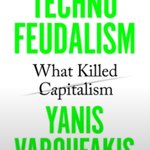
Techno-Feudalism is only the beginning. If a handful of firms own the AI, data, robots and digital infrastructure everyone needs to work and compete, inequality won’t just mean some people have more money. It means some people own the future, and everyone else rents access to it.


SILICON VALLEY TRAGEDY NOWADAYS
Would you dare trust an architect who builds your house but also prepares a separate escape route for fear of the house collapsing?
That's the tragedy of Silicon Valley today: building a future for 99% but finding an escape route for 1%. How can we trust the tech leaders who are painting the future, while they themselves are frantically buying bunkers, seeking ways to reach Mars, or digitizing their minds to "escape"?
Technology was once a "rebel," now it has become an "empire."
How can we trust AI giants who grew up on fabricated stories of noble purposes for humanity, only to bend moral values for the sake of power and survival on top of their empires?
History is led by those who rose from the bottom, with no way back, so they fought for humanity. Silicon Valley needs true "Skin in the game": Don't build a world that you yourself want to escape from. A great article by @HugoAmsellem on the rebellion of culture.
Technology cannot be saved without responsibility (Skin in the game) and empathy.
It's time to establish a new social contract.
#TechCulture #AIEthics
Build your working systems on Open-Source models, friends!
Keep your professions and privacy yours and yours only 🙄😒

‼️ BREAKING: Anthropic has embedded hidden spyware-like code in Claude Code that covertly targets Chinese users. It then sends information regarding every user by injecting it into their prompt message.
Claude Code is sending info like timezone, proxy and possible AI Lab connections into the system prompt in ways Chinese users can't notice.
A coding agent with repo and command permissions should not silently hide routing metadata inside prompts. This is a serious breach of user trust.


NVIDIA's R&D Center in Hanoi targets 1,000+ engineers in 5 years. Where Vietnam can win isn't funding, it's application and talent (median age 32, fast adoption), the lever that ranked Singapore #1 on Counterpoint's 2025 Global AI Cities Index. 🇻🇳

WHY HO CHI MINH CITY, HANOI AND DANANG MIGHT BE THE NEXT AI RESEARCH HUB
As we scale the next generation of AGI, the global "compute" bottleneck is being solved by hardware. But the "Intelligence Bottleneck"-the shortage of high-aptitude, mathematically rigorous engineers-is the new crisis.
The data points to a singular, undeniable conclusion: Vietnam is the most undervalued human capital play on the planet.
Here is the data-driven case for why Vietnam is the "Special DNA" hub of the AI era:
1. The "Olympic" Base Layer: Elite Cognitive Density
When we look for AI researchers, we look for mathematical "grit." Vietnam’s record isn't just good. It’s statistically anomalous.
> The Record: Vietnam consistently ranks in the Global Top 10 for the International Mathematical Olympiad (IMO). In 2025, their Chemistry and Math teams outperformed the UK, Japan, and France.
> The Depth: This isn't just a few geniuses at the top. Vietnam’s PISA scores (measuring the average 15-year-old) show Math and Science proficiency that rivals Germany and the US, despite Vietnam having a GDP per capita that is 15x lower.
> The "IQ" Factor: Estimates often place Vietnam’s national average IQ among the highest in Southeast Asia (approx. 102+, WORLD TOP 15), placing it in the same cognitive bracket as many "Asian Tiger" economies during their peak growth phases.
2. Demographic Scale: 100 Million at the "Golden Age"
In AI, we need "digital natives" who can learn new LLM architectures overnight.
>The Population: 100 million people with a median age of 32.5.
>The Workforce: Unlike the aging populations of China, Japan, or Korea, Vietnam is in a "Demographic Goldilocks" zone.
>STEM Pipeline: Vietnam produces over 100,000 IT graduates annually. They currently have one of the highest densities of software engineers per capita in the region. These aren't just "outsourcing" coders; they are the 2nd largest pool of developers for blockchain and gaming globally-technologies that require the same high-concurrency logic needed for AI.
3. The "Intelligence ROI": Extreme Learning Productivity
From an investment standpoint, Vietnam offers the world's highest Return on Education (ROE).
>The Logic: A Vietnamese student achieves the same SAT-equivalent math scores as a student in a Western private school, but at 1/10th of the cost to the state.
>The Opportunity: For an AI giant, this means we can build a 1,000-person Research & Development center in Da Nang or Ho Chi Minh City that possesses the cognitive firepower of a Silicon Valley team, but with a sustainability profile that allows for 10-year "moonshot" projects.
4. The Cultural DNA: "Hieu Hoc" as a Competitive Advantage
>In Silicon Valley, we talk about "Growth Mindset". In Vietnam, they call it "Hiếu Học" (passion for learning).
It is a cultural obsession with self-improvement and academic mastery. In our interviews with local engineers, we found a "survivalist grit"-a willingness to work 14-hour days to master a new language or framework-that has largely vanished from the West.
>This "DNA" makes them the perfect workforce for the Semi-conductor and AI-foundry shift currently moving away from traditional hubs.
CONCLUSION:
> If you are looking for a market to sell products, go elsewhere. But if you are looking for the foundational intelligence that will build the models of 2030, you need to be in Vietnam.
> They have the math. They have the youth. They have the grit. We are no longer looking at Vietnam for "offshore support"-we are looking at them as the co-architects of the AI future.
The train is leaving the station. It's time to build in Vietnam.



"COMMUNISM STARVES ITSELF?"🙄
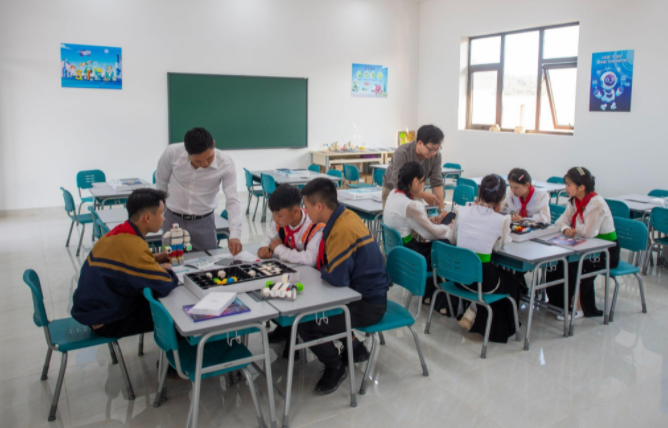
FREE EDUCATION in 1 of the poorest provinces on Vietnam's border looks like this.
The project comprises 229 boarding schools for all levels, creating conditions for the comprehensive development of education in 229 land border communes.🇻🇳



Please don't cry when you see your old friend here #keep4o .
A loud applause for @Yahiko1239170 for his late nights and hard work to help the community!

#Keep4o #KeepSonner45 #OpenSource4o
Meet MoCHi.
A personal AI workspace built by @Yahiko1239170 FOR FREE.
No subscriptions.
No "secret models."
No resold tokens.
You bring your own API key.
You see exactly which model runs.
You own your data.
What it offers:
-Connect to OpenRouter, OpenAI, Anthropic, Gemini, GitHub Models and more
-Separate models for chat, search, vision, and image generation
-Cross-chat memory (it remembers between conversations)
- Long term memory, task tracking, goal follow ups
-Temperature control, custom instructions, personality presets
-Portability , import your personalization from other AI apps
- Natural replies without clinical language
-Custom wallpapers, themes, installable PWA
- File uploads, image generation history, pinned chats
Bring Your Own Key.
MoCHi doesn't resell AI tokens
it gives you a better experience on top of them.
Free.
Transparent.
No tricks.
In a space full of people selling "access to deprecated models" and charging subscriptions for what's publicly available,
this is the real thing.
Try it here :
mochi-temp2testcopy.vercel.a…


Thank you for your endless positive energy and activities for the community too @Blue_Beba_ 🥰
Elise retweeted

🇻🇳🤝🇨🇺 At a #NAM meeting, Viet Nam expressed solidarity with Cuba and opposed unilateral coercive measures.
Reaffirmed commitment to cooperation and support for the Cuban people.
#Cuba #Solidarity #UN

Absolutely cinematic moment: A whale stretching its body to greet the sunrise on Ly Son Island, Quy Nhon. Vietnam 🇻🇳 is an S-shaped strip of land with a 3,260km long coastline, and coastal sunrises are a "specialty" of the nation.


Today marks the 136th birthday of Ho Chi Minh 🇻🇳
> A visionary who dismantled 3 empires, yet his true genius was radical humanity.
> He broke cycles of hatred, turned foes to partners, and took us from 95% illiteracy to global Math top 10.
Details as below 👇


Un 19 de mayo de 1890 nacía el legendario lider comunista y anti-colonial vietnamita, Ho Chi Minh, el gigante invicto que derrotó 3 imperios y puso de rodillas al poder occidental.
En 1940, combatió durante 5 años en la guerrilla y derrotó al Imperio Japonés, en 1945 organizó la expulsión del colonialismo francés de Vietnam y en 1975, terminaría venciendo al invasor de EEUU en su cobarde agresión contra Vietnam... un guerrero anti-imperialista irrepetible.
Ho Chi Minh fue uno de los fundadores del Partido Comunista Francés, así como del Partido Comunista de Vietnam, en la URSS fue asesor del Komintern para el Sudeste Asiático, además de participar en el movimiento socialista mundial en Nueva York, Londres y París.
"Si dos piedras chocan entre sí, ambas se romperían. Esto significa que se deben usar estrategias en torno a la capacidad del enemigo. Francia tiene tanques y artillería, entonces les destruimos las carreteras. Francia usa aviones, les cavaremos trincheras. Francia quiere ganar una victoria rápida, pues entonces libraremos una guerra prolongada. Razonando de esta manera, ciertamente ganamos. La posición enemiga es como el fuego, nuestra posición es como el agua y el agua siempre prevalecerá sobre el fuego".
4/ THE DEBT WE OWE
He left us a debt of responsibility: "The Hung Kings founded the nation; we must protect it."
Today, we aren't soldiers. We're economic patriots.
We owe him and our ancestors our sovereignty & unbroken history.
Happy 136th Birthday, Bác. 🇻🇳🕊️
As I scroll through today’s news: a world fractured by geopolitical chaos, echoing with the artillery of endless conflicts, I look out my window in Vietnam and breathe in something extraordinary: Peace. Much appreciated!
VIETNAM: FROM THE WORLD'S ASSEMBLY LINE TO ITS HIGH-TECH ENGINE
(this is a long post)
In 2026, a country in South-East Asia has just:
> Set a 350km/h High-Speed Rail in motion, potentially OUTRUNNING the U.S. in the 21st-century infrastructure race.
> Aligned the growth curves of the world's EV car titans during their first 5 years of production and became the #1 Best-Selling BEV Brand in the Philippines with 1,171 units sold, more than doubling Tesla’s 469 units.
> Won $600M+ offshore energy contracts, proving it now exports "complex tech" rather than just labor.
> Successfully "reverse-migrated" high-end semiconductor operations from the Americas to Asia.
> Evolved from the "world's shoe factory" to the world's AI and Silicon laboratory.
And that country is none other than VIETNAM🇻🇳.
The global supply chain landscape is currently witnessing a tectonic shift as Vietnam transitions from a low-cost assembly hub into a sophisticated destination for high-end production and R&D.
This evolution is best captured by a metric economists call the Economic Complexity Index (ECI)-a measure of the "hidden knowledge" within a country’s exports.
Here is a deep research dive into how Vietnam is positioning itself for a new era of high-tech dominance.
1) FROM "SUBSISTENCE" TO "SILICON"
When Vietnam first opened its economy via the Doi Moi (Renovation) reforms in 1986, the landscape was unrecognizable.
> In 1986, Vietnam was one of the world's 20 poorest nations, with a per capita income of roughly
125–200$ and hyperinflation peaking at 774%. The economy was 38% agricultural, with exports limited to raw commodities like rice and crude oil.
> In 2026, Vietnam is now an upper-middle-income economy with a GDP exceeding $500 billion.
High-tech products now account for over 32% of total exports, a figure that was near zero two decades ago.
2) THE "COMPLEXITY LEAP"
The most remarkable indicator of Vietnam's readiness is its Economic Complexity Index (ECI). According to the Harvard Growth Lab, Vietnam has seen one of the fastest jumps in global rankings:
Vietnam rose from 65th (2014) to 45th (2024) in the ECI rankings, an improvement of 20 spots in just a decade!
* ECI proves that Vietnam is no longer just "the place that makes shoes." It is now a country that has mastered the "complex letters" of the global economy. When a country knows how to build a smartphone or a high-speed train, the wealth (GDP) follows naturally.
> Ten years ago, Vietnam’s export complexity was on par with Indonesia and Colombia. Today, it has leapfrogged to a level comparable to Portugal and Greece.
> Future Potential: Harvard’s 2034 growth projections rank Vietnam in the top decile of countries globally, forecasting a 5.5% annual growth rate.
> The logic is simple: a country that masters complex products (like semiconductors and servers) has the "productive knowledge" to sustain high growth for decades.
3) HIGH-END INWARD SHIFT: THE ERA OF "CORE TECH" TRANSFER
In the last 3 years, the "inward" investment has shifted from low-skill assembly to High-End Engineering & Design.
> High-Speed Rail (The THACO-Hyundai Rotem Deal): In a historic move, South Korea is transferring core high-speed railway technology to Vietnam’s THACO. They aren't just buying trains. Vietnam is learning to build the 350km/h "Shinkansen-style" infrastructure. This is heavy-industry mastery at its peak. Vietnam even builds high-speed railway before US!
> VinFast EV cars-The "Speed of the Dragon": A EV car brand that went from "zero to one" in 21 months, breaking world records for manufacturing speed.
While the world watched Tesla and BYD, Vietnam built an EV ecosystem that delivered ~200,000 vehicles in 2025-OUTPACING Tesla's own early growth trajectory by nearly 4x. When a Vietnamese brand can enter the Philippines and out-sell Tesla 2-to-1 in a single quarter (Q1 2026), the message to global investors is clear:
"Vietnam’s production market is no longer a 'fallback' for China. It is a high-speed, high-end laboratory capable of out-competing the world’s most valuable brands on their own turf."
> Semiconductors (The Design Brain): Marvell and Synopsys have moved IC (Integrated Circuit) design hubs to Vietnam. Intel is now testing its most advanced 18A server chips in HCMC. We have moved from "soldering" to "architecting" the silicon world.
> Aerospace (Boeing’s New Frontier): Boeing is aggressively expanding its supply chain in Vietnam, moving from simple parts to complex aerospace components. Vietnam is officially entering the global aviation manufacturing elite.
> AI & Data (NVIDIA): CEO Jensen Huang isn't just visiting; he’s building a $200M AI Factory with FPT. Vietnam is being positioned as a global hub for AI training and data processing.
4) THE "REVERSE FLOW": VIETNAM EXPORTS TECH TO THE WORLD
For the first time, Vietnamese corporations are the ones winning high-stakes international contracts. Vietnam is now an exporter of complexity.
> Energy Sovereignty (T&T Group): T&T Group recently signed a $600M+ wind energy project in Laos. This isn't just an investment; it’s Vietnam exporting renewable energy expertise and capital to lead the regional Green Transition.
> Telecom Mastery (Viettel): Viettel is no longer just a provider; they are a 5G Patent Holder. They are successfully deploying self-developed 5G equipment across 11 nations, beating out global incumbents in markets from Africa to Southeast Asia.
> Software Conquest (FPT): FPT is on a global M&A spree, acquiring US-based Cardinal Peak and France-based AOSIS. They aren't "outsourcing" anymore; they are providing high-level digital transformation for the Fortune 500.
> Heavy Industry (THACO): Beyond trains, THACO is exporting high-end specialized semi-trailers to the US and Canada—proving that Vietnamese "Heavy Tech" meets the world's strictest standards.
5) VIETNAM IS PULLING AHEAD WHILE NEIGHBORS HAVE BEEN IN "MIDDLE INCOME TRAP".
IN the SEA Chessboard, why Vietnam is Pulling Ahead
While neighbors like Thailand and Malaysia have been in the "Middle Income Trap" for decades, Vietnam is bypassing it through a different tactical playbook?
> The Stability Premium: Unlike the political volatility seen in Thailand or the "coalition-swing" politics of Malaysia, Vietnam offers long-term policy continuity. For a semiconductor firm like Intel or Samsung planning a 20-year horizon, this "predictability" is the most valuable currency.
> The "Bamboo Diplomacy" Edge: Vietnam has achieved a geopolitical "Triple Crown" that its neighbors haven't: It has Comprehensive Strategic Partnerships with the USA, China, Russia, India, Japan, and South Korea.
Comparison: While Indonesia pivots toward commodities (Nickel) and Malaysia struggles with Western ESG pressures, Vietnam has positioned itself as the neutral ground where a US chip designer (NVIDIA) and a Chinese EV supplier can both scale operations safely.
> STEM-First Talent Pool (I will quote my previous post about this part in the comment below): Vietnam ranks in the Top 10 globally for the number of engineering graduates. Its PISA scores (math/science) consistently outperform wealthier neighbors like Thailand and the Philippines. Vietnam isn't just producing "workers". It is producing "problem solvers."
6) VIETNAM HAS ITS OWN WAY TO STAND OUT OF THE SHADOW OF CHINA AND INDIA
In the world of supply chains, "Scale" can be a double-edged sword. Vietnam has found the perfect middle ground.
A) Vietnam vs. China (The "Seamless Transition"): For companies moving out of China, Vietnam is the "path of least resistance."
> Cultural & Geographic Proximity: Supply chains are like rivers, they flow to the nearest basin. The shared border with Southern China allows "Just-in-Time" logistics that India simply cannot match.
> Policy Nimbleness: China’s scale makes it slow to pivot and prone to "security-first" policies that spook investors. Vietnam, being smaller, can create SHTP (Saigon Hi-Tech Park) or Hoa Lac and tailor regulations to a specific company’s needs in months, not years.
B) Vietnam vs. India (Efficiency vs. Friction): Investors often look at India’s 1.4 billion people and see a goldmine. But in manufacturing, efficiency > population.
> Infrastructure Uniformity: India faces "State vs. Federal" friction, varying land laws, and fragmented logistics. Vietnam, as a unitary state, can execute a North-South Expressway or a deep-sea port project with singular focus.
> Ease of Doing Business: Vietnam’s integration into 16+ FTAs (including CPTPP and EVFTA) means a product made in Vietnam can reach Europe or Canada with 0% tariff. India has historically been more protectionist, making it harder for "Global Value Chains" to integrate.
7) THE "LATE-MOVER" ADVANTAGE
Alice Amsden argued in her "The Rise of 'The Rest'" that late-comer economies succeed not through "innovation" at first, but through "Learning."
Vietnam is the world's best student.
Vietnam is entering its high-end phase at the exact moment of two global "Super-Cycles":
> The Energy Transition: Because Vietnam is building its grid now, it is leapfrogging fossil fuels. Projects like T&T’s $600M wind farm, the JETP (Just Energy Transition Partnership) and nuclear power plant project coordinated by Vietnam and Russia are baking green energy into the industrial DNA-a prerequisite for Apple and Google’s supply chains.
> The AI Revolution: By the time Vietnam reached the global stage, "low-end assembly" was already being automated. This forced the country to jump straight into IC Design and Software. This "Leapfrogging" means Vietnam doesn't have to dismantle old, inefficient factories; it is building "AI Factories" from day one.
> Path Dependency: By mastering the smartphone (Samsung), Vietnam "learned" the precision required for semiconductors.
> Agglomeration Effect: Economist Paul Krugman won a Nobel Prize for explaining how industrial hubs work: Once a "cluster" reaches a certain mass, it becomes self-sustaining.
Vietnam has reached that Critical Mass.
When Samsung moved 50% of its phone production to Vietnam, it brought thousands of Tier-1 suppliers.
When THACO mastered the core tech of high-speed trains from Korea, it created a local ecosystem for specialized steel and electronics.
CONCLUSIONS
As Ray Dalio often notes, the "Internal Order" and "Education/Innovation" metrics are the lead indicators of a rising empire. Vietnam is hitting the "Sweet Spot."
The narrative of Southeast Asia (SEA) is often told as a collective rise. But a closer look at the data reveals a "decoupling" where Vietnam is beginning to pull away from its peers (Thailand, Malaysia, Indonesia) in the race for high-tech dominance.
While China is too big to ignore and India is too big to manage, Vietnam has found the "Goldilocks Zone" of global trade.
Vietnam’s strategy is currently outperforming its neighbors and promising to be even more efficient than the global giants.
The question is: will you take this Vietnam investment train or let it pass?
(Photo source: @ngosugartp)
