
Another chemist Opinions expressed are solely my own and do not express the views or opinions of my employer.
- Tweets5.3K
- Following646
- Followers82
- Likes20.8K




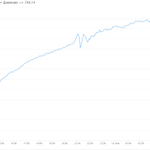


ALT Venus echo spectrum, Dwingeloo → Stockert. 2026-10-18, 1023, 270 seconds. A 5.6 sigma peak in the center shows a successful detection.


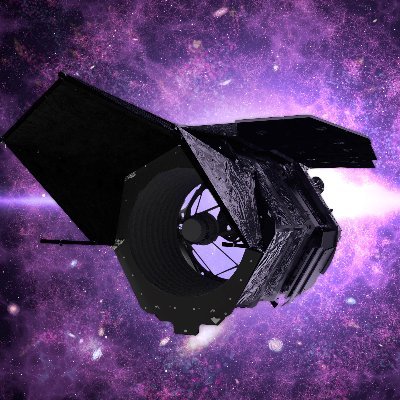

ALT Artist concept of Roman's array of 18 detectors, outlined in light blue against a navy blue background with stars. They are arranged in an arc, with six columns of boxes across and three rows down. A thin, white, arched line in the lower left of the graphic is labeled "Moon's apparent size." Blue text over the left-most column of detectors reads, "WFI 2700 x 1360 arcseconds. Two yellow boxes on the far left are labeled "NIRCam 260 x 130 arcseconds." And a white box on the left, below the yellow boxes, is labeled "WFC3 NIR 130 x 130 arcseconds."


ALT Interior view of NASA’s Vehicle Assembly Building showing multiple levels of steel platforms, walkways, and support structures surrounding the Space Launch System core stage and solid rocket booster segments. Bright work lights illuminate the large white booster sections and dense network of pipes, beams, and scaffolding as teams prepare hardware for upcoming Artemis III operations. Credit: NASA/Cory S. Huston

ALT Technicians extend and inspect one of the solar array wing panels that will attach the Orion service module for Artemis III inside the Neil A. Armstrong Operations and Checkout Building high bay at NASA’s Kennedy Space Center in Florida on Tuesday, Aug. 18, 2026. Credit: NASA/Amanda Stevenson

ALT Four small white sample cups on a tray, each holding a different portion of prepared food. The foods vary in color and texture, including a green‑flecked mixture, a golden paste, a white grain-like sample, and a chunkier mixture with darker pieces. The Artemis III crew tasted various food items on Monday, Aug. 10, 2026, at NASA’s Space Food Systems Laboratory, to determine what they’ll eat on their mission in low Earth orbit. Credit: NASA/Helen Arase Vargas

ALT The Artemis III astronauts pose for a group photo on the front porch before conducting hoist training with U.S. Navy Helicopter Sea Combat Squadron (HSC) 23 and Explosive Ordnance Disposal Group (EODGRU) 1 in San Diego, California, Thursday, Sept. 24, 2026. Credit: US Navy/2nd Class August Clawson


ALT Voyager Technologies’ Griffin-1 lunar lander is suspended in front of the open 25-Foot Space Simulator at NASA’s Jet Propulsion Laboratory as technicians in clean-room garments guide and position the spacecraft. The large thermal vacuum chamber rises behind the lander, with an American flag hanging beside the entrance. Credit: NASA/JPL-Caltech

ALT Voyager Technologies’ Griffin-1 lunar lander is shown during spin testing on a special table at NASA’s Jet Propulsion Laboratory. The spacecraft appears motion-blurred as it rotates, while several technicians in clean-room garments work nearby. Credit: NASA/JPL-Caltech