
Research Scientist @HuggingFace. PhD in Deep RL approaches for Robotic Navigation @INRIA.
Lyon, France
Joined July 2010
- Tweets236
- Following70
- Followers2.6K
- Likes626






Proud to have contributed to this work, congrats @joelniklaus

#SOTATV just interviewed @joelniklaus on his @COLM_conf Outstanding Award Paper, 𝐡𝐨𝐰 𝐜𝐚𝐧 𝐰𝐞 𝐬𝐲𝐧𝐭𝐡𝐞𝐬𝐢𝐳𝐞 𝐡𝐢𝐠𝐡 𝐪𝐮𝐚𝐥𝐢𝐭𝐲 𝐩𝐫𝐞𝐭𝐫𝐚𝐢𝐧𝐢𝐧𝐠 𝐝𝐚𝐭𝐚? over 1T tokens rephrased, 90 experiments, 1.9 B Documents.
His hot take after all that: synthetic data is the least useful in pre-training. More on SOTA TV!
Congrats to @joelniklaus @_gucciiiii Michal Štefánik @gui_penedo @HKydlicek @eliebakouch @_lewtun @edwardbeeching @thibaudfrere Colin Raffel @lvwerra @Thom_Wolf all co-authors ! #COLM2026
paper link: arxiv.org/abs/2604.13977
blog: huggingface.co/spaces/Huggin…
Pipeline code: github.com/huggingface/finep…
FINEPHRASE dataset: hf.co/datasets/HuggingFaceFW…

Edward Beeching retweeted

Super excited to share that FinePhrase has been selected as an Oral Spotlight at #COLM2026!
I will present on Wednesday afternoon next week. First in Oral Session 4 at 3:30PM PT and then in Poster Session 4 between 4:30 and 6:30PM (Poster F-4-126).
If you're in SF, I am looking forward to seeing you at the talk or in the poster session!
What is FinePhrase all about?
Synthetic data is a standard component in training large language models, yet systematic comparisons across design dimensions, including rephrasing strategy, generator model, and source data, remain absent.
We conduct extensive controlled experiments, generating over one trillion tokens, to identify critical factors in rephrasing web text into synthetic pretraining data.
Our results reveal that structured output formats, such as tables, math problems, FAQs, and tutorials, consistently outperform both curated web baselines and prior synthetic methods.
Notably, increasing the size of the generator model beyond 1B parameters provides no additional benefit.
Our analysis also demonstrates that the selection of the original data used for mixing substantially influences performance.
By applying our findings, we develop FinePhrase, a 486-billion-token open dataset of rephrased web text.
We show that FinePhrase outperforms all existing synthetic data baselines while reducing generation costs by up to 30 times.
We provide the dataset, all prompts, and the generation framework to the research community.
Listen to the paper to learn more: alphaxiv.org/abs/2604.13977v…
Thanks to all my collaborators without whom this work would not have been possible! @_gucciiiii, Michal Štefánik, @gui_penedo, @HKydlicek, @eliebakouch, @_lewtun, @edwardbeeching, @thibaudfrere, Colin Raffel, @lvwerra, @Thom_Wolf

Recent events have highlighted how dependent we have become on proprietary AI systems. This a good time to get familiar with open models: directly from the @huggingface Hub and adapting them to specific tasks.
So I’m sharing an open fine-tuning notebook for Carbon-3B model.

The tutorial walks through DNA input formatting, reverse complements, Carbon tokenization, LoRA fine-tuning, and held-out evaluation. It is designed for both biology and ML audiences who want to learn how DNA models can be adapted to quantitative regulatory genomics tasks.
Check out the notebook here: colab.research.google.com/dr…

The fasinating low level details of getting a SOTA DNA model done right!

Deep dive into FNS: building a tokenizer that chunks text efficiently but has character level resolution!
FNS augments the loss with character level signal at training time while at inference time you can decode single characters.
Deep dive here: huggingface.co/spaces/Huggin…

It looks like I'm the first visitor to the new @huggingface Japan office. I wish I could stay in Tokyo longer!


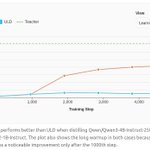
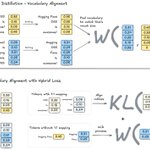
The recent @thinkymachines post was a great reminder of how effective on-policy distillation is for LLMs. But it highlighted a major practical constraint, one that has limited its use: the teacher and student models must share the same tokenizer.

We also benchmarked GOLD against GRPO. Even in this difficult cross-tokenizer scenario, GOLD still outperformed GRPO by 20%

This opens up more flexible and powerful student-teacher pairings. You can now pick the best teacher and best student for the job, without worrying if their tokenizers match. You can read the full technical write-up and find the open-source code here: huggingface.co/spaces/Huggin…
Edward Beeching retweeted

SmolLM3 full training and evaluation code is now live, along with 100+ intermediate checkpoints:
✓ Pretraining scripts (nanotron)
✓ Post-training code SFT + APO (TRL/alignment-handbook)
✓ Evaluation scripts to reproduce all reported metrics
github.com/huggingface/smoll…
All Apache 2.0

Edward Beeching retweeted

It is cool to be capable. It is cool to know shit.
That's why the HF team is open-sourcing not just the model, but the training code and datasets too.
Learn. Build. Make it your own.
github.com/huggingface/smoll…
Edward Beeching retweeted

I'm super grateful for learning from @_lewtun and @edwardbeeching and for working @huggingface where we can share the details of our work with the community. The blogpost is ready and we'll link there all our artifacts (code, datasets, and recipes)! huggingface.co/blog/smollm3 (2/2)

I had the opportunity to spend the last month building an open-source, state of the art, dual-mode reasoning model at the 3B scale. Building on the amazing work of @huggingface's Pretraining team.
It was tough but we managed to get on the Pareto front with the Qwen3 models. 🧵

Edward Beeching retweeted

I just noticed that we have a survey of Vision Language Models every year.
2023: huggingface.co/blog/vision_l… (@RisingSayak and @alaradirik)
2024: huggingface.co/blog/vlms (@mervenoyann and @edwardbeeching)
2025: huggingface.co/blog/vlms-202… (launched today)
This is a nice time to read through all of them and figure out what worked and what did not. It also helps us shape our thoughts on VLMs and the trends that came into existance.
I am pretty sure I would read them all in that order to discover something really interesting! (Weekend sorted)