

8-figure/year home & garden merchant
Joined April 2020
- Tweets401
- Following124
- Followers1.1K
- Likes844




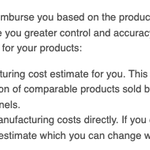

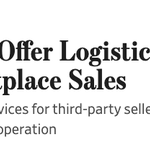
We just had @amazon suppress our products because our prices didn’t match the prices of similar products from other brands being sold on other websites.
@amznsellerhelp


Creator of Prop 13:
How can we incentivize the retirees in the 6-bedroom house in the best school district to stay forever?

Amazons new DD+7 policy just screwed all Amazon sellers and they are setting up to screw their sellers even more.
For the last 10 years they have paid us the equivalent of Net 7.
They just announced they are moving us to Net 16. (DD+7)
Guarantee we will be at Net 30 by EOY (DD+21) and Net 60 by end of next year.
DD+7 Explained:
Before DD+7: Sale → funds immediately available → wait for biweekly payout. Average sale-to-disbursement: ~7 days.
After DD+7: Sale → ~2 days delivery → 7-day hold → funds available → wait for biweekly payout. Average sale-to-disbursement: ~16 days.
Jack retweeted

Yo @amznsellerhelp can someone explain to me how this helps my cash flow? lmao. Huge b**ch move by you guys...so obviously I expected it. Seems this is applying to random accounts and no announcement on your news page yet. Amazon been f**king sellers hard the last...


Jack retweeted

Anthropic just took a big swipe at OpenAI's decision to put ads in ChatGPT. Anthropic is airing ads mocking ChatGPT ads during the Super Bowl, and they're hilarious 😅 Anthropic is also committing to no ads in Claude theverge.com/ai-artificial-i…
I'd keep Claude over the best person on my team.
Not because my team is bad (theyre great). But because Claude is unbelievable.
This tweet is making me rethink our Shopify offer strategy.
We have 15 different flavors of the same type of product.
They have wildly different COGS ($1-$5). This means different price points ($10-$25).
Customers love to mix and match.
A clean % off ladder offer seems simpler. For example, buy 4 get 25% off.
Reading this tweet, it makes me think we should do something like Buy 3, Get 1 Free or something else more creative.
@mattepstein @zachmstuck @DTCMidas What would you guys do in this situation?




Jack retweeted
FedEx and UPS price increases by year:
2006: FedEx 4.9% UPS 4.9%
2007: FedEx 4.9% UPS 4.9%
2008: FedEx 4.9% UPS 4.9%
2009: FedEx 4.9% UPS 4.9%
2010: FedEx 4.9% UPS 4.9%
2011: FedEx 4.9% UPS 4.9%
2012: FedEx 4.9% UPS 4.9%
2013: FedEx 4.9% UPS 4.9%
2014: FedEx 4.9% UPS 4.9%
2015: FedEx 4.9% UPS 4.9%
2016: FedEx 4.9% UPS 4.9%
2017: FedEx 4.9% UPS 4.9%
2018: FedEx 4.9% UPS 4.9%
2019: FedEx 4.9% UPS 4.9%
2020: FedEx 4.9% UPS 4.9%
2021: FedEx 4.9% UPS 4.9%
2022: FedEx 5.9% UPS 5.9%
2023: FedEx 6.9% UPS 6.9%
2024: FedEx 5.9% UPS 5.9%
2025: FedEx 5.9% UPS 5.9%
Have you wondered why Apples "AI" is so bad?
I read Apple in China by Patrick McGee and he explains it on one of the last pages of the book.
The reason is fascinating.
If Apple puts a truly open AI on the iPhone, it can’t easily control what that AI says.
If the AI mentions topics like Tiananmen Square, China could (and likely would) halt iPhone production overnight.
Apple faces a choice:
1. Keep iPhone production in China and rely on third-party AIs like ChatGPT (which the Chinese gov can easily ban in China without hurting Apple)
2. Move manufacturing to another country and build/use their own AI.
If AI is the future, Apple is going to be left behind if they stay the course.
Heartbreaking e-commerce realization this morning.
We started launching products on Amazon in 2016.
Here’s what % of July 2025 profit came from products launched in each year:
2016: 0%
2017: 0%
2018: 1%
2019: 2%
2020: 12%
2021: 11%
2022: 0% (we paused launches due to losses)
2023 7%
2024: 50%
2025: 16%
Key point: the surge in 2024–25 isn’t because we suddenly launched more products. In fact, we launched the most products back in 2020–21.
The truth is: Amazon is a never ending treadmill. Keep launching or you are 3-4 years away from dying.
What turning around a dying $10M/year Amazon brand really looks like:
In 2022, we started bleeding money — badly.
24 months straight of losses. (This was a dark period in my life)
June 2025: We finally hit our target profit margin again.
No masterstroke saved us, just an incredibly painful rebuild: SKU by SKU, decision by decision. Sorry if that's not what you want to hear.
What actually worked:
Killed underperforming SKUs
- We have a file that factors in every cost — including phantom stuff like total storage fees across Amazon, 3PL, everywhere. Most people ignore this and wonder why their margins are bad. Seeing the full picture made it easier to take a big write-off when we had to.
Hired an internal ads guy
- He owns ads, coupons, promos — and does it well. It freed us up to actually run the business instead of staring at campaigns all day.
High standards for sourcing
- Underwriting needs to show 30%+ gross margin.
- We buy every competitor. Ours has to be clearly better.
- Doesn’t rank in 90 days? Kill it.
- Doesn’t make $10K/month profit? Kill it.
Don't Run Out of Cash
- Cash stressed me out more than the income statement ever did.
- We had a few close calls, but my business partner was smart enough to lock in a big SBA loan when money was cheap — and it carried us through.
Where We’re Headed:
- We’ve built a cash buffer back up and can finally restart distributions — 4+ years later.
- No desire to scale 200% a year. If we can grow 20% and maintain our margins, we are happy.
Tariff Stuff:
Already moved a ton of manufacturing out of China. Anything we could move to the U.S., we did. We’ve got backup suppliers lined up. Our retail prices will go up as our costs go up, there is no other way.
My Takeaway:
There’s no silver bullet when your business is getting crushed. You just fix 100 things, one by one. SKU by SKU. Line by line on the P&L. Eventually, it starts working again.


@jeffbezos famously said “Your Margin is My Opportunity”.
He meant it, and he seized it.
We have done ~$45 million in sales over the past 4 years on Amazon. We are about to drop below the $0 in earnings threshold for 4 years of work.
In that time, we have paid Amazon $24,000,000.
On this journey, I have made countless mistakes and take responsibility for that.
The biggest mistake was ordering too much inventory based on pandemic demand.
I thought demand would continue, it didn’t.
It crushed us in warehousing costs, interest expense and the surge in container prices massacred our COGS.
That is on me, expensive lesson.
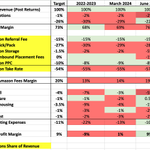
However, during the past two years, Amazons take rate on our sales went from 46% to 55%. Without that delta we would still be a (barely) profitable company. With that delta we are now a wildly unprofitable company.
We are very lucky to have done really well for years and could absorb the losses. We are like a boxer who has taken a few right hooks to the face; wobbly kneed but still standing.
I have no idea how new Amazon companies are surviving without the backstop of past earnings.
As our Amazon advertising expense grows to over 11% we approach a 60% take rate from Amazon. At 30% COGS, that leaves 10% for everything else.
- Warehousing
- Payroll
- Debt expense
- Software
- Any mistakes
We have adjusted quickly:
- We cut our catalog by 75%
- We laid off the majority of the team
- We paid off as many loans as possible
- Renegotiated all software contracts
- Negotiated all unit costs down
We will see if this is enough to survive.
What happens next?
The trajectory for the next three years seems pretty clear to me: Amazons march towards closing the gap between them and Chinese factories will continue.
Amazon's strategy appears to be streamlining the supply chain to a point where it's just Chinese factory -> Amazon -> end consumer – with no room for anyone else in between.
American designers and companies cannot survive at 10% margins, they will self select out.
New product designs will come from people that grew up in Fuzhou not Chicago. Quality standards will degrade.
Remarkably, 44% of Amazon's sales are now driven by new brands. This isn't just a statistic; it's a strategy. Amazon continues to attract new factories, using its audience size as the trap.
Each year, these new brands rise, fueled by thoughts of large revenues, only to find themselves caught in a cycle of hope, despair, and eventual replacement.
Financially, the breakdown becomes more apparent: 70% of your Amazon spend will funnel directly to Amazon, while 30% will flow overseas to China.
Years will go by and those %s will continue to shift in Amazons favor.
Was this inevitable?
Is this what @jeffbezos meant from his quote?
Follow & bookmark to see Part 2

