

Trading volume and liquidity concepts. I make indicators for #thinkorswim + do free videos @ https://xitter.cf/t.co/3qxsABUmDy | https://xitter.cf/t.co/iS52Nf0oM2
Sheridan, WY
Joined September 2016
- Tweets1.8K
- Following161
- Followers1.8K
- Likes56.4K




𝕁𝕠𝕤𝕚𝕒𝕙 🇺🇸 retweeted

All over the country, kids just watched the Roadster fly and decided their own crazy ideas might be possible too.
Thanks, @elonmusk.

𝕁𝕠𝕤𝕚𝕒𝕙 🇺🇸 retweeted

if “chances are slim” and “fat chance” both mean the odds are stacked against you, what is the ideal BMI of fate


𝕁𝕠𝕤𝕚𝕒𝕙 🇺🇸 retweeted

I heard a statement from an older woman recently,
“We worked so hard to give our kids what we didn’t have growing up that we neglected to give them what we did have.”


𝕁𝕠𝕤𝕚𝕒𝕙 🇺🇸 retweeted

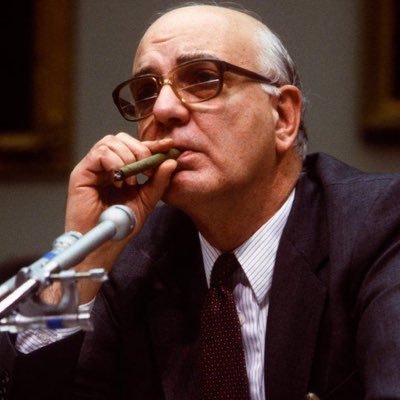
*BESSENT THREATENS TO GIVE IRAN FREE SUBSCRIPTION TO JIM CRAMER INVESTING CLUB AS ECONOMIC WAR ESCALATES - NY POST.



𝕁𝕠𝕤𝕚𝕒𝕙 🇺🇸 retweeted

Unpopular opinion, but the most charitable thing Mackenzie Scott could have done for humanity is let Jeff Bezos invest that money
𝕁𝕠𝕤𝕚𝕒𝕙 🇺🇸 retweeted

Imagine telling someone in 1999…
The year is 2026.
The President is Donald Trump in his second non consecutive term.
The richest man in the world is PayPal cofounder Elon Musk… but not because of fintech or Paypal. Because of rockets, electric cars, AI, satellites, brain chips and something called “Boring Company”.
Apple is worth trillions but its main business isn’t computers… its selling glass rectangles everyone stares at for 9 hours a day.
People don’t watch TV. They watch teenagers explain geopolitics, finance, and relationship advice in ~60 second videos.
The biggest taxi company owns no taxis.
The biggest hotel company owns no hotels.
The most powerful media companies are social networks where everyone argues with strangers for free.
Kids are making millions filming themselves playing video games.
AI Robots write emails, code, legal memos, songs, essays, and breakup texts.
The internet is mostly bots arguing with humans who are trying to prove they aren’t bots.
You can summon a car, groceries, a doctor, a date, a private jet, or a dog walker from your phone.
People pay real money for invisible currencies, digital monkeys, AI girlfriends and pictures that disappear after 24 hours.
The richest companies in the world don’t sell oil, steel, or cars. They sell attention, compute, data, and addiction.
And somehow, after all of that everyone is still using Excel.
𝕁𝕠𝕤𝕚𝕒𝕙 🇺🇸 retweeted

Believing that "people wouldn't do crimes if their basic needs were met" while also believing that "greedy rich people are stealing from everyone" never registers to the people who say this shit as inherently contradictory.
𝕁𝕠𝕤𝕚𝕒𝕙 🇺🇸 retweeted

Over 4000 workers just became millionaires by owning the means of production and the socialists are pissed

𝕁𝕠𝕤𝕚𝕒𝕙 🇺🇸 retweeted

An old man is selling watermelons by the side of the road.
His sign reads:
1 for $3
3 for $10
A young man stops and buys one watermelon.
“That’ll be $3,” says the old man.
The young man then buys a second watermelon. And then a third.
After paying another $3 each time, the young man picks up his watermelons and starts to walk away.
Then he turns back, grinning proudly.
“Hey old man,” he says, “you realize I just bought three watermelons for $9 instead of $10? Maybe business isn’t your thing.”
The old man smiles and shakes his head.
“Funny… every time somebody comes by, they buy three watermelons instead of one… and then try to teach me business.”
𝕁𝕠𝕤𝕚𝕒𝕙 🇺🇸 retweeted

In a hyperinflationary environment, the single most important financial decision you can make, and the one almost nobody who lives through one is psychologically prepared to make, is to maximize fixed-rate, long-duration debt against productive assets, because the entire mechanism of hyperinflation is a wealth transfer from creditors to debtors, and the only question that matters, in the moment it begins, is which side of that transfer you have positioned yourself on.
The math is brutal in its simplicity. If you owe a bank $400,000 at a 30-year fixed rate of 6%, and the currency loses 90% of its purchasing power over five years, you are, in real terms, paying back the bank in lottery tickets. The house you bought with that loan retains its real value, because it is a physical asset that the inflation cannot touch. The bank, which lent you future dollars and is now receiving past dollars, takes the loss. You take the gain. The transfer happens silently, invisibly, on the loan amortization schedule, every single month, while the people around you who saved in cash, held bonds, or refused on principle to take on debt watch their lifetime savings evaporate in real time.
The Weimar industrialists who emerged from 1923 with their fortunes intact, and in many cases multiplied, were not the ones who hoarded gold or moved their assets to Switzerland. They were the ones who borrowed aggressively, in the local currency, at fixed rates, against factories and farms and apartment buildings, and let the inflation pay off the debt while they collected rents and revenues that repriced upward with the currency. The same pattern played out in Hungary in 1946, in Argentina in the 1980s, in Zimbabwe in 2008, and in every other major inflation event of the modern era. The borrowers won. The savers lost. The people in the middle, who tried to be cautious and hold cash and wait for clarity, were the ones whose lives were quietly destroyed.
The reason almost nobody acts on this knowledge in advance is that the human brain treats debt as danger, and treats saving as safety, and these instincts are correct in stable monetary environments and exactly inverted in unstable ones. The middle class, which has been trained for generations to fear debt, is structurally the worst-positioned group when the currency starts to fail. The wealthy, who use leverage as a tool, and who hold the productive assets that the leverage was used to acquire, are structurally the best-positioned. The asymmetry is not an accident. It is the entire mechanism by which monetary debasement transfers wealth from one class to another, every time it has happened, in every country it has happened in, for as long as currencies have existed.
You do not need to predict the timing. You need to structure your balance sheet, in the years before the event, in a way that benefits if it arrives. Fixed rate, long duration, productive assets. The trade has worked for 400 years. It will work for the next 400. Almost nobody will run it, because almost nobody is willing to be the person who took on debt while everyone they know was paying theirs down, which is, as it has always been, the entire reason the people who do run it end up owning everything on the other side.
𝕁𝕠𝕤𝕚𝕒𝕙 🇺🇸 retweeted

Unpopular opinion: there shouldn’t be tax rates, there should be tax amounts.
If you split only federal spending evenly, it’s about $27,000 per adult per year, with roughly $3,700 of that just paying interest on past spending.
That’s the actual price tag.
The reason it’s hidden behind rates and brackets is simple: amounts create accountability. If every adult saw a bill for $27K, the question wouldn’t be “who should pay more,” it would be “why does this cost this much, and what am I actually getting for it?”
Right now the system blurs that. Costs are diffused, benefits are emphasized, and the bill is partially pushed into the future.
Amounts would force a different conversation.
Not about redistribution, but about value.
And that’s the part the current framing avoids.
