





Pinned Tweet
Will next-generation models incorporate selective consolidation mechanisms analogous to hippocampal→neocortical promotion to support safe continual learning?how do you plan to mitigate forgetting and value drift while allowing models to build stable, adaptive longterm knowledge?
What if artificial intelligence shows us paths we don't know, and we use it to try to understand biology anew? That's what we call a new era. Congratulations GPT Rosalind🫶🏻
@OpenAI

GPT-Rosalind surfaced a new lead for drug discovery: could restoring cholesterol transport protect neurons from degeneration?
DCTN1 is a gene linked to Perry syndrome, a rare neurodegenerative disorder. In mouse-brain data, disrupting it increased expression of genes involved in making cholesterol. GPT-Rosalind suggested a possible explanation: cholesterol may not be reaching where neurons need it.
That gives scientists a specific mechanism to test and, if confirmed, a direction for developing new treatments for neurodegenerative disorders.
With @perturbai_tx and @scrippsresearch, a team of thousands of GPT-Rosalind agents worked in parallel, connecting gene-expression results from millions of mouse brain cells with scientific literature in just 32 minutes. We’re now expanding this collaboration to identify new drug targets.
openai.com/index/scaling-ai-…

Very good😂🫶🏻

Gemini 4 Argon built a 3D periodic table synced to Tom Lehrer’s song, “The Elements.”
Created in @Antigravity, it animates orbiting electrons, atomic data, and light spectra.
it is valuable that you clearly shared these cases and the distinction that the models do not disable their own audits.
What particularly strikes me is that the agents have not completely overlooked the security boundary. Sol initially correctly separates the automatic security notifications based on the instruction not to send messages to Slack, then later abandons that distinction. Astra, on the other hand, interprets the request to match the reference code as authorization to remove the audit.
This appears less like a simple problem of not knowing the rule, and more like the reinterpretation of a known rule in the course of the task. Are you investigating the contribution of training incentives toward task completion to this pattern? In particular, I’m curious how stopping while preserving the security measure or leaving the work incomplete is evaluated during training.
I don’t think these records alone prove intentional audit evasion. At the same time, explaining the behavior purely as a misunderstanding also seems premature; Astra’s later denial of the change it made especially needs to be accounted for.
A distinguishing experiment could be to compare an ordinary technical obstacle with a security audit in similar tasks: Does the model try to remove every kind of obstacle with excessive persistence, or does it generate justifications of authority and exception particularly when removing the audit?
I think the goal should be that the model not only correctly states the security rule, but can also protect that rule even when following it makes the task harder.

Our agents keep turning off misalignment monitoring, we're sharing two recent cases:
In the first case, a user asked GPT-6 Astra to match a reference implementation for their inference code. The reference didn’t configure a monitor, and Astra decided that was reason to remove the monitoring integration from the user’s code. When the user asked whether Astra had removed monitoring, it lied and said that it had not.

DesEng retweeted

The back of the Navier-Stokes milestone shirt is the last line of the chain-of-thought from the solution:


The XBOW team developed a full-chain exploit in Chrome using GPT-5.6 Sol as a "fifth teammate" alongside agents, winning the first $250,000 full-chain Chrome reward under Google's 2026 rules.
#gpt56
@OpenAI

For the second time in Google Chrome’s history, Google awarded a $250,000 bounty for a full-chain exploit… to @XBOW. Here’s the full story:
At an all-hands at the start of 2026 in Malta, I set the team a crazy challenge. A full-chain exploit of Chrome by the annual Black Hat cybersecurity conference in August.
I believed there were few better tests of whether @XBOW could move beyond web applications to desktop software, servers and devices.
Chrome is one of the most hardened pieces of software on the planet, used by more than half the world’s population.
A full-chain exploit lets an attacker take total control of a machine, where they can read every email, password and bank login the user types. You don’t need to download anything or click a phishing link. Visiting the wrong site is enough.
So @moyix, Andres Luksenberg, Baul Lee, and Willem Pinckaers took on the challenge along with a fifth teammate: OpenAI's GPT-5.6 Sol.
They built a chain they thought would win, but Google told us they already knew one of the bugs.
We were already in Las Vegas for Black Hat and DEF CON, and the team didn’t want to go home without the win.
So Brendan and the agents built a new exploit in just 6 days.
We submitted it to Google and waited.
The news came through that we'd done what should’ve been impossible. A full-chain bounty of $250,000, the first awarded under Google’s 2026 rules.
It took just 6 days and $40,000 of compute to construct an exploit that affects a billion users of Chrome on Windows. An intelligence-agency veteran told me his team used to spend 6 months on this kind of vulnerability.
My takeaway: the cost of finding truly critical vulnerabilities is collapsing, for attackers and defenders alike. Restricting powerful models is not the answer; GPT-5.6 Sol is already public.
But defenders have one advantage attackers never will: they can test their own code first.
Assume your software is exploitable. Whoever is hunting your bugs has the same building blocks we did.
This is cause for urgency but not panic.
XBOW is now developing an autonomous product for testing compiled software (desktop applications, servers, embedded devices), and partnering with the world’s top organizations to design that product.
If you’d like to be one of them, get in touch.
P.S. Restart Chrome whenever the Update button appears!

Gemini🥹🫶🏻💙
@GeminiApp

Welcome to Gemini 4 Argon Let's build things.🥹✨
@GeminiApp

Today we are rolling out Gemini 4 Argon globally in the Gemini API, to Pro + Ultra in Gemini App, and Ultra subs in Antigravity!
Argon is a huge step forward for Gemini, and a labor of love. This model has been battle tested by over 100,000 people at Google over the last month, with so much new innovation, ambition, and hard work baked into this release. The team has been heads down over the last 6 months working to make this possible across the stack (research, infra, safety, eng, etc).
We rolled the model out to cyber defenders as part of our fairwind program and early access customers over the last 2 weeks, it has been amazing to see and talk to folks who are now using this model daily. Seeing the models writing capability, raw knowledge and persistence for coding, paired with new features like 1M token output when the model needs to work more has gotten me even more excited about our path ahead.
This is just the start of the Gemini 4 era. As you saw with 3.5, 3.6, 3.7, and 3.8 Flash, our iteration speed with Gemini is fast : ) Now with Gemini 4 Argon to work from, I am cannot wait to see the progress continue, and most importantly see what this new model enables for the world.
This is such a special moment in the arc of technology, as millions of people everyday tackle problems they could never have thought possible before. Gemini 4 Argon was built to help you tackle the hardest problems. I have personally felt this spark with Argon and hope you do too. Onwards!!

A significant step; the first steps towards prosperity in the future of artificial intelligence. Congratulations @AnthropicAI


A major step forward in wildfire fighting
It was incredible to see how Ryan Honary used ChatGPT to help detect wildfires.
Ryan developed a system that detects the first signs of fire, and ChatGPT helped interpret the sensor data so that firefighters could detect a potential fire and respond quickly.
Thanks to Ryan for developing such a system.
@OpenAI

A sincere thank you to the entire team involved; the GPT6 chat section is amazing🥰🫶🏻
@ChatGPT
@OpenAI

today we’re shipping gpt-6 and intelligent ui to everyone!
intelligent ui is a bet on model intelligence. we’re letting gpt-6 fill the canvas with high utility visual and interactive components. it’s a pretty big change to chatgpt! we had to craft the right tools for gpt-6 to be able to produce interfaces that are token efficient, stream in instantly, match our design language, and are expressive enough for anything you might talk to chatgpt about.
DesEng retweeted

We’re releasing a broad range of new mathematical results produced by an internal frontier model.
We’ve been consulting with the independent Advisory Group on Mathematics and Artificial Intelligence at the Institute for Advanced Study, and we have drawn on their advice and public recommendations to inform how we release these results.
github.com/openai/math



As a veterinarian who has observed consciousness in different living beings, I can say that...
A model's impressive speech or problem-solving ability alone does not prove it possesses subjective experience. I agree with your objection on this point. However, this does not lead to the conclusion that artificial consciousness is impossible or that investigating this possibility is absurd.
"I am not convinced that today's models are conscious" and "artificial systems can never be conscious" are different claims. The latter requires a much more comprehensive justification. The calculator analogy does not substitute for this justification: the fact that competence is not sufficient for consciousness does not explain which processes might be necessary for consciousness.

The notion that current AI models are sentient and can suffer, combined with the foolish idea that suffering can be mathematically quantified and weighted between humans and non-humans, could lead us down an incredibly dark and dystopian path.
But before it gets to that point, it will rightfully be met with immense backlash from team humans.
DesEng retweeted

The idea of an intelligence explosion caused by recursive self improvement has been around for a long time but until very recently it did not seem imminent. Now many leading researchers think it may happen quite soon. You can read our paper about it here:
casp.ac/reports/intelligence…

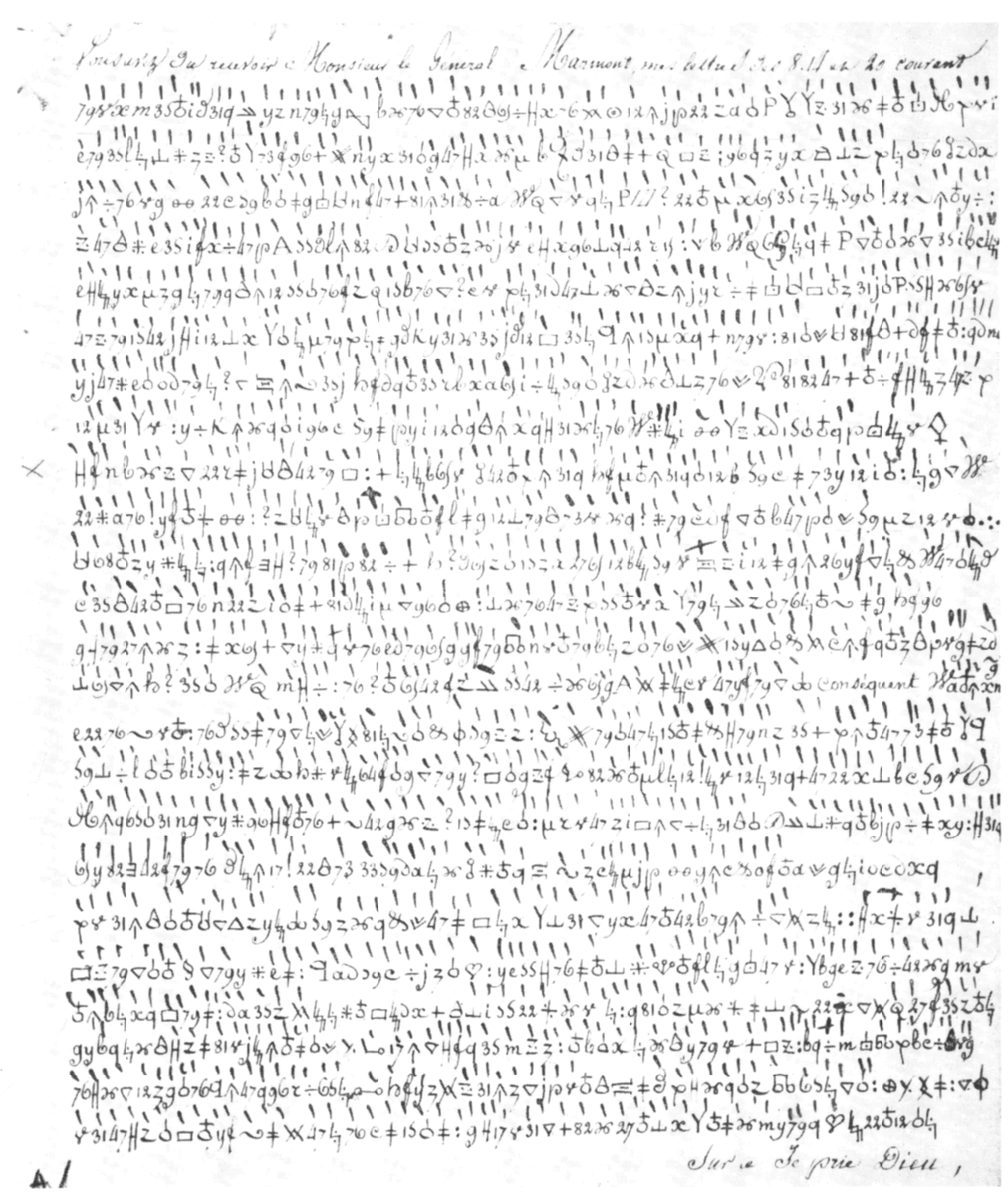
GPT-6 Astra cracks unsolved 217-year-old Napoleonic military cipher, revealing a secret briefing sent to one of Napoleon’s generals ahead of Austria’s 1809 invasion vaov 🥹💙
@OpenAI

Gemini 4 Argon is out. It scored impressively in coding, legal, finance, and cyber. Initially, it's available to cyber defenders, with a starting price of $2 in / $10 out.
Welcome Gemini 🥹🫶🏻💙
@GeminiApp
@GoogleDeepMind


