

Spine surgeon. Investor. Operator. Helping physicians build a business, not just a career. Co-founder, Physicians Capital Fund. 🪜
Park City UT
Joined June 2008
- Tweets359
- Following128
- Followers206
- Likes708




Pinned Tweet
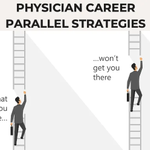
Six months into my first job out of fellowship, I could see the next 30 years of my career.
And that was the problem.
I wrote about what I did next. 🪜

1
3
55
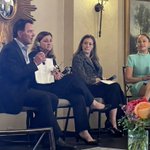
Women's Healthcare Nexus 2026.💥
Yesterday, I participated in the second annual WHN in Bethesda, Maryland.
The event was an intersection of women's health leaders, regulatory policymakers, founders, and investors, all aiming to improve access to affordable and tailored healthcare for the largest underserved population in America: Women
I interviewed extraordinary experts on my Diagnostics panel, including Dr. Paula Muto, Lisa Subrize, and Kalah Auchincloss. What a fantastic event!
Thank you, Dr. Vipul Kella !
🤖 Made with AI


38
Seems like he may have sustained a Central Cord injury....

STATEMENT FROM JACK CAMPBELL
My family and I want to sincerely thank everyone for the overwhelming amount of love, prayers, and support we’ve received over the past few days. It means more to us than words can express.
I’m incredibly encouraged by the progress I’ve made in such a short period of time. I have full movement in my lower body, and I’m continuing to make progress with movement in my upper body. I know there’s still work ahead, but I remain very optimistic. I’m taking things one day at a time, staying positive, and focusing on getting better.
My faith in God has never been stronger. I know He has a plan for me, and I trust in that plan. I know there may be challenges ahead, but with my faith, my family, and so many people in my corner, I know we’ll get through this.
I especially want to thank the athletic trainers and medical personnel who responded and cared for me on the field. I know those were difficult moments, and I’m incredibly grateful for the professionalism, compassion, and care you showed me. The way you handled everything and looked after me when I needed it most is something I’ll never forget. From the bottom of my heart, thank you.
I also can’t say enough about the incredible care I’ve received from the medical team at Henry Ford Hospital and the Detroit Lions medical staff. They’ve been amazing to me and my family throughout this process, and I’m truly grateful for everything they’ve done.
To my teammates, coaches, and everyone in the Lions organization, I want you to know how much I love and appreciate you. This team is a family to me, and the way everyone has been there for me means everything. I’m proud to be a Detroit Lion and couldn’t ask to be surrounded by a better group of people.
One thing I’ve learned about Detroit is that this city is built on toughness, resilience, and grit. That’s exactly how I’m going to approach this challenge.
Please continue to keep me and my family in your prayers. We feel the love, and I can’t thank everyone enough.
God is good. My faith is strong.
Jack Campbell
39
And those thrust into a single-payer system experience worse access, longer delays, and lower-quality outcomes than before. Our system's not perfect, buts single-payer, per Scott's comments, is not a panacea. Eyes open people!

One of the greatest fallacies being sold during election season is that Medicare for all translates into health equity. I am not particularly for or against it. God knows our multiple payor system is causing tremendous challenges. What I do know from watching other countries with a national payor system is that the wealthiest 10 to 20 percent in those countries and the politically connected go around the single payor system to get the healthcare they want. I’m not against a single payor this or that. Let’s just not pretend that it solves health care equity.
1
23
Spot on target! 🎯

Marc Andreessen reveals why housing, health care, and education keep getting more expensive while everything else gets cheaper
"There's basically three components to the American dream. A house near great job opportunities, great health care for you and your family, and sending your kids to good schools"
"If you disaggregate the economy over the last 25 years, everything that technology touches basically collapses in price. Television sets, computer games, anything with electronics in it. But if you chart housing, education, and health care, the prices of those things are skyrocketing"
"The government restricts supply, zoning laws and university certifications. And then the government responds to the political pressure caused by the rising prices by subsidizing demand. And of course, if you subsidize demand and a fixed supply, you get skyrocketing prices"
19
The data keeps piling up..."non-profits" are almost always the most profitable!??

New study in @JAMAHealthForum: Profitability of Nonprofit and For-Profit Ambulatory Surgery Centers
jamanetwork.com/journals/jam…
h/t Elizabeth Plummer & Kahler Doyle
@JHUCarey @JohnsHopkinsSPH @NeeleySchoolTCU

3
51
⚕️CMS 2027 Rules Proposal. Take a listen if you are interested as a physician, founder, or investor. PhyCap on Substack substack.com/@phycap?r=3k7pn…
1
62
This is called a Domestic Captive Network. Spoiler alert: doctors, we provide the care....we can (and will) build these !

Once they realize how much they can save on these Carve Outs, they can go to their employees and tell them if they use these new hospitals or centers , the company saves so much money, there will be no out of pocket cost to the employee.
See where I’m going with this ?
The path to universal HC starts when big companies , who in aggregate cover more than 60 pct of insured employees, start getting smart about eliminating the middlemen, by first using Carve Outs and then expanding them to all elements of care. Then, hiring claim administrators that are not affiliated with the big conglomerates, and only paying a fee per claim, they can offer to cover all care, with no patient OOP.
If 60 pct of insured employees are moved from the big conglomerates to direct contracts , the cost of care would go down, because those companies are actually directly negotiating and working with providers.
The revenues of those providers will go up , because the middlemen are out
And of course employees will spend less on care.
Effectively smart companies can offer Universal Health Benefits with no out of pocket beyond basic copays for all their employees.
If companies can negotiate and offer Universal Care , so could a city , or state and then potentially the federal government, using the corporate template and approach
1
1
66

Healthcare innovation isn't just about technology — it's about vision and courage.
Honored to join @grantzarzour , @DutchRojas and the incredible @BKRBusinessMin Scott Becker on stage yesterday.
Vision. Persistence. Leadership. These are the real foundations of entrepreneurial success.
Disruption in service of physicians and their patients — that's the only kind worth building.
→ @MedMergeco
→ PhyCap Fund
→ Sperity Health
The future isn't coming. It's already here. 🔥


Time is running out... Join us!

Physicians have been kept at the margins of venture investing. PhyCap was built to change that.
We're hosting our last session before our June 1 final close.
📅 Thursday, May 21 | 2:00 PM ET
🔗 luma.com/fe60nbal?utm_source…
@DutchRojas @drslo

1
72
Take a peek at SF area home prices over past 6 months....just a small preview of the tsunami of wealth soon to be unleashed by theses IPOs. It won't all be parked in real eatate...
Five percent of US market capitalization is about to enter public markets through three IPOs.
Paul Tudor Jones laid out the structural read on Invest Like the Best. The contemplated IPOs over the next year represent 5-6% of US market cap. Normal IPO issuance runs 0.5 to 1% in active years. The 2026 pipeline runs ten times that ratio.
The mechanism is direct. Buyback capacity has supported equity prices for a decade. The mega-IPO pipeline reverses it. The funding for SpaceX, OpenAI, and Anthropic is already being pulled out of existing technology stocks. Magnificent Seven weakness year to date is the rotation, not a coincidence of earnings cycles.
Standard 180-day lockups place the insider supply wave in Q1 through Q3 of 2027. The 2000 parallel is exact. Supply hit demand at the same moment fundamental concerns began to bite.
For physician allocators, healthcare sits structurally outside this pipeline. That creates the asymmetry worth positioning for.

52
Physician is the word....

No wonder he doesn’t understand healthcare!
Abdul El-Sayed told a podcast in 2022 that during his only clinical rotation, his job was “to be the, like, worst doctor on the team” and that he was “cosplaying a doctor.”
That four-week sub-internship at the end of medical school is the entirety of his time at a patient bedside.
He is now running for U.S. Senate in Michigan calling himself a physician.
El-Sayed earned an MD from Columbia in 2014, after two years at the University of Michigan Medical School and a Rhodes Scholarship at Oxford where he completed a DPhil in public health. The academic ladder is real.
Two doctorates. “Dr.” is accurate.
He never entered residency.
He has never held a medical license in Michigan, New York, or any other state.
He has never independently treated a patient.
In March 2026, El-Sayed told a group of Teamsters nurses he had “been in enough codes to watch who really does the work.” On a podcast that same month: “I’ve been a doctor my whole career.”
His campaign objects to the Politico report that surfaced these statements.
The spokesperson’s response was that “he has earned the right to be called ‘doctor’ twice over.”
That is true, and it is beside the point. The contested word is physician.
In American medicine, the MD is the beginning. Residency is the apprenticeship, three to seven years long.
State licensure follows residency. Independent practice follows licensure.
The structure exists because patients pay the price when it is skipped.
Every physician in this country surrendered most of their twenties to those steps.
Eighty-hour weeks.
Overnight call. Boards. Maintenance of certification. Malpractice exposure that follows them for the rest of their careers.
Physician is not a credential of the classroom.
It is a credential of the bedside, the licensing board, and the legal accountability of both.
To borrow it without paying for it is to take something from every doctor who did.
El-Sayed knows the difference.
He named it himself.
Excellent reporting @adamwren
politico.com/news/2026/05/12…

Already the preemptive shock waves rippling through the SF area...rent and property values are the early indicators...
This quoted post is unavailable.
73
We have a lot to talk about!! Join us Wednesday to learn how we harness MDs and healthcare pros insights to make smart investments. #vc
Tomorrow: Patterns from 500 Healthtech Deals
Join @drslo and Tracy Poole as they walk through the signals that build conviction quickly and why some of the strongest looking companies fall apart during diligence.
📅 April 29 | 7:00 PM ET
🔗 luma.com/bamfhwie?utm_source…
@DutchRojas

44
Clinical decision support tools(AI-driven) are growing and will be an important solution helping doctors and frontline health care professionals address the caregiver shortage. VC investments in these is complex.... and requires extraordinary clinical insight. @PhysiciansCap
AI clinical decision support: 70% observed venture failure rate. The segment with the heaviest generalist-VC concentration is the segment with the worst return distribution. Workflow blindness has a price, and the return books show it.
@PhysiciansCap
@drslo
1
55
Unbelievable...

WOW 🚨 Delta Dental is considered a nonprofit but the CEO skyrocketed her pay from $4.5 million per year all the way to $48 million over 4 years
That’s $1 million dollars per month pay for one employee as a nonprofit
“Delta Dental is considered a non-profit, and as such you can be their taxes online. So I got curious in their 2014 filing, the IRS requests for the organization's top accomplishments.
Delta Dental reported that over 95% of claims electronic, online and paper were processed without any manual intervention. That means when your care is denied, there is less than 1 in 10 chance a human reviewed it
— That same year, Delta dished out up to a 30% pay cut on the care that doctors deliver, and for a decade, they did not raise what they pay for your dental care by a single penny.
Meanwhile, their CEO's salary skyrocketed. She went from 4.5 to $15 million a year. From 2014 to 2018, she made off with almost $48 million before leaving her position. That's a million dollars a month. Must be nice. And she's not even a clinician. She's a CPA.
You don't have to be an accountant to do the math. Dr. Pay cuts stagnant reimbursements. They were never about saving patients money on premiums.”
37
Healthcare delivery is a blackbox to most...not us. Seeing around corners in HC investing is a dynamic and nuanced process. Join us tomorrow!
Tomorrow: A Real Healthtech Deal Debate
Join @drslo, @DrVipulKella, and Tracy Poole as they debate a real (anonymized) healthtech deal live.
📅 April 7 | 7:00 PM ET
🔗 luma.com/9sva1xlu?utm_source…
@DutchRojas

1
29

@LSIUSA26. Speed dating for Healthcare start-ups, investors, strategics. Incredible energy and optimism for meaningful positive changes coming!! @PhysiciansCap #womenshealth #aihealthcare


25
This is accurate...the ACA turbo-charged $$$ to insurance companies (from you the taxpayer) ...the results were predictable and those of us who "predicted this future" were ignored (or worse) as fear-mongering....

The consolidation engine we aren’t talking about enough - site neutrality
The healthcare consolidation crisis did not begin with hospitals. It began with insurers.
When the Affordable Care Act reshaped the market after 2010, it accelerated insurer consolidation through exchanges, risk corridors, and quality reporting infrastructure that rewarded scale. Larger insurers gained negotiating leverage, tightened network contracting, and squeezed reimbursement margins across the board. Hospitals, facing that margin pressure and the new requirements for electronic health records, population health management, and value-based contracting, responded with the only logical move available to them: get bigger. Acquire other hospitals. Acquire physician practices. Build the scale necessary to sit across the table from a consolidated insurer.
Physicians were the last domino to fall, and they fell fast.
In January 2019, 62.2% of U.S. physicians were employed by hospitals or corporate entities. By January 2024, that number had reached 77.6% — a 15-point shift in five years. Over just the last two years of that period, the employed share grew by 5.1 percentage points, and critically, that recent acceleration is attributable to hospitals, not to corporate entities. Hospitals are still actively absorbing the remaining independent physician workforce. (Avalere analysis of IQVIA OneKey data)
That is not a trend. That is a structural transformation of the American medical profession, driven by a cascading consolidation logic that started with insurers, moved to hospital systems, and is now completing its circuit through the physician workforce.
The mechanism is straightforward. Congress built a payment architecture that rewards hospital acquisition of physician practices. Medicare pays a hospital outpatient department roughly 1.5 to 2.5 times what it pays an ambulatory surgery center and even more than an independent physician office for the exact same procedure, on the exact same patient, with the exact same clinical outcome. A Level 2 office visit in a freestanding physician office generates a professional fee. That same visit, conducted the day after a hospital acquires the practice and designates it a provider-based billing site, now generates both a professional fee and a facility fee — often $500 to $1,500 — with zero change in the care delivered.
That differential is not a clinical premium. It is a billing premium. And when hospitals were already under margin pressure from consolidated insurers, the ability to acquire a physician group and immediately convert its billing to HOPD rates became one of the most reliable capital allocation decisions in American healthcare. The acquisition frequently pays for itself within a year for surgical practices through facility fee conversion alone, not including capturing referrals and procedure volume.
MedPAC has documented this for over a decade. The GAO has confirmed it. What has been in dispute is whether Congress has the will to fix it, because the hospital lobby’s argument is always the same: hospitals cross-subsidize emergency care, graduate medical education, and indigent care, and equalizing the differential will destabilize that model. That argument deserves engagement. But it cannot permanently shield a payment structure that has, in five years, moved 15 points of the physician workforce out of independent practice.
The Cassidy-Hassan site-neutral framework is the most serious bipartisan attempt to correct this differential. This week I will walk through why it is necessary, why it is not sufficient on its own, and what a complete reform package actually requires.
Done wrong, site-neutral reform trades one consolidation crisis for another and the next wave of consolidators is already positioning.


1
48