

Cardiac Electrophysiologist @Sutterhealth - California Pacific Medical Center. Dad Joke Expert. Views are my own.
San Francisco, CA
Joined March 2009
- Tweets1.4K
- Following533
- Followers567
- Likes13.5K




Rajat Goyal retweeted

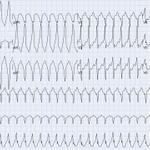
Type I, infrahisian second degree AV block.
One of the largest HV I have ever recorded
Case done with the portable EP recording system KardioSkater.

Rajat Goyal retweeted

It’s 2075. There is only one hospital in the entire country. It is 8 square miles in the middle of Kansas and owned by United Healthcare. Premiums are $47,000 per month. The only medications left are Ozempic and boner pills. Life expectancy is 38.
Government: “I can’t believe doctors did this to us.”
Rajat Goyal retweeted

"Adenosine-sensitivity (termination or transient slowing/suppression) in response to adenosine was 100% sensitive and specific for identifying focal AT mechanisms due to triggered activity or automaticity, respectively.
ahajournals.org/doi/10.1161/…



Rajat Goyal retweeted

High-Intensity Ultrasound Catheter Ablation: Transmural Ventricular Lesions Through Transducer-Tissue Contact Sensing
@B_Naz_MD @UWCardiology @UWMedHeart
heartrhythmjournal.com/artic…

Rajat Goyal retweeted

The appearance of kinesin, the motor protein that transports substances inside cells, is so cute.
Readers added context they thought people might want to know
This video is a computer-generated 3D animation of kinesin (based on structural data), not real footage or its actual microscopic appearance.
easternblot.net/2016/02/12/ima…
en.wikipedia.org/wiki/The_Inner…
artofthecell.com/well-you-can-t…

Rajat Goyal retweeted

One of the best measures of an informed doctor: they never shock w less than maximal energy.
Don’t let your friends use less than maximum energy

The largest randomized AF DCCV trial to date shows excellent safety and efficacy with either 200J RBW or 360J BTE shocks. @AndrewNguyen_DO @atwater_brett @ISHVnews ahajrnls.org/4bVOKj2

Rajat Goyal retweeted

My next startup idea: use AI to invest in startups.
Venture capitalists are currently pouring hundreds of billions of dollars into companies promising to replace doctors, lawyers, engineers and writers.
Oddly, no one seems particularly eager to replace venture capitalists. This feels like an oversight.
The proposed platform would use AI to source companies, interrogate founders, evaluate markets, benchmark valuations and construct diversified venture portfolios. Essentially, it would perform pattern recognition across thousands of opportunities—without requiring three partner meetings, a warm introduction or having attended Stanford with someone’s roommate.
ML based algorithms have demonstrably better performance compared to human VCs when looking at ROIC, survivability after 5 years and ARR.
The market opportunity is modest: TAM: 6 billion people. (That is approximately the number of people currently online worldwide. ) Under the admittedly generous assumption that fractional ownership, global distribution and compliant investment structures eventually remove geography, accreditation and minimum-check requirements, nearly every digitally connected adult becomes a potential venture investor.
Yes, some of those six billion people are children, have no discretionary capital or believe Bitcoin is a personality trait. This is called “top-down TAM analysis,” and venture capitalists have funded companies using considerably worse assumptions.
For discipline, we reduce that universe to a SAM of 1–5%:
1% penetration: 60 million investors
5% penetration: 300 million investors
At an average allocation of $1,000: $60–$300 billion in potential deployable capital
All subject, of course, to securities laws—which remain annoyingly sentient.
The underlying thesis is straightforward. Approximately 35% of VC-backed companies eventually reach an acquisition or IPO, while roughly 65% of venture investments return less than the capital invested. A very small percentage generates most of the industry’s returns.
In other words, venture investing is a low-frequency, high-variance prediction business dominated by incomplete information, cognitive bias and a tiny number of outliers. (Talk about finding a machine learning problem with excellent branding!)
The AI would not need to be perfect. It would merely need to outperform an industry whose current methodology consists largely of pattern recognition, social proof, herd behavior and explaining afterward why the company everyone funded was “obviously inevitable.”
The pitch practically writes itself:
Democratizing access to venture returns by replacing gatekeepers with an algorithm trained on the gatekeepers’ mistakes.
We are currently pre-revenue, pre-product and pre-regulatory approval.
So, naturally, we are raising at a $100 million valuation.
Sources for the excessively serious TAM slide: The ITU estimates approximately 6 billion people were online in 2025, while the World Bank reports that 79% of adults globally now have a financial account.
h/t to @BrentAWilliams2 for the idea for this post . This is obviously sarcasm and not meant as a slight to my VC buddies (love the Patagonia vest btw); but it highlights a critical point - being successful building scaleable SAAS companies doesn't automatically translate into domain expertise elsewhere. (This doesn't apply to neurosurgeons by the way. We really are THAT smart, good looking and totally humble.)
@DrDiGiorgio @SebastianCaliri @anish_koka @mahesh_shenai @ssdhall @operationdanish @neoavatara @ddonoho @tylcole @NBSaphierMD @CanesDavid @DutchRojas @chrissyfarr

Not peer reviewed but some real life " indicative proof" at xitter.cf/nealkhosla/status/2036… . If FDA allowed "AI physicians as a category with human performance as a predicate" we'd have proof very quickly! try AI intake and full process at @CuraiHQ
Rajat Goyal retweeted

I'm not mad at this tweet.
I admire it.
It's a clean piece of political warfare, and most people will never see the machine running underneath it.
Here's what it's actually doing.
First, it picks the sides before anyone votes: "doctors are melting down" assigns the uniforms: doctors are emotional and losing, the public is calm and free. A whole profession collapsed into one hostile bloc in four words.
Then it builds an enemy that can't win: no named doctor, no quoted objection. A specific complaint could be answered; a phantom can't, because there's nothing there to rebut.
Then it poisons the jury before the defense speaks. "Elitism about knowing best" pre-labels every physician rebuttal as villainy, so when a real doctor shows up with a real point, the crowd has already been told to ignore it.
Then it manufactures consensus, “it's very clear where the public stands," based on nothing, so dissent stops being a position and becomes deviance. You're not disagreeing with him, you're disagreeing with "the public."
Then it hides the weak claim behind the strong one. The aggressive claim is that a 20-minute prototype from an art company is great and doctors are elitists for doubting it. The retreat position is "you deserve your own data." Challenge the first, and he falls back to the second. The thing nobody argues with is armor for the thing everybody would.
Then it converts a product into a civil right. "As a sovereign individual" turns a scanner subscription into freedom itself, so opposing the gadget reads as opposing your liberty, and the mark picks up the sword and fights for him.
And it rigs the whole thing so the other side loses every way. Doctors object, "see, melting down." Doctors go quiet, "see, they can't defend it." Every exit is his.
Here's the part that matters: strip the populism, and this is corporate PR. Aim the crowd at a rival professional class so the anger never reaches the actual power, the platform that needs a billion scans a month to hit its number.
It's the same operation the PBMs, health systems, and insurers run on you every day.
The physician gets targeted in every version because the physician is the one class positioned to name the extraction out loud.
The structure is excellent.
It's aimed at the wrong target.

doctors are melting down over midjourney's medical imaging tech, despite it making knowledge about your own health cheaper + more accessible
it's very clear where the public stands and who can't read the room over their elitism about knowing best
as a sovereign individual, you deserve to access your own data, understand risks & make informed decisions about your health

Rajat Goyal retweeted

Yesterday, Sam Hazen, CEO of HCA Healthcare, sat before the House Ways and Means Committee and argued that physician-owned hospitals are not on a level playing field with corporate hospitals because they lack functioning emergency rooms and do not treat unfunded patients. Hazen delivered this argument while representing a company that posted $70.6 billion in revenue and $5.76 billion in net profit in 2024. He was not offering a neutral observation about healthcare access. He was protecting a market position.
Congresswoman Van Duyne did not let the testimony pass unchallenged. She pointed directly to HCA's own Research Medical Center in Kansas City, Missouri, which closed its labor and delivery unit, its neonatal intensive care unit, and all associated obstetrics emergency services effective September 8, 2025. HCA cited an 80 percent decline in community use of those services over several years as its justification. Nurses at the facility publicly protested the planned shutdowns and called on HCA to reverse course. HCA proceeded anyway. That is a full-service corporate hospital making a purely financial decision to eliminate essential community services when they stopped generating adequate volume. The same CEO who told Congress that physician-owned hospitals fail community obligations made that decision.
The emergency room argument deserves particular scrutiny. Mr. Hazen's implication is that operating an ER is a financial burden that justifies the premium reimbursement HCA collects across its outpatient system. The capital record contradicts that framing entirely. In January 2024, Hazen personally told HCA investors that the company's freestanding emergency room capacity would "grow consistently" in 2024 and 2025 to meet rising patient demand. In October 2025, HCA committed nearly $60 million to construct three new freestanding emergency rooms in Virginia alone, expanding its footprint there from eight to eleven standalone ER facilities. HCA has simultaneously been opening freestanding ERs in South Carolina, Florida, and throughout its other markets. In the first quarter of 2026, HCA reported that its emergency room capacity grew 4 percent year-over-year. A peer-reviewed analysis published in Health Affairs found that hospital emergency department revenue exceeded costs by $6.1 billion nationally as far back as 2009, a margin of 7.8 percent overall, with privately insured ED patients generating $17 billion in profit. Companies do not invest tens of millions of dollars in freestanding emergency infrastructure because that infrastructure is a burden. They expand aggressively into emergency care because it is profitable, particularly for commercially insured patients. When physician-owned hospitals choose not to operate ERs, they are not avoiding a community obligation. They are declining to compete in HCA's most profitable and most aggressively expanded service line.
The uncompensated care argument carries an equally significant contradiction. Through its Surgery Ventures division, HCA jointly owns and operates approximately 150 ambulatory surgery centers with more than 3,400 physician partners across 16 states. Those ambulatory surgery centers have no emergency rooms. They do not accept unfunded patients. They perform elective procedures on commercially insured patients and return profits to both HCA and its physician co-owners. By the precise standard Mr. Hazen applied to physician-owned hospitals before the Ways and Means Committee, his own company's Surgery Ventures facilities are doing exactly what he described as an unfair advantage. The distinction HCA is actually drawing is not between facilities that serve whole communities and those that do not. It is between facilities that HCA controls and those that it does not. When physicians own a hospital independently, HCA calls it cherry-picking. When HCA installs those same physicians as partners in ASCs under its corporate umbrella, it calls it innovative care delivery.
The history of how HCA treats physician partners outside of its direct control is documented in a Harris County, Texas courtroom. Fondren Orthopedic Ltd., a group of orthopedic surgeons, entered a limited partnership with what was then Columbia Hospital Corporation in 1993 to jointly own and operate Texas Orthopedic Hospital in Houston. The agreement ran for 57 years. For roughly two decades it functioned as written. Around 2017, HCA, which had assumed Columbia's position, began employing orthopedic surgeons at competing facilities across the Houston area, ultimately opening 10 competing hospitals offering the same services as the joint venture, in direct violation of the non-compete provisions of the partnership agreement. Simultaneously, HCA invoked those same non-compete clauses against the Fondren physicians, blocking them from doing what HCA was openly doing. In September 2024, a Harris County jury returned a verdict of $25.6 million against HCA for breach of contract. Lead attorney Joe Ahmad stated publicly that HCA owned 60 percent of Texas Orthopedic Hospital with Fondren, but 100 percent of the competing facilities it quietly opened to redirect patients away from their jointly held hospital. The jury found that HCA had the size, the scale, and the power to disregard a contractual obligation it found inconvenient, approximately 28 years into a 57-year agreement.
The legislative response is already written. H.R. 4002, the Patient Access to Higher Quality Health Care Act of 2025, introduced by Congresswoman Van Duyne and Congressman Henry Cuellar (D-TX-28), would repeal Sections 6001 of the Affordable Care Act, which banned new physician-owned hospitals from Medicare participation in 2010 and capped existing facilities at their March 2010 capacity. That ban was not derived from patient outcome data. It was a lobbying achievement. The evidence accumulated in the 15 years since passage shows that physician-led facilities consistently deliver care at lower cost with higher patient satisfaction than large corporate systems.
Thank you @RepBethVanDuyne for being a champion for patients, physicians, and communities!

Rajat Goyal retweeted

At Northwell since 2015:
105K strokes, 32% diagnosed with Afib at some point
The “reverse”:
655K patients with Afib diagnosis, 7,4% had a stoke
Afib ablation:
2,293 patients with Afib ablation
3.5 years follow up
21 (0.9%) had a stroke
13 (62%) while on anticoagulation
Some of this data published, the rest under publication
academic.oup.com/ehjqcco/adv…

Rajat Goyal retweeted

Hospitals are putting hard caps on physician compensation, sometimes as low as the 75th percentile, and calling it fraud and abuse protection.
Think about what that means. If earning above the 90th percentile is inherently suspicious, then 10 percent of every physician in every specialty must be breaking the law. At the 75th percentile, 25 percent of all physicians are apparently committing fraud. That logic falls apart the moment you say it out loud.
Health law attorney Dennis Hursh has been reviewing these clauses for years, and he says they are showing up in the majority of physician employment contracts now. Some contracts say compensation "may be reviewed" if it exceeds the threshold. Others are blunt: under no circumstances will your total compensation exceed this number.
So if you are the most productive physician in your specialty in the entire country, your pay is frozen. Every dollar you produce above that cap flows to the institution. And as Hursh puts it, the CEO's bonus is not capped.
It gets worse. Most hospitals are not giving physicians clear, timely productivity data. You might be told you produced 9,500 WRVUs, but without access to the actual benchmarks, you have no idea whether you are approaching the cap. You are flying blind while working at a pace that funds someone else's compensation growth.
There is also a downstream effect that hurts the entire profession. Compensation surveys from MGMA and SullivanCotter use reported salary and productivity data. When the highest producers have their pay artificially suppressed, it pulls benchmark numbers down for every physician in that specialty the following year. The cap does not just limit one doctor. It compresses pay across the board.
Hursh says physicians need to review contracts for this language, demand regular and transparent productivity reports, and push for independent third-party compensation reviews when they are producing at the top of their field. The hospital should not be the one deciding whether the cap is justified.
The physicians most hurt by this are exactly the ones hospitals cannot afford to lose.
Listen to the full conversation on The Podcast by KevinMD. Link in the replies.
Have you seen this cap in your own contract? #ThePodcastbyKevinMD
🤖 Made with AI


Rajat Goyal retweeted

I’m a physician who got rich from other things and quit medicine.
People are not understanding what the doctors in this thread are saying.
When doctors say “I’m in it for the money” it means they wouldn’t have gone into the profession if it didn’t pay well, not that they don’t care about saving lives.
Nobody in their right mind would become a physician in America if it didn’t pay well. It’s a hurculean, soul crushing endeavor where you sacrifice the prime of your life. Friends are lost, relationships ruined, health deteriorates as you study endlessly and work like a dog in high stakes situations while getting financially decimated.
The fat paycheck at the end of the tunnel when you’re 30+, burnt out, and in six figure debt is the only thing that makes the whole thing feasible in the real world (not all these larpers saying it should only and primarily be done from the goodness of the heart)
There is a lot wrong with today’s medical system and practice but it’s not the physician paychecks.
Rajat Goyal retweeted

The ventricular insertion of the concealed nodoventricular pathway—once completely unknown❤️🔥
We finally mapped it and successfully ablated it🔥🔥
Collaboration with Drs. Tachi and Kaneko
Now expanding this ventricular insertion mapping—Looking for collaborators 🔥
#EPUniversity
#concealedNodoventricularPathway

Precise Localization of the Ventricular Insertion of a Bystander Concealed Nodoventricular Pathway in Fast–Slow Atrioventricular Nodal Reentrant Tachycardia #OpenAccess
@Koichi16423232
heartrhythmjournal.com/artic…

Rajat Goyal retweeted

CHAMPION-AF: My thoughts, especially in the context of CLOSURE-AF.
A quick summary of the trial and main findings:
1. 3000 patients randomized in 1:1 DOAC vs Watchman Fix, mean age 71, avg CV2 3.5.
2. Primary efficacy endpoint composite of CVD, stroke/SE