

Dr. Richard Dalyai is a Cerebrovascular Neurosurgeon and the Surgical Director of Stroke at Vidant Medical Center in Greenville, North Carolina.
Greenville, NC
Joined June 2009
- Tweets173
- Following811
- Followers424
- Likes481




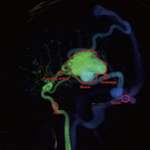


I clipped the real aneurysm first.
Then I used Claude Opus 5.5 to build a prototype in 24 hours that lets you try it yourself.
You can look at the aneurysm, dissect the Sylvian fissure, deploy the clip, and see what happens.
What interests me most about AI right now is how quickly someone can take expertise from their own field and turn it into something interactive.
Credit to @hinumpy for the foundational prompt that helped get this started.
This is version one. I’m going to keep building it and see how far I can take it.
Want to try it? Link below 👇
3
2
388
Here's the aneurysm clipping simulator: sim.drdalyai.com
It runs right in your browser, best on a laptop or desktop.
34
My patients are increasingly asking AI whether an unruptured brain aneurysm should be treated before they ever see a specialist.
This new study gave 67 real aneurysm cases to ChatGPT, Gemini, and Claude.
The models were remarkably consistent with themselves but not always with each other:
• ChatGPT + Gemini agreed on treat vs observe in 92.5% of cases
• In ~1 in 5 cases, at least one AI disagreed
• ChatGPT and Gemini were significantly more likely to recommend treatment than the neurovascular MDT
• Claude tended to be more conservative
But I think the most important finding came from the cases where all 3 AIs recommended treatment while the multidisciplinary team recommended observation.
The doctors often had information the AI prompt didn't: comorbidities, prior treatment history, subtle morphology, previous decisions, procedural risk, and even adherence concerns. This will obviously get better in time with more data to pull from.
However it is also a challenge as AI enters clinical decision-making:
The model may understand the aneurysm morphology.
The physician can relate to and potentially understand the patient much better.
And increasingly, we need to be prepared for patients to arrive with an AI-generated treatment recommendation already in hand.

1
76
Interesting study in Neurosurgical Review: “Inter-Model Variability of ChatGPT, Gemini and Claude in Treatment Recommendations for Unruptured Intracranial Aneurysms.”
link.springer.com/article/10…

45
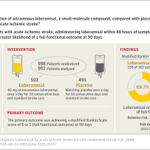
Interesting new data on neuroprotection after ischemic stroke.
The LAIS randomized trial in JAMA tested IV loberamisal started within 48 hours:
• 998 patients randomized across 32 hospitals in China
• 90-day mRS 0–1: 69.7% vs 56.3% with placebo
• Adjusted absolute benefit: 13.3 percentage points
• Serious adverse events: 8.6% vs 10.7%
Encouraging, but thrombectomy patients were excluded and several secondary outcomes were neutral. I’d like to see replication and data alongside thrombectomy before changing practice.
Article below. Figure: JAMA.

2
2
200
For anyone interested in reading the study:
Li S, et al. Loberamisal for Acute Ischemic Stroke: The LAIS Randomized Clinical Trial. JAMA. Published September 10, 2026.
jamanetwork.com/journals/jam…

1
38
Two very interesting new thrombectomy trials just came out, testing two very different approaches to improving stroke reperfusion:
THUNDER / Thunderbolt
• 216 patients
• 87.5% mTICI ≥2b after Thunderbolt
• 64.8% first-pass mTICI ≥2b
• 70.4% mTICI ≥2c after Thunderbolt
• 0.9% sICH
MARRS / Millipede
• 180 patients
• 88.9% mTICI ≥2b within ≤3 passes without rescue
• 52.2% first-pass mTICI ≥2c overall
• Millipede88: 59.6% first-pass ≥2c
• 75% first-pass ≥2c in the M1 PP subgroup
• 2.3% sICH
Both impressive and they’re attacking the problem very differently.
1
2
146
Thunderbolt tries to improve clot ingestion by changing the physics of aspiration with computer-controlled modulated vacuum.
Millipede takes a different approach: bring a 0.088” superbore catheter directly to the clot, maximizing catheter-to-vessel ratio.
I already use superbore 0.088” catheters frequently in thrombectomy, typically as part of a nested systemr advanced to the thrombus.
1
62
What matters more for first-pass reperfusion: catheter-to-vessel ratio, aspiration dynamics, or ultimately the interaction of both?
jnis.bmj.com/content/early/2…
doi.org/10.1136/jnis-2026-02…

29
More data suggesting for M2's and beyond (medium vessel occlusions) that aspiration alone is the lower risk option. This Japanese case series found similar reperfusion, but more procedure-related SAH with SR-first (39% v 18%). Aspiration solo is our practice strategy.
🤖 Made with AI

1
70
Important context: single-center retrospective data. SAH included asymptomatic minor hyperdensity on 24-h CT and was not independently associated with 90-day outcome after adjustment.
Full article: doi.org/10.1016/j.wneu.2026.…
34
One of the more interesting applications of AI is continuous physiologic optimization. Monitoring and adjusting that we can’t do as clinicians and nurses alone.
The SAVE-O2 AI randomized trial found autonomous oxygen titration increased time spent in normoxemia from 63% to 85% while reducing hyperoxemia from 29% to 9% in acutely ill hospitalized adults.
As a vascular neurosurgeon, I see the benefit in preventing hyperoxemia from a vasospasm, neurovascular population.
Could similar closed-loop systems help reduce secondary brain injury after stroke, aneurysmal SAH, TBI, or postoperative neurosurgical care by continuously avoiding prolonged hyperoxemia? And beyond that what if this continuous adjustments were made to BP or ICPs?
The study wasn’t performed in neurocritical care, so neurological outcome benefits remain unknown. But this is exactly the kind of AI that could enhance care in continuously managing physiologic variables that humans simply cannot monitor every second.

1
4
323
For anyone interested in reading the study:
Douin DJ, et al. Autonomous Oxygen Titration for Maintaining Normoxemia in Acutely Ill Adults: The SAVE-O2 AI Randomized Clinical Trial. JAMA Internal Medicine. Published August 3, 2026.
doi.org/10.1001/jamainternme…

27
Interesting clinical AI article from Nature Medicine was how it was trained this model was trained, called NeuroVFM. Researchers and clinicians out of U of Michigan, where the health system used 566,915 prior CT and MRI studies, drawing on years of imaging collected during routine patient care to build a general-purpose neuroimaging model rather than a tool focused on one narrow task.
Puts forward the idea of a learning health system. Harnessing data from past care to be used to improve how future scans are triaged and reported, and hopefully make clinical workflows better for both patients and physicians.

1
1
53
The investigators also tested NeuroVFM prospectively in 1,155 consecutive patients. It ran silently, so clinicians did not use its output to make decisions. It does not yet prove better workflows or outcomes, but it is a meaningful step toward clinical use.
Article: nature.com/articles/s41591-0…

17
That final 5% is not only technical judgment in medicine. It is trust, accountability, and human connection. Few parents would accept their child undergoing brain surgery without speaking to the surgeon who understands the treatment options and uncertainty. For the foreseeable future, AI will support that doctor-patient relationship, not replace it.

This is true. APP's and AI can do 95% of my day-to-day job.
But you wouldn't get in a plane with a pilot who could only complete 95% of the trip.
That last 5% is where doctors earn their money.
1
130
As a neurosurgeon, I treat patients who cannot shop during emergencies. Criticize the IDR system, but “hate providers” is not analysis. $15B is total selected rates, not incremental payouts; CMS warns QPA ratios may be overstated; providers won 84% of regular cases.

It’s easy to hate insurance companies if if you want to make medical care cheaper and more widely available you need the courage to hate health care providers.
wsj.com/health/healthcare/me…

1
1
113
100% agree. The physician-patient relationship is central to good medicine. My hope is that ambient AI moves us in the opposite direction with less time documenting and clicking, more time looking patients in the eye and actually listening.


1
70
Quantitative angiography may give us a functional fingerprint of an AVM to better determine hemorrhage risk and natural history.
AI could potentially segment the nidus and rapidly extract qDSA measures such as the normalized stasis index (NSI), combining hemodynamics with traditional risk factors to help identify the most dangerous unruptured AVMs in the post-ARUBA era.
One limitation in this study, ruptured AVMs were analyzed only after hemorrhage. NSI therefore distinguished previously ruptured from unruptured AVMs.
Would be interesting to apply this analysis to baseline angiograms from conservatively managed unruptured AVMs, especially those that unfortunately later hemorrhaged.
Study linked: 👇

1
66
The study: Quantitative digital subtraction angiography-derived normalized stasis index for brain arteriovenous malformation rupture assessment.
doi.org/10.1136/jnis-2026-02…
23