

|| Nihil de nobis, sine nobis || | Disability Rights Advocacy | | Diversity & Inclusion | #UNCRPD | inclusion, policy change ll
- Tweets1.7K
- Following899
- Followers4K
- Likes506

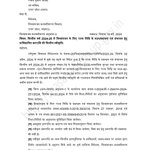


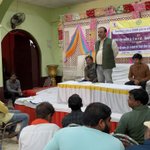




ALT Newspaper clipping from The Economic Times with the headline, “Census Repeats ‘Nihshakt’ Term Used in 2011, Activists Object.” The article discusses objections from disability rights advocates to the use of “nihshaktata” in the Hindi Census 2027 notification. Yellow highlights mark comments by disability rights advocate Akeel Ahmad Usmani on the term being derogatory and outdated, and a reference to the Hon’ble Prime Minister using the term “divyangjan” during the Accessible India Campaign in 2015. A central graphic shows disability symbols and numbers, alongside a highlighted box stating that the Registrar General of India said the use of “nihshakt” in the gazette was inadvertent and that “divyangata” is being used in the enumeration form. The article also includes comments from NCPEDP Executive Director Arman Ali on the importance of accurate disability enumeration and accessible self-enumeration in Census 2027.

ALT A Government of India awareness poster by the Department of Empowerment of Persons with Disabilities highlights disability inclusion as part of society. The poster features a diverse group of children and adults, including wheelchair users and a person using a white cane, in an accessible urban setting with a school, ramps, tactile pathways and accessible public transport. Four panels highlight Inclusion, Equity, Access and Together, emphasizing equal rights, barrier-free infrastructure and a society that leaves no one behind. The poster concludes with the message: “Different abilities. One society. One future.”

ALT An info graphic by the Department of Empowerment of Persons with Disabilities (DEPwD) titled “What is Cerebral Palsy?” The visual features a child using mobility support with a caregiver, alongside an image of an adult engaged in creative activity. It explains Cerebral Palsy (CP) as a group of conditions affecting movement, muscle control, balance, and posture due to changes in the developing brain. The info graphic highlights possible impacts on walking and movement, balance and coordination, muscle control and posture, speech and communication, and daily activities. It lists support measures including physiotherapy, assistive devices, speech therapy, inclusive education, and family support. The message emphasizes dignity, independence, equal opportunities, and inclusive communities for persons with Cerebral Palsy.

ALT Info graphic marking International Day of Sign Languages, 23 September, highlighting the global importance of sign languages and key milestones in the development of Indian Sign Language (ISL). It features facts on the World Federation of the Deaf, including its founding in 1951 and 135 member associations, followed by ISL milestones from 2011 to 2025, including the establishment of ISLRTC, legal recognition, the ISL Dictionary, National Education Policy 2020, and digital ISL resources. The graphic also features diverse people using sign language and the message “Inclusive Communication.”


ALT The Department of Empowerment of Persons with Disabilities hereby invites comments from the public on the Draft National Policy for Persons with Disabilities 9th July, 2022. Comments on this draft National Policy may kindly be sent by email at [email protected] and [email protected], within the stipulated date. #NotNowThenWhen #NothingAboutUsWithoutUs #LeaveNoOneBehind #UNCRPD #RPWD #SDGs #CRPD

ALT The Department of Empowerment of Persons with Disabilities hereby invites comments from the public on the Draft National Policy for Persons with Disabilities 9th July, 2022. Comments on this draft National Policy may kindly be sent by email at [email protected] and [email protected], within the stipulated date. #NotNowThenWhen #NothingAboutUsWithoutUs #LeaveNoOneBehind #UNCRPD #RPWD #SDGs #CRPD


ALT A screenshot of a The Week article titled “Can you buy a prosthetic on EMI? The critical gaps in assistive technology access for India’s disabled,” authored by Arman Ali and published on September 14, 2026. The article discusses barriers to assistive technology access, including weak service networks, limited financing options, high costs and lack of awareness. The main image shows a person with a prosthetic leg in a running position at sunrise. A highlights section below notes that fewer than 10% of people in low- and middle-income countries have access to necessary assistive technology, points to gaps in India’s consumer lending market, and recommends financing models such as insurance coverage, rentals and blended finance to improve access.

ALT A vibrant info graphic titled "Inclusion at Work Starts with You" depicts a modern Indian office where employees collaborate in a positive and welcoming environment. A wheelchair user actively participates in a discussion with colleagues, symbolizing equal participation and workplace inclusion. The info graphic highlights five key practices: respecting accessibility needs, providing equal opportunities, using accessible communication, encouraging participation, and valuing diverse talents. It emphasizes that inclusion benefits everyone and features the message, "Inclusion is not a policy, it's a practice," along with the closing call to action: "Be Respectful. Be Inclusive. Be the Change." The DEPwD logo and official social media handles are displayed at the top and bottom.

ALT Screenshot of a Deccan Herald opinion article titled “Assistive tech needs a policy backbone.” The page shows a large header image of assistive technology devices placed in a workshop-like setting, including wheelchairs, prosthetic legs, a prosthetic hand, and a tablet displaying accessibility icons. Below the image, the article headline and subheading read: “A strong national framework can translate innovation potential into affordable, high-quality disability support.” The visible opening text discusses India’s potential to build assistive technology companies and the link between inclusion and economic opportunity.

ALT A vertical promotional poster for the 17th NCPEDP–Mphasis Universal Design Awards 2026 with a deep maroon background and orange, white, and gold text. The top section includes the NCPEDP, Universal Design Awards, and Mphasis logos, followed by the main announcement “Applications Open.” The poster lists the four award categories: Persons with Disabilities, Companies/Organisations, Working Professionals, and Javed Abidi Public Policy. On the right side, yellow line-art illustrations represent accessibility and Universal Design, including wheelchair access, tactile paving, braille signage, hearing access, accessible digital information, wayfinding, cognitive access, accessible transport, and an information desk. The bottom section includes a QR code with the text “To apply scan QR,” the website www.ncpedp.org, and contact details +91-9217345677 / [email protected]


ALT An infographic by DEPwD, Government of India, titled “Disability does not make someone less deserving of.” The poster highlights that everyone has equal value, rights, and opportunities. It features illustrated panels showing inclusion themes such as love, career, acceptance, access, rights, education, opportunity, family, support, success, independence, and respect for persons with disabilities. The footer reads: “Inclusion is everyone’s responsibility. An inclusive society is a stronger society

ALT This info graphic by the Department of Empowerment of Persons with Disabilities Government of India, celebrates “World Environment Day 2026” with the theme “Inclusive & Green Environment for All.” It highlights the importance of building a sustainable and accessible environment where persons with disabilities can equally participate in climate action and environmental conservation. The infographic showcases accessible public spaces, inclusive transport, green infrastructure, accessible environmental awareness through Braille and sign language, and participation of PwDs in sustainability initiatives. It also encourages simple actions like reducing waste, planting trees, saving water and energy, and promoting accessible green mobility. The key message emphasizes that “A greener future is possible only when it is inclusive for everyone.”