

Prof, MD, PhD Medical Oncology and Precision Medicine. Medicana International İzmir Hospital
İzmir
Joined November 2024
- Tweets563
- Following598
- Followers397
- Likes151




More Than 50 ADCs at ESMO 2026. How Many Will Actually Change Clinical Practice?
Four questions matter:
Meaningful OS/PFS benefit?
Appropriate comparator?
Acceptable toxicity?
Better patient selection?
More ADCs do not automatically mean better outcomes.
@myESMO @oncodaily #Oncology

An exciting pan-cancer target, but spatial heterogeneity remains a major challenge.
As I highlighted in a previous post, CLDN18.2 expression shows substantial intratumoral (35.8%) and primary–metastatic (20.3%) discordance.
Could CLDN18.2 PET help us move beyond single-biopsy selection and better identify patients who may benefit from targeted therapies?
xitter.cf/dr_dirican/status/2099…


Prof. Dr. Ahmet Dirican retweeted

Can Liquid Biopsy Predict Immunotherapy Response? - Prof. Dr. Ahmet Dirican (@dr_dirican)
oncodaily.com/voices/ahmet-d…

Can Liquid Biopsy Predict Immunotherapy Response? Is Blood TMB Enough?
A phase II trial in ESMO Open evaluated nivolumab in patients with high blood-based TMB (bTMB).
ORR: 21.1% in the bTMB-High cohort.
Baseline bTMB did not clearly distinguish responders from nonresponders.
Week 3 ctDNA decline was associated with longer PFS (HR 0.51).
Perhaps dynamic ctDNA response matters as much as baseline mutational burden.
doi.org/10.1016/j.esmoop.202…
@oncodaily @Dr_R_Kurzrock @myESMO @ESMO_Open #ctDNA #Immunotherapy #PrecisionOncology

ctDNA monitoring in metastatic cancer: Tumor-informed or methylation-based tumor-agnostic assays?
The first head-to-head comparison in advanced solid tumors showed 94% concordance in longitudinal ctDNA monitoring.
But the key question is:
Are we monitoring the original tumor, or the continuously evolving metastatic disease?
In 5 discordant cases, the methylation-based assay better reflected clinically confirmed disease activity.
Could methylation-based ctDNA monitoring better capture the dynamics of metastatic disease?
Promising findings, but prospective validation is needed.
@oncodaily @Dr_R_Kurzrock #LiquidBiopsy #PrecisionOncology @NateraGenetics @BillionToOneInc

Universal Germline Testing in Oncology: Are We Ready to Move Beyond Age-Based Selection?
A new study in Cancer Discovery evaluated 39,184 patients across 32 solid tumor types.
Key findings:
16.3% carried a pathogenic germline variant.
Restricting testing to patients diagnosed before age 50 would miss 72% of carriers.
Even among patients with late-onset cancers, 12.3% carried a pathogenic variant, including 5.1% in high- or moderate-penetrance genes.
But detecting a pathogenic variant does not always mean clinical actionability.
The real challenge is translating broader genetic testing into meaningful changes in cancer treatment, prevention, and risk assessment for family members.
Should universal germline testing become the new standard, or should clinical actionability remain the key criterion for selecting patients?
@oncodaily @AACR @OncBrothers @mtmdphd #CancerGenetics #PrecisionOncology #GeneticTesting
Universal Germline Genetic Testing after a Diagnosis of Cancer aacrjournals.org/cancerdisco…

Prof. Dr. Ahmet Dirican retweeted
Four Key Developments in Oncology This Week - Ahmet Dirican (@dr_dirican)
oncodaily.com/voices/ahmet-d…

Prof. Dr. Ahmet Dirican retweeted
Is This the Beginning of a New Era in Oncology Combinations? - Ahmet Dirican (@dr_dirican)
oncodaily.com/voices/ahmet-d…

Prof. Dr. Ahmet Dirican retweeted
Is One Negative ctDNA Result Enough for MRD Surveillance in Colorectal Cancer? - Ahmet Dirican
@dr_dirican
oncodaily.com/voices/ahmet-d…

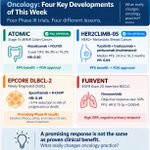
Four Key Developments in Oncology This Week
Four Phase III trials. Four different lessons.
ATOMIC: DFS benefit → New FDA approval
HER2CLIMB-05: PFS benefit → New FDA approval
EPCORE DLBCL-2: Promising Phase III results
FURVENT: High ORR, negative primary endpoint
A promising response is not the same as proven clinical benefit.
What really changes oncology practice?
@oncodaily @FDA #Oncology #ClinicalTrials #CancerResearch #EvidenceBasedMedicine #PrecisionOncology
🤖 Made with AI

New FDA Approval for Adjuvant Immunotherapy in Colon Cancer!
The FDA has approved atezolizumab + FOLFOX for stage III dMMR colon cancer.
The approval is based on the Phase III ATOMIC trial:
3-year DFS: 86.3% vs 76.2%
HR: 0.50
Immunotherapy now has a new role in curative-intent colon cancer treatment.
Will this DFS benefit translate into an OS advantage?
@FDA @oncodaily @mtmdphd @NEJM @FASinicropeMD
#FDA #ATOMIC #ColonCancer #Immunotherapy
fda.gov/drugs/resources-info…

Could a new door be opening for immunotherapy in MSS colorectal cancer?
In microsatellite-stable (MSS) colorectal cancer, which has historically been resistant to immunotherapy, the combination of botensilimab, a next-generation CTLA-4 inhibitor, and balstilimab, a PD-1 inhibitor, is showing promising results.
The combination is not yet FDA-approved, and Phase 3 results are awaited.
The key question: Can we turn immunotherapy-resistant tumors into immunotherapy-responsive ones?
doi.org/10.1158/1078-0432.CC…
@oncodaily @ilyassahinMD @mtmdphd @myESMO @ASCO @CCR_AACR

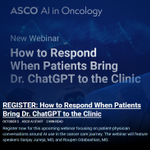
Seeing ASCO’s “When Patients Bring Dr. ChatGPT to the Clinic” made me think: What do I do?
1️⃣ I encourage patients to tell me about it.
2️⃣ I listen to what they learned from AI.
3️⃣ I reinforce what is correct with solid evidence.
4️⃣ I explain what is wrong, incomplete, or not applicable to them — and why.
5️⃣ I remind them that AI can be a powerful assistant, but not the decision-maker in cancer treatment.
The issue isn’t whether we use AI. It’s whether we can put the right information into the right context for the right patient.
What about you? How do you respond when a patient comes to you with advice from ChatGPT?
ascoai.org/articles/2026/10/…
@therealoncdoc @RoupenMD @ASCO @ASCOPost @ASCOAIOncology @oncodaily

Is this the beginning of a new era in oncology?
AstraZeneca, Daiichi Sankyo & Summit Therapeutics joining forces…
What does AstraZeneca’s $2 billion investment in Summit really signal?
Dato-DXd + ivonescimab
➡️ TROP2 ADC + PD-1/VEGF bispecific antibody
The biological rationale is compelling.
Could this three-company collaboration help shape a new therapeutic paradigm in oncology?
We’ll see.
AstraZeneca, Daiichi Sankyo partner with Summit to test cancer drug combination reuters.com/legal/litigation…

Is one negative ctDNA result really enough?
The prospective INTERCEPT study in stage II–IV CRC raises an important point about MRD surveillance:
Single-timepoint testing: sensitivity 48.5%
Longitudinal testing: sensitivity 79.9%
This is more than a numerical difference.
Perhaps we should stop thinking of MRD as a single positive/negative result and start thinking of it as a dynamic trajectory over time.
MRD is a trajectory, not a snapshot.
But the key question remains:
Will detecting molecular recurrence earlier—and acting on it—actually improve outcomes?
Are we ready for longitudinal MRD-guided surveillance in routine practice?
@oncodaily @OncBrothers @myESMO @ilyassahinMD @mtmdphd #ctDNA #MRD #LiquidBiopsy #ColorectalCancer #PrecisionOncology
gut.bmj.com/content/early/20…

After CDK4/6 inhibition, a key question: Do we know the ESR1 mutation status?
Phase III evERA, published in NEJM, showed that giredestrant + everolimus improved PFS in ER+/HER2− advanced breast cancer after CDK4/6 inhibition:
Overall: 8.8 vs 5.5 months (HR 0.56)
-ESR1-mutated: 10.0 vs 5.5 months (HR 0.38)
-ESR1 wild-type: 5.7 vs 5.5 months (HR 0.84)
The key message is not simply “another oral SERD.” The benefit appears particularly compelling in ESR1-mutated disease, while the advantage in ESR1 wild-type tumors is much less clear.
Take-home message: After progression on CDK4/6 inhibitors, treatment is becoming increasingly biomarker-driven.
ESR1 is evolving from a mechanism of endocrine resistance into a clinically actionable biomarker.
OS remains immature, but these results provide another strong argument for molecular profiling—particularly ctDNA-based ESR1 testing—at progression.
@NEJM @oncodaily @myESMO @PTarantinoMD @Dr_Oncologista

Thank you @OncoDailyGU for highlighting this important development.
The approval of belzutifan + lenvatinib represents another important step toward more effective, biology-driven treatment strategies for patients with advanced ccRCC. Exciting to see the therapeutic landscape continue to evolve.

FDA Approves Belzutifan Plus Lenvatinib in Advanced ccRCC - Ahmet Dirican
@dr_dirican
oncodaily.com/science/ahmet-…

Prof. Dr. Ahmet Dirican retweeted

FDA Approves Belzutifan Plus Lenvatinib in Advanced ccRCC - Ahmet Dirican
@dr_dirican
oncodaily.com/science/ahmet-…
A new post-immunotherapy option in advanced ccRCC.
FDA has approved belzutifan + lenvatinib following prior PD-1/PD-L1 therapy, based on the phase III LITESPARK-011 trial.
• PFS: 14.8 vs 10.7 months; HR 0.70
• ORR: 52.6% vs 40.2%
• DoR: 23.0 vs 12.3 months
An important step forward — but with perspective: OS benefit is not yet statistically significant (HR 0.85) and grade ≥3 toxicity remains high (~84%).
A promising new standard after IO, with patient selection and toxicity management remaining crucial.
@oncodaily @FDA @ASCO @mtmdphd
