

trying to live up to my values
San Francisco
Joined June 2021
- Tweets707
- Following1.3K
- Followers277
- Likes3K



Daniel Sosebee retweeted

I've had some great moments with aloud, my voice-driven meditation app lately - and now it's in limited beta for Android and iOS. I need 12 testers to sign up for Android specifically so I can go live as a Real App. Extra free credits for mobile testers!
aloud.rest/mobile-beta/
Daniel Sosebee retweeted

If you want better parties, you have to make better parties.
Enter: Maximum Republicans. New York needs a competitive political ecology, and two parties that compete to offer a strong, positive vision of governance. Here's my part of that grand project:
maximumnewyork.com/p/maximum…

So cool!!

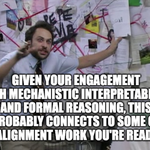
interpretability might be the most important scientific problem in the world right now, as I don't think we can solve alignment if we don't know what we're building. I think I have good news about it. I co-authored early work in mechanistic interpretability at OpenAI and came away pessimistic, because neural networks appeared to fold into arbitrary tangled knots. years later, I started openai's first large-scale automated interpretability project, finding about 2% of neurons legible with the primitive tools we had
with modern agentic tools and a much closer look, the picture looks totally different. the vast majority in models up to trillions of parameters are legible, and their circuits beautiful. many famous examples of tangled neurons turned out to be misunderstood. The roadblocks I expected mostly aren't there. I now think ambitious interpretability will be solved by the time we need it most, and possibly quite soon, as automated scientists keep improving. it may be a bitter lesson for interpretability: the simple thing, at absurd scale, works
already-clean.goodfire.com/


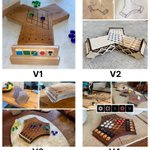
Today, we are announcing Sneaky Town Overview (V4 Edition).
It is here: blog.danielsosebee.com/p/sne…


... and then come to The Commons on Thursday to play Sneaky Town on the new boards (DM me if you can't register):
luma.com/the-51bi

Daniel Sosebee retweeted
Foundations of the Liberal Arts, Cohort 3, applications will open this week. It will start in about three weeks, and will be Sunday evening to give you a refreshing start to the week.

Cohort 16, baby! Application are now open. We start September 14.
maximumnewyork.com/p/applica…

Daniel Sosebee retweeted
You know, @OpenAI, I heard a rumor @AnthropicAI solved alignment and they're publishing in two weeks.

Working on some important writing and suddenly feel motivated to read fewer random blogs/tweets. “get these unrelated ideas out of here, I need to let very specific thoughts stew.” Probably a good approach in general. Hard b/c reaching for the blogs/tweets is so instinctive
Some piano: "rain_alt" ... my favorite recording that will (probably) not make it onto the album. Enjoy :) samply.app/p/W38rL3rLTHu6qh1…
Though, you know, I will be visiting the piano/recording setup soon, so maybe I could record another version... 🤔
As I move towards final recordings the songs get polished, they slow down. In some ways they get more beautiful, but they also often lose some essence. It might be unavoidable. But when I go back to older recordings (like the one linked above), the essence is so vivid, and despite the roughness I often prefer it. I was really just playing, and/or feeling. There was no script getting in the way. It's like every song is a mini little Goodhart's Law in action, developing its own inner beauty and then eventually becoming a metric/target and losing it. Perhaps I exaggerate - the polished recordings have soul too. But something is lost. Is the tradeoff between essence and polish intrinsic? I'm not sure. In rare instances I seem to get both. Maybe if I leave and come back I can rediscover the essence of a song and give it another try.
Daniel Sosebee retweeted

Seeing reactions like "Frequent scanning is bad, over-testing leads to unnecessary procedures that cost thousands of dollars." This take is catastrophically wrong. More data is unequivocally good. We should adjust the threshold for follow-on procedures, not make ourselves blind.
