
Maths, puzzles, board games, banjo
Singapore
Joined September 2015
- Tweets1.6K
- Following388
- Followers264
- Likes13.9K



David C @[email protected] @dlcmaths.bsky.social retweeted

David C @[email protected] @dlcmaths.bsky.social retweeted
A hugely successful international online #Physics competition for A Level students has been cancelled after 15 years
In 2025, after a thorough investigation, 175 teams were disqualified - all were using AI to game the competition
Sad physicsbrawl.org/

David C @[email protected] @dlcmaths.bsky.social retweeted

What fresh hell is this?!!!
1) The Education Secretary seems to have forgotten that education is about teaching children things they don’t already know. That’s rather the point.
2) Coursework is a disaster for the most disadvantaged and doubling down on it in the age of AI is frankly bonkers.
Lucy Powell seems determined to lower standards for the next generation.

I think education should be about what you can do, and not what you can’t do.
Read my full piece in @theobserveruk where I set out my vision for reforming England's education system - from tackling the SEND crisis to reimagining what success looks like beyond exams.
observer.co.uk/news/national…

David C @[email protected] @dlcmaths.bsky.social retweeted

One more time for this one: dtwuva.substack.com/p/studen…

David C @[email protected] @dlcmaths.bsky.social retweeted

This paper gives a fancy name to a problem you can already feel in your bones
"The Tragedy of the Cognitive Commons." Checking AI output requires deep expertise. Deep expertise comes from doing grunt work for years. And grunt work is the first thing AI eats
So we're building systems that need expert supervision while dismantling the only known process for making experts
The paper calls the shared pool of human expertise the "cognitive commons." Every profession drinks from it. Nobody's refilling it.
By eliminating junior roles, each company is acting totally rationally, and the collective result: a profession that can't catch AI's mistakes anymore because it never learned to do the work in the first place
Who checks AI's homework in 15 years?

David C @[email protected] @dlcmaths.bsky.social retweeted

There is a belief that goes around: if only students understood what mathematics is good for in real life, they would love it more, take more interest in it, work harder, do better.
It is not true. It is not true in the slightest. And we have a great deal of evidence that it is not.
Does a young person who loves music love it because music will come in useful one day? Every young person knows the benefits of exercise — are they all devoted to sport? Does a teenager play football because sport is good for you, or because it is fun, because they enjoy it, because they lose themselves in it?
We do not love a thing because it is useful.
We love it first for its beauty. Because it makes us happy, because it is good for us, because it takes us out of ourselves.
It will not make you love mathematics. But let me tell you anyway, as well as I can, what mathematics is good for.
Mathematics is good for nothing. Mathematics is good for a great deal. In fact, it is good for everything.
It is good for so many things that it is impossible to say what it is good for. Carpentry is good for a limited number of things — a table, a chair, a cupboard. Mathematics is not like that.
Human beings have found no way other than logic and mathematics to understand this world, this nature, this universe — and to persuade anyone else of what they have understood. The world we find ourselves in when we are born and the world we later build for ourselves are both understood through mathematics. Every structure with an order inside it, every structure with a balance inside it, is understood through mathematics. There is no other way. Where mathematics falls short, we turn to philosophy, to belief, to principles. But where mathematics is enough, whoever turns to something else is called a zealot.
Mathematics is good for being convinced — and it is more than that. Mathematics convinces you that you can convince everyone in their right mind. It carries you past “I have understood that this is true, I am convinced” and makes you say: “I can explain this to any reasonable person, and they will be convinced exactly as I was.”
Mathematics is common reason.
Mathematics claims to be a mental model of the universe we live in. We learn how strong an earthquake a building will stand up to not by shaking the building, but — after a field study or two — at a desk, with a pencil and paper, with calculation. That is, with mathematics. Never mind technology and industry: in trade, in politics, in human relations, in sport, even in art — in short, wherever there can be reasoning and balance — we decide with logic and mathematics.
Art and philosophy, exactly like mathematics, are good not for one thing but for everything. They are good for so much, their use spreads over so wide a field, that you can never point and say: there, that is what it is for. What good has it done you so far to understand art, to know Picasso and Klee, to have read Dostoyevsky, to listen to Brahms? None whatsoever, of course. And all the good in the world — it made you an entirely different person.
In underdeveloped countries like Turkey, if a line of work has no direct and immediate benefit, it is looked down on, belittled, held in contempt. That is exactly why we founded villages for the three things believed to be good for nothing and, in truth, good for everything: mathematics, philosophy, and art.
The one way out of the middle-income trap we are stuck in runs through more mathematics and more science.
In mathematics there is a single truth. Mathematics has defined its own truth, the way a “mate in two” problem defines it. Because of this, there is no brawling in mathematics; there is argument, an exchange of ideas, an effort to persuade. Have you ever seen a mathematician bite an opponent’s leg, or land a flying kick on a rival? Neither have I. And a politician? Yes — that has happened. Two members of parliament who disagreed went for each other; one bit the other’s leg, another delivered a flying kick. You can be sure those politicians did not know mathematics.
Even if mathematics were good for nothing else, it teaches what it means to look for the truth, it shows how the truth is reached, and it makes you feel how hard the truth is to reach.
And when we hold mathematics — which lives in the mind — up against real life, we see how vague the truth is out here, how difficult it is to arrive at, and sometimes that there is no absolute truth at all. So we grow more open to the ideas we disagree with. We understand what it is to persuade, and what it is to listen.
Mathematics is not only calculation. Taught properly, it is a lesson in democracy.
- Ali Nesin
David C @[email protected] @dlcmaths.bsky.social retweeted

You cannot be creative at a high level unless you are robotic at a low level.


The anti-memorization movement has left millions of students unable to think because every elementary operation consumes working memory.
For instance, solving equations feels smooth when basic arithmetic is automatic. It's like moving puzzle pieces around, and you just need to identify how they fit together.
But without automaticity on basic arithmetic, each puzzle piece is a heavy weight. You struggle to move them at all, much less figure out where they're supposed to go.
It’s the same all the way up the ladder of math: from arithmetic, to algebra, to calculus, to all sorts of university-level math and beyond.


David C @[email protected] @dlcmaths.bsky.social retweeted

If your sole tactic against the massed ranks of data, tech & money of the big tech firms is "teen willpower" then you are setting them up for failure.
Modern research backs up Odysseus's intuition.
Willpower needs supplementing with environmental design.
David C @[email protected] @dlcmaths.bsky.social retweeted
The reason togas often looked baggy is because some Romans were confused that L was bigger than XL.
David C @[email protected] @dlcmaths.bsky.social retweeted

Oxford Mathematician Alison Etheridge has been appointed Dame Commander of the Order of the British Empire (DBE) for services to Mathematical Sciences.
Alison said: ‘this really is a huge honour & it's taking a while to sink in."
Read more about Alison:
maths.ox.ac.uk/node/70154

David C @[email protected] @dlcmaths.bsky.social retweeted

My polemic in Nature on probability has attracted some attention nature.com/articles/d41586-0… - you should be able to download from here
rdcu.be/d41qA

David C @[email protected] @dlcmaths.bsky.social retweeted

David C @[email protected] @dlcmaths.bsky.social retweeted
“To read a book in college, it helps to have read a book in high school.”
#Teenagers need constant exposure to #Books if they are to build a habit of long-form #Reading theatlantic.com/magazine/arc…
David C @[email protected] @dlcmaths.bsky.social retweeted

Neat one-page proof of "Stirling's bound" n! ≤ (n/e)ⁿ(√{2πn}+1) inspired by the discussion on mathoverflow.net/a/458011/54…

David C @[email protected] @dlcmaths.bsky.social retweeted

We're excited to invite papers for "Word ↔ Puzzles", a conference at @magdalenoxford in 2025.

David C @[email protected] @dlcmaths.bsky.social retweeted

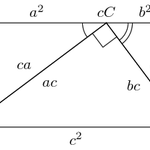
Favourite maths etymology:
"Gon" means angle, as in hexaGON, which has six angles.
"Ortho" means correct, as in ORTHOdontist, who makes your teeth correct.
So "orthogonal" means "at the correct angle".
Right is another word for correct, so "orthogonal" means "at a right angle".
David C @[email protected] @dlcmaths.bsky.social retweeted

The Simpsons on PhD students - almost twenty years old & more cutting than ever

