
New York, NY
Joined February 2010
- Tweets1.9K
- Following631
- Followers26K
- Likes4




Interested in how "money" is created? The new book "Money and Promises" is a delightful romp through economic history. It's beach reading for people too serious to do beach reading. Here is my full review in The Wall Street Journal:
wsj.com/arts-culture/books/m…

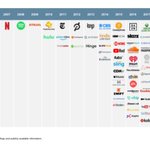
This GIF shows it all. Valuations for subscription-based companies have collapsed. So what comes next for them? We assembled reams of data to create the 2022 Lazard Subscription Economics Report. Email [email protected] to get the full, 32-page version.
First on CNBC! The future of the media - and much else in our world - is all about the subscription. We dug deep into the traits and virtues of these businesses to produce the 2022 Lazard Subscription Economics Report. Email [email protected] to get the full, 32-page version. @CNBC

The future of the media - and much else in our world - is all about the subscription. We dug deep into the traits and virtues of these businesses to produce the first-ever Lazard Subscription Economics Report. Email [email protected] to get the full, 32-page version.

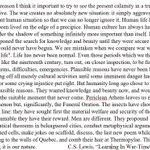
The coronavirus seems to be grinding the world to a fearful, lonely halt. It's at times like these when it helps to read the great C.S. Lewis speech titled "Learning In War-Time." Delivered weeks after the start of WWII, it inspires us to keep going.

Meet the "shareholder vocalists" -- the cranky backup singers to the showy shareholder activists -- who are changing how companies are run forever. My column in today's Financial Times: ft.com/content/dd822d02-9bd5…

Still the single most important - and least discussed - chart in economics and politics today.
Via @SoberLook.

These numbers are stunning.
Just 10 shareholders now control a full 31% of the S&P 500’s $24 trillion in total market cap.
lazard.com/perspective/lazar…

The most important chart in America today.
Health-care and pension costs are eating state budgets alive.
In other words, there is a war for resources between The Old and The Young.
Guess who is winning.
wsj.com/articles/why-are-sta…

The Wall Street Journal (@WSJ) is and will remain the world's best news organization.
Dogged but not doctrinaire. Fair but not retiring. Self deprecating and not self-obsessed.
Thanks to all those who came before. And to those who will carry it on anew.

I've got an incredible new job at @lazard. The best part so far? My unopened emails have gone from 146,579 to........0.
businesswire.com/news/home/2…

Terrible, terrible day in the markets. And yet there have been more than 100 days worse. Do you remember the wreckage of August 10, 2011? Probably not.

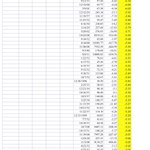
Today’s Dow -4.6% plunge is large and concerning. But it is percentage - not points - that matters. And on that basis, today does not make the Top 25 of worst Dow days.

Before you lose your mind about the stock market, take in the bigger picture: The 1-year chart of the Dow.

The World Fracking Created...
1991: United States goes to war to protect Saudi Arabia's oil fields.
2017: Saudi Arabia comes to Texas to buy United States oil fields.
wsj.com/articles/saudi-arabi…

Why is the U.S. coal industry never coming back?
Because fracking killed it first.
on.wsj.com/2j5LQho

Money mania, 2017. The moment when Grandma interrupts games of poker to check on the price of Bitcoin.
wsj.com/articles/bitcoin-man…

What are the investment returns on Da Vinci’s “Salvator Mundi”?
Original 1519 price: About $454,600
Duration: 498 years
Annual return: 1.9%
2017 sale price: $450,312,500
blogs.wsj.com/moneybeat/2017…

Want to make great art about finance? Write an opera about quantitative easing - not a drama about Michael Milken.
wsj.com/articles/who-is-the-…

The most incredible statistic I've read this year:
Amazon will control 43.5% of all e-commerce sales in 2017.
wsj.com/articles/amazon-reve…
