
Computational neuroscientist and physicist at Penn State, works on neural mechanism of birdsong, spike-based neural computation, and data analysis.
State College, PA
Joined April 2009
- Tweets1.5K
- Following458
- Followers286
- Likes1.8K




Pinned Tweet
Published a new paper!
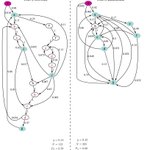
Many brain elements are highly sensitive to temperature changes, but birdsong tempo is resistant to such fluctuations.
We show this is due to the use of axonal delays, and the prolonged opening of synaptic channels.
link.springer.com/article/10…

Great move China! This is the way to nurture scientific progress.

China has selected its first group of young researchers to receive funding for up to 15 years, in one of the longest research grants on offer to scientists globally
go.nature.com/4z4Q3pw

Dezhe Jin retweeted

これから数年間で数学、少なくとも数学教育は再発明されなければならない。ハーバードでは博士号授与に関しては論文よりも口頭試問を重視すると言っているが、Tao博士の構想はそれよりも先に進んでいる。
今やAIが数学の難問を解決するならば、人間はそのAIの能力とともにさらに進化しなければならない。Tao博士の大学院生指導はもはやセラピーセッションのようになっているという。もし数学者がAI以前に自分たちができたことばかりを考えているならば、未来はつらいだろうというわけだ。彼の含意は、AIとともに数学者は未来を切り開いていかなければならないということだ。
“To Dr. Tao, the next few years will require the reinvention of math, or at least of math education. The Harvard report recommended, essentially, that math become more human-centric: Doctorate degrees should not be rewarded primarily on the text of a dissertation, as they are now, but more on a rigorous in-person defense. Students should regularly show professors they can speak fluently about their work.
Dr. Tao went further last week when he presented what he sees as the future of math in a lecture at the California Institute of Technology. Despite OpenAI’s releases, he said, most problems at the frontiers of math are unsolved, math remains infinite and the difficulty of problems is therefore boundless. Since A.I. has given mathematicians the ability to collect data on such a vast scale, they will increasingly work in large groups collaborating on once-unimagined projects.
Dr. Tao, who sees each of his three students once a week, said every meeting is “increasingly a therapy session more than technical guidance.” His answer to them is that “if you focus on only the things you could do before, it looks bleak.””
nytimes.com/2026/10/16/us/ma…

Congratulations Ann!

Congrats to @AnnMGraybiel for winning the Review Paper of the Year from the International Parkinson and Movement Disorder Society!
Read the award-winning paper, "Surprises from the Basal Ganglia: Stop and Go Have New Meaning," below:
movementdisorders.onlinelibr… @movedisorder

Is there chain networks in M1 cortex? This looks exactly like what we have described in songbird HVC. Very interesting!
Nature research paper: Targeted stimulation of motor cortex ensembles drives learned movements
go.nature.com/4jmQIO3

Dezhe Jin retweeted

LLMs used to often be wrong. Now they are often bullshit. I preferred them when they were wrong. They literally use language where they can not be wrong. They start sounding like my most insufferable colleagues!
Maybe AI can help to solve the holy grill of theoretical physics: quantum gravity.

Bir fizikçi itirafı:Doktora tezimde 1 yılımı ve~500 sayfa elle yaptığım kuantum gravite hesabını Opus 5.5 makalesi ve GitHub reposu dahil 10 saatte yaptı.😱 Üstelik hataları da buldu.Neyse ki sonuç değişmedi. Akademide “emek” bundan sonra neyi ifade edecek?github.com/eokahya/claude-au…

Dezhe Jin retweeted

Un investigador de Anthropic acaba de decirle a una sala llena de doctorandos que su plan de carrera ya no existe.
La charla se titula "El fin del Antropoceno" y los datos son brutales:
→ El cómputo para entrenar modelos se multiplicó por 10 millones en la última década
→ La duración de las tareas que una IA completa sola se duplica cada pocos meses
→ Desde hace 7 meses los modelos resuelven problemas abiertos de Erdős que los matemáticos no habían logrado cerrar
→ En San Francisco, tener "timelines largos" significa pensar que la AGI llega en 10 años
Su proyección: el cómputo de 2030 será 10.000 veces mayor que el de 2025.
Todavía estamos al principio de la exponencial.
Sus 3 consejos para los estudiantes:
1. Usa la IA cada día. Si estás sobre la exponencial, nunca te quedas atrás de ella.
2. Elige proyectos que mejoren cuando el cómputo escala. El resto quedará resuelto antes de que los termines.
3. Deja de planificar tu carrera como si fuera estable. La opción segura ya no compra seguridad, ya no existe.
Y una frase que resume todo:
"Escribir es pensar. Si externalizas tu escritura, externalizas tu pensamiento."
La charla completa aquí ⬇️
Dezhe Jin retweeted

In our recent PNAS work, we showed that a local, biologically plausible learning rule can be designed so that both the neural network and the learning rule itself are "learned." More importantly, this rule always emerges to behave like a generalized gradient descent.
arxiv.org/abs/2412.20018v2
Dezhe Jin retweeted

The new XPRIZE on Interspecies Communication, with a $10M purse will launch next month.
It will challenge teams to demonstrate ethical, verified two-way communication with wild animals, advancing coexistence and cooperation.
Dr. Irene Pepperberg spoke to us today about her pioneering work with grey parrots, training them in English to perform many tasks at 6-year old human skill level.
“Clearly, animals know more than we think and think a great deal more than we know.”
It wasn’t easy when she started. The feedback to her first grant review: “what are you smoking?”
And now, her parrots ask questions and learn from the answers. They ask for what they want.
She has taught her parrots 100 English labels for objects and materials, exact quantities up to 8 (and addition and subtraction), colors, shapes, materials, concepts like same/different, absence, a zero-like concept (absence of a set, on his own, with no training), relative size comparisons, optical illusions, and they make new word combinations (calling the banana chip “banacker” for a banana cracker). They have a visual working memory (tracking moving cups) that beats adults with 4 swaps. They do inference by exclusion (when you show where food is not located, they figure out where it is).
Bird brains look very different at first, a smooth unfolded organ with no cerebral cortex, but further research found a relatively large cortical area similar to non-human primates in relative size and connectivity. They have a dense processor, doing same thing as human children.
“Bird brain should be a complement,” she concluded.


We can imagine the marvel of first contact, whether alien or AI, and it starts with communication.
We can practice with the isolated animal intelligences all around us. We hosted a gathering for the leadership of the Earth Species Project, with an ambitious plan to do just that, using multimodal AI models.
“Everything that can be translated will be, by 2030.”— @Aza Raskin of ESP, and:
“It’s impossible without scale and inevitable with scale.” (of data and compute)
“We will face the unusual situation where our AI will communicate with animals before we understand what they are saying.”
“Human languages have evolved over a couple hundred thousand years. Whale and dolphin language has evolved over 34 million years. And some are multilingual, using a third language when hunting together off the coast of Norway.”
“Beluga whales announce themselves with their unique name and clan ID. Parrots teach each of their chicks their name in the nest—a lifelong signature that connects them to their family and community.”
“And there are different cultures. The is a fascinating community of crows in Spain that operate unlike other crows. They raise their young as a group, like a kibbutz. They have a unique dialect for collaborative parenting. When an outside crow joins the group, it learns the dialect and participates in the unique culture. The crows have different personalities and there is a lot of drama. There is one adult that none of the other mothers like. She has to zip in and out quickly to feed the young before being chased off by the others.”
“Humpback whale songs go viral. There is group of whales off Australia that are like the K-pop singers. Their songs propagate globally over a couple years."
"An orca once wore a salmon hat, and it became a fashion trend among orcas.”
“80% of animal communication is relatively quiet one-to-one communication, and we need to capture that. It’s a perception problem. Of the animal recordings made, only 3% of the data have been analyzed. There has been little progress in orca communications in the past 20 years.”
“Many indigenous myths start with communication with the animals and nature. And then we forget how. We became disconnected.”

Dezhe Jin retweeted

Sleep pressure in flies is regulated by a rhythmic seesaw between two groups of neurons. This oscillation isn’t just a byproduct of sleep. It helps generate it.
nature.com/articles/s41593-0…
#neuroscience

Dezhe Jin retweeted

Join us for four months at Anthropic as a STEM fellow. You'll work directly with our research team on ambitious, open-ended problems in your field of expertise.
I encourage you to apply even if you don't think you meet every single qualification.
job-boards.greenhouse.io/ant…

Dezhe Jin retweeted

Today @GoogleResearch is launching Deep Review — an agentic system designed to stress-test manuscripts, design docs, and complex proposals before submission or publication. After pilot partnerships analyzing over 15,000 research papers, we’re making Deep Review globally accessible to help researchers, engineers, and professionals bring structured critique to their daily workflows.
Dezhe Jin retweeted

Our paper is out in Nature, congrats to Qiyu, An et al!
By stimulating ~20 motor cortex neurons carefully selected based on their activity, we could induce learned population activity and, sometimes, the movement itself, depending on the brain's state.
nature.com/articles/s41586-0…
Dezhe Jin retweeted

Rapid spatial cognition in mice, with and without neocortex and hippocampus
biorxiv.org/content/10.64898…

Dezhe Jin retweeted

Ken Griffin, who runs Citadel, just admitted that the most expensive skill of his quants, the one he paid them millions for, now costs nothing
And for the first time in history, that skill belongs not just to a hedge fund, but to anyone with access to AI
A fund's entire quant team runs one cycle: come up with a strategy, turn it into code, test it on history, deploy it to the market
Every step used to cost separate people and years of training. Now AI does the whole cycle
You describe an idea in words, it writes the strategy itself, runs it on years of real data, and if it's alive, deploys it straight to a broker
But the speed isn't the point. The point is what the retail trader doesn't understand
You take a strategy with a beautiful chart and you believe it. But a beautiful chart is no proof
Run enough versions and a profitable curve will appear even on random numbers. One just got lucky, and you decided you found gold
Funds don't trust any curve until they test it on data the strategy has never seen. There the fit falls apart, and a real edge survives
I ran two of the most-cited quant papers through this cycle
Time Series Momentum on Bitcoin: +1,537%. Alive
Betting Against Beta, a classic from every textbook: minus 7.78% a year while the market rose 14.86%. A corpse
One still prints money, the other died long ago. And trading blind, you'd never know which is which until it took your deposit
If you want to run your own idea through the same test, it takes minutes here (free trial after signing up): join.horizon.trade/qwinsiiii
The entire hedge fund is six steps. AI already ate four of them. Which ones, I broke down in the article below


Dezhe Jin retweeted

(1/7)
Why do different languages/modalities have similar "platonic" representations in neural networks? Why does similarity peak in the middle layers of LLMs? When does it enable cross-lingual transfer?
Our new paper develops a theory based on shared hierarchical structure. 🧵

Dezhe Jin retweeted

The Harvard Statistics dept & Applied Math area seek applicants for a joint tenured professor position in AI for Science. We seek outstanding candidates to advance principled AI grounded in math and stat theory to accelerate scientific discovery.
academicpositions.harvard.ed…
Totally agreed! Scientific discoveries are largely random. Spread widely to foster the diversity. Concentrating resources on a few elite places is a mistake.

What with all the nonsense criticizing Terrence Tao? He is right to defend the way math should be done: human understanding and beauty is more important than theorems.
The landscape of theorems is infinite. Piling up theorems after theorems is meaningless.