

Tech 💻 | Futsal ⚽ | Author of https://xitter.cf/t.co/pKL6g7wJ3k 📚
London, England
Joined April 2012
- Tweets1.1K
- Following202
- Followers333
- Likes2K






The ease with which AI can generate new code makes intentional design even more valuable both as a validation and knowledge sharing mechanism.
1
27
I am hearing "software factories" is the next big thing in AI-native software development.
It is interesting that not so long ago, "feature factory" was used as a derogatory term for organisations that measured value by outputs rather than outcomes.
26
This is one of these AI ideas that sound cool and forward-looking, but fail in real life due to lack of pragmatism.
There are cases where you need one-off throwaway data. And then there are cases where you need system-of-record data that have gone through rigorous validation.

Every time you think you need a dashboard to look at data, stop yourself.
Do this instead:
1. Ask your agent to make sure that you have all the data to analyze something actually stored in the database.
2. Ask your agent to write a skill to gather that data.
3. Ask your agent to do the analysis and create a temp and throw-away HTML dashboard to answer the question(s) that you have
In my experience, every dashboard that I've created gets less and less use over time and decays.
It's much better to make sure your agent can get the data you need and answer the questions you have, on-demand.
42
This article explains very nicely the real risks from giving larger tasks to LLMs. Seems like the most efficient thing to do at first, but removing yourself from the feedback cycle can have compounding errors on the final outcome.
hagakure.substack.com/p/the-…
30
The recent OpenAI post on scaling PostgreSQL to millions of QPS was a good reminder of how often our industry gravitates toward absolute takes.
1
59
Very interesting result, given reasoning output is a common tool for understanding and troubleshooting LLM decisioning

This paper shows LLM reasoning can be switched on internally, without chain-of-thought (CoT) text, by steering 1 feature.
That is a big deal because it separates thinking from talking, meaning the model can reason without printing long steps.
The authors find this hidden reasoning mode shows up at the very start of generation, so a tiny early nudge changes the whole answer.
On a grade-school math benchmark (GSM8K), steering raises an 8B LLM from about 25% to about 73% accuracy without CoT.
The problem they start with is that CoT makes models write long step-by-step text, yet nobody knows if that text is the real cause.
They treat reasoning as a hidden mode in the model’s activations, meaning the internal numbers that drive each next token.
Using a sparse autoencoder, a tool that breaks those activations into separate features, they find features that spike under CoT but stay quiet under direct answers.
They then nudge 1 chosen feature only at the 1st generation step, and test across 6 LLMs up to 70B on math and logic tasks.
Early steering often matches CoT with fewer tokens, meaning less generated text, and it can override “no_think” prompts, so CoT is not required.
----
Paper Link – arxiv. org/abs/2601.07663
Paper Title: "Reasoning Models Will Blatantly Lie About Their Reasoning"

37
The amount of AI hype at the moment has reached the point where it becomes hard to distinguish if something is satire or not.
18
A great write-up on the various overheads of system calls and how io-uring or eBPF help reduce that overhead.
blog.codingconfessions.com/p…

39

A good article on the pitfalls of Select FOR UPDATE and alternative, more lenient options for row locking medium.com/fresha-data-engin…
1
37
Have you wondered how Google Maps manages to find out of all restaurants the ones closest to you so fast? Were you asked to design it in an interview and bombed it?
You can read about some basic data structures and indexing strategies for spatial data in my latest blog
1
51
Spatial indexes and where to find them: dimosr.github.io/spatial-ind…
21
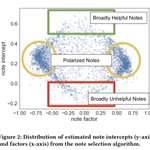
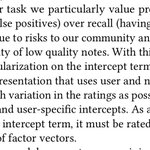
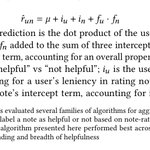
After Meta introduced community notes, I got curious and went back to read the Twitter paper about their community notes algorithm (, Birdwatch). Thoughts on a 🧵
1
45
This is the best explanation of reservoir sampling I've found so far samwho.dev/reservoir-samplin…

An interesting article on interpreting the internal mechanisms of LLMs
anthropic.com/research/traci…
37
Knowledge is software engineers' hammer, so it's comforting for everything to look like a knowledge problem.
josvisser.substack.com/p/its…
34
I got nerd sniped from Aurora DSQL release in last re:Invent, so I got down to reading as much as I could find about it.
Here's a blog post with a summary of it all:
dimosr.github.io/aurora-dsql…
2
60
This is a nice comparison of KPIs and SLIs blog.alexewerlof.com/p/sli-v…
32
If you come across the hierarchical navigable small world's (HNSW) algorithm and find out the Wikipedia link lacking, this is a very easy to digest blog post on it pinecone.io/learn/series/fai…

46