
Assistant Professor, CS & IDS, The University of Hong Kong. Previous CS PhD student at UCLA.
Hong Kong
Joined June 2018
- Tweets110
- Following128
- Followers667
- Likes228





Difan Zou retweeted

Introducing NovaAtom-Lite, an all-atom structure prediction model for drug discovery.
It predicts the structures of proteins, nucleic acids, and the molecules they bind, including how they fit together.
NovaAtom-Lite outperforms both IsoDDE and AlphaFold 3 on FoldBench antibody–antigen structure prediction (DockQ ≥ 0.23):
NovaAtom-Lite: 79.07% (n=172)
IsoDDE: 75.58%
AlphaFold 3: 47.90% (n=167)
Our evaluation uses 5 seeds × 5 samples, with the top-1 prediction selected by the model's own ranking score.
Better structure prediction. A stronger starting point for your next experiment.
Live today via Geodesic API and NovaDDE.
🔗 API: platform.geodesiclab.com/
🔗 NovaDDE: agent.geodesiclab.com
🔗 Model Card: geodesiclab.com/news/introdu…

Some recent discoveries with my student! We try to perform some "simple scientific understandings" regarding the LLM training and will release a series of blog!

(1/6)
Weight decay has a direction, too.
We usually tune its strength. For matrix weights, we can also choose how shrinkage is distributed across singular modes.
New blog with my advisor @difanzou :
Rethinking Weight Decay
doodlext.github.io/blog/reth…
2
13
875
Difan Zou retweeted

Excited to introduce Puro-2B, along with its fully open recipe that lets you train a Qwen2-1.5B-level LLM on RTX 5090 GPUs for less than $5090!
As someone who has always been curious about why LLMs work so well, one of the biggest challenges today is that we not only lack a good theory, but are also losing the ability to run controlled training experiments at scale, systematically vary key factors, and gather the empirical evidence needed to understand how LLMs learn from data.
Training LLMs has simply become too expensive.
There are now a few great open or almost open training recipes for models with billions of parameters, but reproducing them can still cost hundreds of thousands of dollars. As this makes many basic questions about LLMs inaccessible to academic labs, we really hope to bring this cost down far enough that academic labs can train and study genuinely capable models from scratch.
Puro is a full-stack engineering effort to reduce training cost, which mixes engineering and research across data, optimization, numerical precision, hardware, and training strategy. It also builds on some of our own previous research:
📈 Curriculum Model Averaging (CMA): data curriculum designs have to work together with moderate learning rate decay and model averaging (arxiv.org/abs/2511.18903)
◉ Hyperball / MuonH: an optimizer wrapper that constrains weight and update norms, and directly controls the effective (angular) step sizes for stable and efficient training (arxiv.org/abs/2606.16899)
There is still a long way to go, and we would be very happy to hear your feedback and ideas!


Difan Zou retweeted

🎓 HKU IDS SRP2026 students have concluded their summer research journey after ten weeks of research training, mentorship, academic exchange, and hands-on project experience at the Institute.
#HKU #HKUIDS #DataScience #SummerResearchProgramme


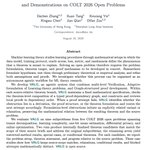
We open sourced VALG, an agentic system for automated ML theory research that turns the real "iterate and revise" rhythm of theoretical work into a structured workflow.
A key feature is joint problem solving and problem (re)formulation. VALG iterates between adjusting assumptions and deriving proofs in a unified loop. When a theorem cannot be fully established, it produces a well scoped relaxation or special case while keeping the mathematical link to the original question explicit.
We tested it on 5 COLT 2026 open problems, running 9 subproblems and producing 22 theorem candidates. Two were fully solved, and the remaining seven were partially resolved via relaxations or restricted settings.
We are also building a benchmark for ML theory automation, with initial results suggesting around 80% of arXiv 2026 theory papers can be handled end to end. Future directions include human AI proof alignment and systematic data collection.
That said, AI is not replacing researchers yet. Problem formulation, key constraints, and final delivery still require human judgment. VALG helps with rapid validation and identifying which directions are worth pursuing and can give positive outcome.
Try it, file issues, and help us improve.
GitHub: github.com/DechenZhang/ml-th…
arXiv: arxiv.org/pdf/2608.13060


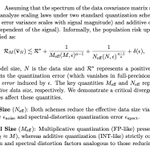
Excited to introduce our recent work on deriving the scaling laws for precision in high-dimensional linear regression!!
Low-precision training is standard for efficient LLMs, yet the theoretical mechanisms governing its scaling have remained unclear. In our new work, we introduce a unified theoretical framework based on high-dimensional sketched linear regression (see arxiv.org/abs/2406.08466) to derive precise scaling laws .
By modeling quantization as a spectral transformation, we follow our previous work on low-precision training for linear regression problems (see arxiv.org/pdf/2510.18259), derive the excess risk bound (both lower and upper) as a function of model size, dataset size, and quantization errors, which bears similarity with the empirically found scaling law for precision in arxiv.org/abs/2411.04330.
Technically, our result reveals a fundamental dichotomy for two types of quantization:
Multiplicative Quantization (e.g., FP8): Our theory shows this acts as signal-dependent noise but preserves the effective model capacity (size of the model). This explains the empirical robustness of floating-point formats during scaling.
Additive Quantization (e.g., INT8): In contrast, this scheme acts as a signal-independent floor that strictly reduces model capacity. It effectively "flattens" the spectral tail, rendering those parameters useless for learning.
Despite these differences, we prove that both schemes degrade the effective dataset size ($N_{\text{eff}}$) through noise amplification.
Future Work: The low-precision trainingdepends on the optimizers; we are working on understanding and developing theory for various optimization algorithms (e.g., Adam, Muon, etc) under the low-precision quantization regime! Open to any discussion on the related topics!
Paper link: arxiv.org/pdf/2602.19241
Joint work with Dechen Zhang, Xuan Tang, and Yingyu Liang


We are excited to share our latest work on the implicit bias of stochastic steepest descent!
While optimizers like Adam and Muon, variants of steepest descent under different norms, are popular for large-scale pretraining, their theoretical behavior under mini-batch stochastic gradients has remained elusive. We provide a unified analysis of how batch size, momentum, and variance reduction shape the solutions these algorithms find.
Key findings:
🔹 No Momentum: Convergence to the (approximated) max-margin solution requires large batches. Small batches fail to recover the full-batch implicit bias.
🔹 Momentum: Acts as a stabilizer! It enables convergence to the max-margin solution even with small batches, though at a slower rate.
🔹 Variance Reduction: A better fix, it recovers the exact full-batch implicit bias regardless of batch size or momentum.
🔹 Small Batch Size (B=1): In the extreme case (per-sample updates), the implicit bias fundamentally changes, which provably cannot be explained by standard max-margin solutions.
We believe thoroughly understanding these algorithms in theory is crucial for developing the foundation of large model training, and our work provides the initial attempts along this line.
Paper: arxiv.org/abs/2602.11557
Joint work with Jichu Li (fantastic undergrad student) and Xuan Tang (genius grad student).

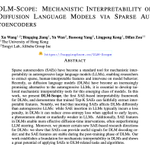
1/4 We are excited to introduce DLM-Scope: the first mechanistic interpretability framework for Diffusion Language Models (DLMs) using Sparse Autoencoders!
We develop SAE training and inference for open-source DLMs: Dream & LLaDA, providing new ways to inspect these models.


3/4 We used these features to analyze model dynamics, finding that:
1️⃣ SAEs can explain how different decoding orders (e.g., entropy-based vs. random) shift internal semantics.
2️⃣ Base-trained SAEs transfer well to instruction-tuned models, showing feature stability.
1
497
We believe that DLM-scope establishes a foundation for interpreting DLMs, and can be leveraged to explain and guide other aspects of DLMs!
Paper: arxiv.org/pdf/2602.05859
Model: huggingface.co/DLM-Scope
Joint work with Xu Wang, Bingqing Jiang, Yu Wan, Baosong Yang , Lingpeng Kong
424
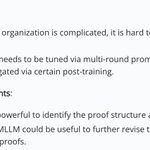
We are trying to include a proof diagram (see the following example) in my theoretical papers, which is generated via using LLM to (1) parse the paper to understand the proof structure; and (2) generate latex code to draw the diagram. We hope this can make our proof clearer 😆😆.


1
14
806

Difan Zou retweeted
【🚀 Diving into the future of AI and Machine Learning! 🤖 】HKU IDS Interdisciplinary Workshop on foundational AI & ML on May 28-29, 2025!
A great shout-out to everyone joining us 🥳 Until next time for more thought-provoking exchanges!
datascience.hku.hk/workshop2…
#HKU


Difan Zou retweeted

Thank @_akhaliq for sharing our work! Up to 16x less inference steps and 9.5x actual speedup for autoregressive visual generation. Our code and models are released at github.com/Epiphqny/PAR.
Project page: epiphqny.github.io/PAR-proje…
Paper: arxiv.org/pdf/2412.15119


The course will add more advanced topics next semester, including generative AI and some in-context learning and reasoning studies! All course materials will be released to the public.

【🔥Graduate course on data mining - DATA8003 " Theoretical Foundation of Deep Learning" by Profs Yingyu Liang & Difan Zou🙌】
View the course syllabus here: datascience.hku.hk/data8003/
Dive into the theoretical tools & methods of DL w/ our IDS professors!👻
#HKU #hkudatascience

Difan Zou retweeted
【🔥Graduate course on data mining - DATA8003 " Theoretical Foundation of Deep Learning" by Profs Yingyu Liang & Difan Zou🙌】
View the course syllabus here: datascience.hku.hk/data8003/
Dive into the theoretical tools & methods of DL w/ our IDS professors!👻
#HKU #hkudatascience
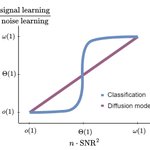
Our new paper studies how the neural network performs feature learning in training diffusion models with the denoising score matching loss.
Arxiv: arxiv.org/pdf/2412.01021
Joint work with Andi Han, Wei Huang, and @_YuanCao_ .

On the Feature Learning in Diffusion Models ift.tt/hYQCukc

We show that diffusion model can perform more balanced feature learning from the training data, outperforming that of the classification task with a similar architecture in a low SNR regime. See the figure below:

1
478
Excited to delve deeper into the mysterious world of diffusion model training and uncover the fundamental source of generative models. Welcoming any comments and feedback! Thanks again for the amazing collaborators: @WeiHuang_USTC @han_jm3andy @_YuanCao_.
367