

Diadem Technologies - India's leading #VPS, #CloudServer, #Linux #WebHosting & #IAAS provider for SME's and growing organisations.
Kolkata, India
Joined February 2009
- Tweets753
- Following1.1K
- Followers453
- Likes35


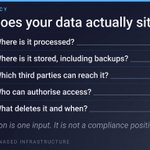

You should not have to become an expert in this. You can ask your provider three things.
What has happened to your costs? What are you doing about it? What does that mean for me at renewal?
3
"Same cores, same price" comparisons are worth even less than they were.
A provider holding a price flat across a renewal is absorbing something real. It is worth knowing whether they bought the stock or they are hoping.
4
What it does to a procurement conversation:
Lead times matter more, so capacity must be planned further ahead.
The gap between a lightly specified machine and a properly specified one has widened.
2
Most published guidance still says 20 to 30 per cent. That is where the number sat for years. It is simply out of date and it is the main reason hosting prices are moving.
5
On the builds we are specifying now, memory and storage are roughly 75 to 80 per cent of the bill of materials.
Not the CPU. The RAM and the drives.
3
Most people still picture a server the way I was taught to price one. The processor is the expensive part. Memory and disks are what you add at the end.
That has not been true for a while.

1
That last one is the worst of the three and the easiest to build by accident.
Which dependency in your application has the least obvious owner?
5
If part of that path calls an AI service, decide what happens when it is unavailable.
Perhaps the task queues safely. Perhaps somebody finishes it by hand. Perhaps it should fail visibly rather than succeed quietly with a bad answer.
5
Pick one customer action. Submitting an enquiry will do. Trace it from the screen to the final record.
Where can it stop?
Would an alert fire, or would a customer tell you?
Who investigates?
5
Some are managed for you. Some are still yours. Find out which is which before the application becomes important to the business, rather than during the week it stops.
5
The new capability arrives surrounded by very familiar things.
Identity. DNS. Certificates. Databases. Networks. Queues. Third party services with their own bad days.
6
A customer cannot tell whether your application failed because of the AI model or because a certificate expired.
They only know the work did not get done.

2
Use those pages for a shortlist, which is what they are good for. Then ask each provider the same scope questions yourself.
2
Here is what we will not do. We will not pay for placement in those lists.
We also will not claim that makes us better than providers who do. Plenty of good companies buy that visibility. We would rather spend it on engineers.
1
Comparison tables compare what is easy to put in a column. Cores, storage, price.
They rarely compare what decides your experience: who patches, who answers at midnight, what happens the first time something breaks.
3
Review platforms vary a great deal in how much they verify. Some check that the reviewer was a customer. Some check nothing.
A page of five star reviews tells you little unless you know which kind you are reading.
1
Most "top 10 hosting" articles are affiliate pages. The site earns a commission when you sign up through the link.
The order usually reflects what each provider pays. That does not make the article false. It does mean the ranking is not evidence.
8
Search for the best hosting provider in India and most of what comes back is paid placement wearing the clothes of a recommendation.
This is not a scandal. It is simply how that corner of the internet is built.

1
I would like the people doing that work to have it understood, even when the result is an ordinary day. Especially then.
What does your team do that customers only notice when it stops happening?
3