
Nothing unusual to see here, move along.
Joined March 2014
- Tweets62
- Following24
- Followers15
- Likes52



@posthog It seems like us.i.posthog.com may be having issues? Seeing timeouts and flag compute failure flags in responses. No notes on status page yet.
Tracked on the status page now posthogstatus.com/us?inciden…
One of these days, someone is going to craft a supply chain compromise to trigger on and infect a widely adopted package being updated to patch a critical vulnerability. It's the logical way to maximize uptake as people panic to upgrade. That day will be a very bad day.
The difference between vibe coding and a software factory boils down to two things:
- automation (work keeps going without a human pressing go)
- really, really good scaled risk management (security risks, behavior defect risks, availability risks)
Jonas Bauer retweeted

Clay just shipped what might be the best version anyone will ever build of the 2025 definition of 'Cursor for GTM'.
This category still won't survive, even for Clay.
What they launched today at Sculpt: an agent harness, a Knowledge Hub for context, and a pitch to work with Clay "the way software engineers work with coding agents." It's exactly what they had to build, and they're probably the only company with any hope of pulling it off.
That background wailing is fifty other 'Cursor for GTM' startups turning back into pumpkins 🎃
But GTM engineers already have coding agents: Claude Code, Codex, Cursor. Clay knows it (Workflows also runs from "the coding agent of your choice via CLI"). The labs won't cede a layer this valuable, and they get to train the horse in harness because they own both.
Clay's own learning example suggests an ICP change after a campaign 'books six meetings.' That's not an eval. Meetings aren't revenue, and the truth behind deals is buried in a stack built for the age of humans.
You can't solve 'what worked' at the orchestration layer.

Jonas Bauer retweeted

There is nothing cuter than @camillericketts, @swyx and Alma reading my book about Dragon, Mina and attribution. I smiled and laughed every time I watched this and now I want a recipe for these pepper buns and a stuffed dragon for @UpsideGTM 🙃

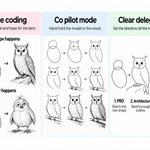
Astra/Fable class models don’t need micro managing, and worse, you can actively make them worse if you try to. Learn how to draw the rest of the owl with good delegation up front, and then getting out of the way.


Does the DuckLabs team joining AWS mean we're going to get some kind of DuckRDS? I would love to see some sort of managed AuroraDuck fusion for hybrid workloads
Software engineering is very much about solving problems given constraints, and the building of the software itself is rife with it's own constraints. What data is allowed to inform changes? Is a change here safe for the thing over there? etc
I see some people talking as if software factories will be fully commoditized and fungible, but I don't think that will be the case. The coding agents inside them will be (just like robotic arms in real factories have been), but the overall orchestration will still be unique
I'm beginning to think that within a year or two, the core work product of an engineering team will no longer be their company's product. It will be the 'software factory' (pardon the buzzword) that is *specialized* in building product for their company's domain
With how long agents can now hill climb against a well written definition of done, I'm finding myself settling into a pattern of 'thinking' days (where I'm just deeply mentally digesting the next major chunk of work) and 'do' days where I tackle all the other misc tactical stuff
I used to try to make every single day a 'do' day, which was insidiously attractive proposition given how much agents can crank out. But the biggest problems still require mental space and focus time to roll them over and inspect the true problem and best path forward.
