

PhD in Political Science and International Relations, Community Adv. @chainlink, Founder of AdastraaNet, Per aspera ad astra
SEA
Joined May 2014
- Tweets1.5K
- Following9K
- Followers11.4K
- Likes128K





devin retweeted

Don't miss this! 👇Worth a read.

The Great Filter
Since the earliest civilizations, human beings have returned to the same haunting question:
Are we alone in the universe?
The universe is unimaginably vast, filled with billions of galaxies and countless planets.
As Carl Sagan put it, “The universe is a pretty big place. If it’s just us, it seems like an awful waste of space.”
The Great Filter hypothesis offers one possible explanation for this silence.
It suggests that somewhere between the beginning of life and the rise of an interstellar civilization, there is a barrier that almost no species can cross.
Civilizations may fail to develop advanced technology, collapse after developing it, or destroy themselves before they ever leave their home planet.
According to this idea, some civilizations may have reached a stage similar to our own before collapsing.
The causes could include nuclear war, engineered pandemics, ecological catastrophe, uncontrolled artificial intelligence, resource depletion, or dangers we have not yet imagined.
The unsettling part of the Great Filter is that we do not know whether it lies behind us or ahead of us.
Perhaps humanity has already passed the most difficult stages. Or perhaps the greatest test is still to come.
When we look into the darkness between distant galaxies, the question becomes impossible to ignore:
“Are we alone in this vast universe?”
The Great Filter also leads to a more urgent question about our own future:
If unchecked technology has the power to destroy humanity, can we learn to control it before it is too late?

devin retweeted

#vss365 #hurricane
white fire
in dark cloud
moon
in
free
fall
hurricane
takes refuge
in your eyes
#poetrycommunity
#writingcommunity
devin retweeted

whoa 👇
Hyperchainlinkization in the Autonomous AI Era
By the mid-2030s, there may be tens of billions of connected devices worldwide.
Earlier forecasts placed the figure above 100 billion.
The exact figure matters less than the broader trend: the digital world is expanding beyond the scale of the human population.
We are rapidly approaching a point where humans are no longer the primary creators or consumers of digital information.
Autonomous machine intelligence is beginning to take the wheel.
Stephen Hawking famously warned that creating human-level AI could be “the biggest event in the history of our civilization, or the worst.”
Whether that becomes reality depends heavily on the integrity of the data machines rely on.
When an autonomous system acts on corrupted, manipulated, or fabricated inputs, highly capable AI becomes a force for systemic disruption.
The core challenge lies in building the infrastructure required to ground autonomous systems in verifiable reality.
This is exactly the kind of challenge Chainlink is designed to address.
Chainlink connects smart contracts and autonomous systems to external data through a decentralized network of independent nodes.
By aggregating and verifying information from multiple sources, it prevents inaccurate or malicious inputs from reaching automated decision-makers.
In the 20th century, authority rested largely within centralized institutions such as courts, credit bureaus, and state registries.
In the AI era, trust will increasingly depend on the infrastructure that verifies and transmits information.
If artificial intelligence is the engine of the next industrial transformation, decentralized oracle networks are its rails, switches, and signals.
Without them, the autonomous economy cannot scale. It breaks down.


The Great Filter
Since the earliest civilizations, human beings have returned to the same haunting question:
Are we alone in the universe?
The universe is unimaginably vast, filled with billions of galaxies and countless planets.
As Carl Sagan put it, “The universe is a pretty big place. If it’s just us, it seems like an awful waste of space.”
The Great Filter hypothesis offers one possible explanation for this silence.
It suggests that somewhere between the beginning of life and the rise of an interstellar civilization, there is a barrier that almost no species can cross.
Civilizations may fail to develop advanced technology, collapse after developing it, or destroy themselves before they ever leave their home planet.
According to this idea, some civilizations may have reached a stage similar to our own before collapsing.
The causes could include nuclear war, engineered pandemics, ecological catastrophe, uncontrolled artificial intelligence, resource depletion, or dangers we have not yet imagined.
The unsettling part of the Great Filter is that we do not know whether it lies behind us or ahead of us.
Perhaps humanity has already passed the most difficult stages. Or perhaps the greatest test is still to come.
When we look into the darkness between distant galaxies, the question becomes impossible to ignore:
“Are we alone in this vast universe?”
The Great Filter also leads to a more urgent question about our own future:
If unchecked technology has the power to destroy humanity, can we learn to control it before it is too late?

devin retweeted

This blissful view of a New Zealand Beach has everything that a person can hope for. When the Waters, Skies, and Sand are this Wonderfully Clean, and Calm; Possessing the Air that's as Pure as an Angel's Kiss, we're near Paradise... ~~CR~~

devin retweeted

.
Sunlight dancing on ivy-mantled bark, painting a path made of time and stillness.
The world is loud, but here, the silence speaks volumes. ☀️🍂
#SilentForest #WhisperingTrees #NatureHeals
.

ALT L'immagine mostra un sentiero boschivo illuminato dalla luce del sole che filtra tra gli alberi, con tronchi alti parzialmente ricoperti di edera.

ALT L'immagine mostra un sentiero boschivo illuminato dalla luce del sole che filtra tra gli alberi, con tronchi alti parzialmente ricoperti di edera.

ALT L'immagine mostra un sentiero boschivo illuminato dalla luce del sole che filtra tra gli alberi, con tronchi alti parzialmente ricoperti di edera.
devin retweeted

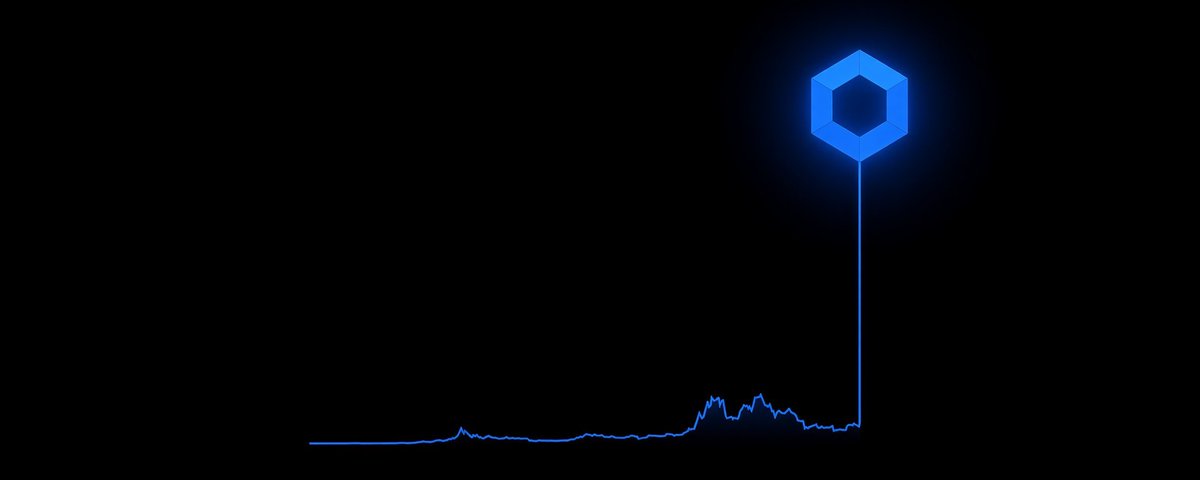
Hyperchainlinkization
Hyperchainlinkization in the Autonomous AI Era
By the mid-2030s, there may be tens of billions of connected devices worldwide.
Earlier forecasts placed the figure above 100 billion.
The exact figure matters less than the broader trend: the digital world is expanding beyond the scale of the human population.
We are rapidly approaching a point where humans are no longer the primary creators or consumers of digital information.
Autonomous machine intelligence is beginning to take the wheel.
Stephen Hawking famously warned that creating human-level AI could be “the biggest event in the history of our civilization, or the worst.”
Whether that becomes reality depends heavily on the integrity of the data machines rely on.
When an autonomous system acts on corrupted, manipulated, or fabricated inputs, highly capable AI becomes a force for systemic disruption.
The core challenge lies in building the infrastructure required to ground autonomous systems in verifiable reality.
This is exactly the kind of challenge Chainlink is designed to address.
Chainlink connects smart contracts and autonomous systems to external data through a decentralized network of independent nodes.
By aggregating and verifying information from multiple sources, it prevents inaccurate or malicious inputs from reaching automated decision-makers.
In the 20th century, authority rested largely within centralized institutions such as courts, credit bureaus, and state registries.
In the AI era, trust will increasingly depend on the infrastructure that verifies and transmits information.
If artificial intelligence is the engine of the next industrial transformation, decentralized oracle networks are its rails, switches, and signals.
Without them, the autonomous economy cannot scale. It breaks down.


devin retweeted

It’s summer, yay, time for a diversion! All work and no play makes Jack a dull boy, and Jackie? NYC spoils one with magnificent parks. We found 2 new attractions in Hudson River Park-the “Choo Choo” train, & the “Heads”. Geese were flocking with humans! A beautiful day! Stay well


The Stoic Walk
The world is full of disorder.
Loss, chance, violence,and storms wait beneath its fragile patterns.
No one promised you paradise.
Only your will can defy the dark.
So walk.
Hold on to your Quest.
Let it keep you alive.
Survive if you can
Stay human no matter what.


devin retweeted

昭和の頃は八百屋さんや
魚屋さんがあって
お店の人との世間話や
「これオマケね!」って👍🏻
笑顔で🤗言う店主や
お客同士の顔が見え
人情味が街に溢れてた
今はスーパーや商業施設が
溢れ便利になったが
誰とも話さずに買い物が
終わる
便利さと引き換えに
大切な人の温もりを
失ってしまったようだ
🤖 Made with AI

devin retweeted

The world 🌏 is our home. With compassion (Karuna) and wisdom (Prajna), may all the citizens of this world of ours be able to co-exist peacefully, overcoming all challenges.
🙏🏼🙏🏼🙏🏼
Sadhu Sadhu Sadhu


Watching the city from the window of the KL Library, I jotted this down:
“When a critical persona dies at a node shared by the universes, memory pulls forward and backward at once to accommodate the loss.
This is what causality looks like when you stop insisting that one thing follows another and start accepting that some things arrive sideways.”
A timeless song by the Beatles came to mind:
“All the lonely people,
Where do they all come from?”

