

Delhitrees is an attempt to learn and share the knowledge of greens in and around Delhi.
Joined March 2019
- Tweets862
- Following0
- Followers6.8K
- Likes1.3K

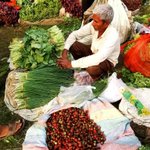


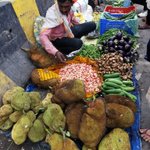


CR Park is Delhi’s little Bengal, but Regar Pura has Bengal in every corner.
Lau shaak, mocha, thor, poi shaak, laal shaak, chalkumro, kumro, chalta etc. fill the vegetable stalls.
Puffed rice in heaps, jhal muri, begun bhaja & other bhajas bring Bengal’s street food to Delhi.


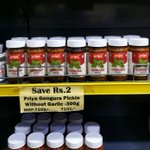
Having heard Aavakaya Mana Andaridi, I wanted to know more about gongura, the sour, leafy green.
My quest led me to Southern Super Market in Karol Bagh, where shelves of gongura pickle revealed its place in Telugu food traditions.
Sometimes, a leaf leads you far beyond botany.


Got gongura leaves & buds, and patua leaves in Mandi today.
Farmers grow these greens for Delhi’s diverse communities.
Next time, look beyond your usual greens. Ask how to cook. Experiment!
You may discover a new favourite, a new cuisine, or a food tradition from another part.


Was quite delighted to find Noni saag in Okhla Mandi today.
Known botanically as Portulaca quadrifida, it is a small, creeping purslane that has long been gathered & eaten as a green in parts of eastern India.
This will go into making Pakoras. What recipes do you make with it?


DelhiTrees retweeted

Sunday well spent at the monsoon pakora party by @delhitrees — devoured 10 types of pakoras made of jute leaves, kankaua, banana flowers, red sorrel, chaulai & curry leaves with 9 types of chutneys made of amrood, hog plum, elephant apple & Karonda.


Tucked within Lodhi Garden is a grove of Kaim/Krishna Kadamb (Mitragyna parvifolia) trees in bloom. Their creamy, fragrant flower heads fill the monsoon air with sweet fragrance, evoking the ancient legends of Lord Krishna, whose divine pastimes are eternally entwined with it.


At IHC, met a fascinating Krishna Fig (Ficus benghalensis var. krishnae), carefully pruned into a striking umbrella shaped topiary. Remarkably, the same tree has both the characteristic pocket shaped leaves of the Krishna Fig & the flat ancestral leaves of the ordinary banyan.


Qudsia Bagh is home to some giant Kosam trees that are in fruits!
Foraged a handful of these tangy, litchi-related fruits for making some chutney.
Beyond feeding birds, Kosam is India's top host for the lac insect, which yields the natural resin used in traditional bangles.


If you walk through Rajghat these days, you are likely to notice the grove of Barna trees and the ground beneath them equally covered with brilliant red fruits.


Patua/patsan leaves, probably Corchorus capsularis (white jute) at Okhla Mandi. The 2 cultivated jute species Corchorus capsularis & C. olitorius, are grown for their strong natural fibre. The leaves are rich in natural mucilage & give soups & curries a distinctive silky texture.


Saw 2 tree species in Lodhi garden one hardly expects to find in Delhi.
Sal (Shorea robusta), the great forest tree of the Himalayan foothills, central & east India and rarely seen in Delhi.
Kuchla or Poison Nut(Strychnos nux-vomica), known for homeopathic preparation Nux Vomica.


Summer arrives in the company of Amaltas (Cassia fistula). The rising, relentless heat follows close behind, with these blooms as the only mercy.


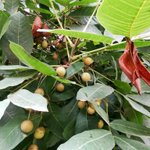
Foraging Khirni (Manilkara hexandra) at Vir Bhumi- ripe yellow drupes tucked among thick, leathery leaves!


Scenes from Old Delhi/Sadar today:
- Gondi fruits! Apparently, edible!!
- Falsa fruits!
- Kachra (काचरा), the round cucumbers!
- Dried Chana leaves, to be cooked with some lentil(Masoor)!
- A lady with a roadside shop, feeding a kitten she found near railway tracks!


Came across the Calabash (Kamandal) tree at Talkatora Garden with large & smooth gourds sprouting straight from the trunk and fresh blooms. Native to tropical South America, its name comes from Spanish calabaza (gourd). The shells become vessels; the pulp traditional remedies.


