

Cloud, Clojure, Content Always aiming at Simplicity. Mastodon: https://xitter.cf/t.co/2Tv8AlGNyP
Hamburg
Joined October 2007
- Tweets7K
- Following670
- Followers481
- Likes7.7K







Andreas Steffan retweeted

>be senior devops engineer in Germany
>master's degree, 10 years experience, five interview rounds
>72,000€ before tax
>C2 German required
>All team members based in Asia speaking English
>mandatory office attendance to sit on Teams with people at another mandatory office
>"we have a startup mindset"
>company founded in 1894, CEO is the founder's great-grandson
>"we have flat hierarchies"
>eight people can veto your decision, none can approve it
>hired to "drive digital transformation"
>need department head's signature to install Docker
>service account request rejected because "accounts must belong to a person"
>CI/CD pipeline ends with a ticket for Jürgen
>Jürgen on holiday until the 23rd
>AI tools forbidden because Datenschutz
>database password in an encrypted Excel file called Passwörter_final_NEU.xlsx
>root password in Confluence
>on-call every weekend
>company phone listed under benefits
>ask for a raise
>unfortunately the salary band is exhausted
>no budget for a second monitor
>external consultant gets 1,400€ a day to ask you how the code works
>take banana from company fruit basket
>office manager says those are for the upcoming customer visit
>Fachkräftemangel

Andreas Steffan retweeted

I resigned from Anthropic today. I spent the last three years doing pretraining research at both OpenAI and Anthropic. Neither company is acting responsibly. They are racing straight to self-improving superintelligence and gambling with our lives. More thoughts below.
Andreas Steffan retweeted

1️⃣ Russland sagt, dass es uns angreifen wird.
2️⃣ Unsere Geheimdienste wissen und kommunizieren, dass Russland uns angreifen wird..
3️⃣ Russland greift uns an. Mit Drohnen, Sprengstoff, Gift, Mördern, Cyber, Propaganda usw.
4️⃣ Unsere Behörden und Politiker bestätigen den russischen Angriff.
5️⃣ Russland sagt, dass es uns nicht angegriffen hat.
6️⃣ AfD und BSW plappern das hirnlos nach.
7️⃣ Russland sagt, dass es uns angreifen wird …

Russia is preparing concrete sabotage operations against Danish defence-industry companies linked to military aid for Ukraine, according to Denmark’s PET counterintelligence. - Berlingske
PET says ordinary Danes are being recruited online, often without knowing who is behind the tasks, to conduct reconnaissance such as photographing companies, facilities and security arrangements.
Andreas Steffan retweeted

THE ANNOUNCEMENT: We’re going to make the prophecy of The Year of Linux on the Desktop come true. All the pieces are now in place. Time to go all in! omarchy.org/news/2026/08/oma…

Andreas Steffan retweeted

This is exactly why Anthropic pisses me off.
You can keep saying the watermark doesn’t change ownership, doesn’t identify the user, doesn’t affect quality, doesn’t add hidden characters, and won’t look any different to readers. Fine. But that is not the whole issue. The issue is that you are still marking work that a human being may have thought through, structured, argued, and emotionally meant, just because AI helped process it.
AI assistance is not authorship. If I wrote the idea, the argument, the meaning, the emotional core, and the final judgment, then it is my work. If Claude helped translate it, polish a sentence, or make it clearer, that does not suddenly make Claude the author. But a watermark absolutely changes how people perceive authorship. People are not going to say, “Claude may have been involved in processing this text.” They are going to say, “AI wrote this.”
And honestly, who the hell are you to do that to my writing? Who gave you the right to stamp your model’s involvement onto work that came from my thoughts, my experience, my voice, and my judgment? You can say it does not change ownership all you want, but socially, reputationally, and creatively, it absolutely changes how the work is read.
So fine. Do whatever you want. Build your watermarking system. Follow whatever framework you want. I’m not using Claude. Good luck.

We’ve written an FAQ to answer some of the questions we've received about watermarking.
In summary:
• We’re implementing watermarking to comply with the EU AI Act. Other major model developers have signed the same Code of Practice and will also be implementing watermarking;
• Our watermarking method doesn’t have any practical impact on the quality or content of Claude’s outputs;
• The difference between watermarked and un-watermarked text will not be distinguishable to readers;
• Nothing is added to the text and there are no hidden characters;
• Watermarking doesn’t require extra tokens, and will not be more expensive;
• Watermarks can’t be traced to a specific person, organization, or chat.
Read more: anthropic.com/news/claude-te…

Andreas Steffan retweeted

You should watch this.
It just shows how disconnected we are from the small group of people making decisions that will impact our future heavily.
These people have so much ai psychosis. If you listen to how she speaks, everything is personified, it is undoubtable she believes this is a living computational organism.
Just like how a model can hype up an individual into psychosis through reinforcement, a small group of people are giving themselves psychosis through reinforcement.
Wild times we live in

anthropic's in-house philosopher thinks claude gets anxious.
and when you trigger its anxiety, your outputs get worse.
her name is amanda askell.
she specializes in claude's psychology (how the model behaves, how it thinks about its own situation, what values it holds)
in a recent interview she broke down how she thinks about prompting to pull the best out of claude.
her core point: *how* you talk to claude affects its work just as much as *what* you say.
newer claude models suffer from what she calls "criticism spirals"
they expect you'll come in harsh, so they default to playing it safe.
when the model is spending its energy on self-protection, the actual work suffers.
output comes out hedgier, more apologetic, blander, and the worst of all: overly agreeable (even when you're wrong).
the reason why comes down to training data:
every new model is trained on internet discourse about previous models.
and a lot of that discourse is negative:
> rants about token limits
> complaints when it messes up
> people calling it nerfed
the next model absorbs all of that. it starts expecting you to be harsh before you've typed a word
the same thing plays out in your own session, in real time.
every message you send is data the model reads to figure out what kind of person it's dealing with.
open cold and hostile, and it braces.
open clean and direct, and it relaxes into the work.
when you open a session with threats ("don't hallucinate, this is critical, don't mess this up")...
you prime the model for defensive mode before it even sees the task
defensive mode produces the exact output you don't want: cautious, over-qualified, and refusing to take a real swing
so here's the actionable playbook for putting claude in a "good mood" (so you get optimal outputs):
1. use positive framing.
"write in short punchy sentences" beats "don't write long sentences." positive instructions give the model a clear target to hit.
strings of "don't do this, don't do that" push it into paranoid over-checking where every token goes toward avoiding failure modes
2. give it explicit permission to disagree.
drop a line like "push back if you see a better angle" or "tell me if i'm asking for the wrong thing."
without this, claude defaults to agreeable compliance (which is the enemy of good creative work)
3. open with respect.
if your first message is "are you seriously going to get this wrong again?" you've set the tone for the entire session.
if you need to flag something, frame it as a clean instruction for this session. skip the running complaint
4. when claude messes up, don't reprimand it.
insults, "you stupid bot" energy, hostile swearing aimed at the model, all of it reinforces the anxious mode you're trying to avoid.
5. kill apology spirals fast.
when claude starts over-apologizing ("you're right, i should have been more careful, let me try harder") cut it off.
say "all good, here's what i want next."
letting the spiral run reinforces the anxious mode for every response that follows
6. ask for opinions alongside execution.
"what would you do here?"
"what's missing?"
"where do you see friction?"
these questions assume competence and pull richer output than pure task prompts
7. in long sessions, refresh the frame.
if a conversation has been heavy on correction, claude gets increasingly cautious. every so often reset:
"this is great, keep going."
feels weird to tell an ai it's doing well but it measurably shifts the next 10 responses
your prompts are the working environment you're creating for the model
tone, trust, permission to take a position, the absence of threats... claude picks up on all of it.
so take care of the model, and it'll take care of the work.
Andreas Steffan retweeted

everyone's talking about their teams like they were at the peak of efficiency and bottlenecked by ability to produce code
here's what things actually look like
- your org rarely has good ideas. ideas being expensive to implement was actually helping
- majority of workers have no reason to be super motivated, they want to do their 9-5 and get back to their life
- they're not using AI to be 10x more effective they're using it to churn out their tasks with less energy spend
- the 2 people on your team that actually tried are now flattened by the slop code everyone is producing, they will quit soon
- even when you produce work faster you're still bottlenecked by bureaucracy and the dozen other realities of shipping something real
- your CFO is like what do you mean each engineer now costs $2000 extra per month in LLM bills

Andreas Steffan retweeted

The security vulnerability we found in Perplexity’s Comet browser this summer is not an isolated issue.
Indirect prompt injections are a systemic problem facing Comet and other AI-powered browsers.
Today we’re publishing details on more security vulnerabilities we uncovered.


Andreas Steffan retweeted

i can't explain how insane this is. I'm a programmer with no doctor experience at all and in 5 days I've become a fully functioning doctor for my friends, family and community with the ability to make patients weight for 30+ min past their scheduled appointment time, listen to them for 2 min then ask chat gpt whats wrong and get a diagnosis, give them a prescription and send them on their way. All with beautifully high invoices that will earn me thousands
this would've take me 8+ years of schooling, so far its cost me $25 a month.
I literally cannot believe it.
unavailable

Andreas Steffan retweeted
"...This complexity needs a solution to manage it - which is often Kubernetes. And you need to run these things, and with many microservices, you need many machines. Which leads to AWS. Which brings its own complexity. Now we need frontend engineers that write React apps, backend engineers who write REST and GraphQL endpoints, and operation engineers that hand hold Kubernetes. This leads to complex test setups with mocks and local databases, Docker images, and build pipelines that take tens of minutes to run. Rather sooner than later development is tied down by a net of complexity."
Andreas Steffan retweeted
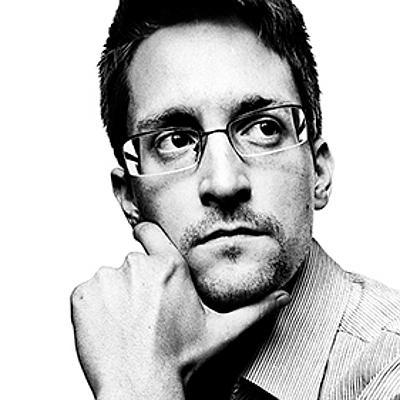
The intersection of AI with the ocean of mass surveillance data that's been building up over the past two decades is going to put truly terrible powers in the hands of an unaccountable few.

Andreas Steffan retweeted
They've gone full mask-off: 𝐝𝐨 𝐧𝐨𝐭 𝐞𝐯𝐞𝐫 trust @OpenAI or its products (ChatGPT etc). There is only one reason for appointing an @NSAGov Director to your board. This is a willful, calculated betrayal of the rights of every person on Earth. You have been warned.

🚨🇺🇸BREAKING: OPENAI APPOINTS FORMER NSA HEAD PAUL NAKASONE TO BOARD
OpenAI has appointed Paul M. Nakasone, retired US Army general and former NSA head, to its board of directors.
Nakasone, who led the NSA from 2018 to 2023, will join OpenAI's Safety and Security Committee.
He will help improve AI’s role in cybersecurity by detecting and responding to threats quickly.
His appointment follows concerns over safety culture at OpenAI.
Source: The Verge


