





manu ve retweeted

Major depression often involves a measurable drop in cellular ATP production.
This matters because your struggle may be a metabolic crisis wearing a costume of meaning.
People with major depressive disorder frequently exhibit measurable mitochondrial dysfunction, including reduced ATP production, lower complex I and IV activity, and altered membrane potential. This deficit appears even in the absence of overt metabolic disease.
When cellular energy production falters like this, two things follow.
First, the relationship between stress and mitochondria is bidirectional. Chronic stress damages these cellular powerhouses, and damaged mitochondria actively amplify the body's stress response, creating a self-reinforcing loop that standard medications and talk therapy struggle to interrupt alone.
Second, the clinical focus expands beyond neurotransmitters. When low mood is paired with persistent fatigue, exercise intolerance, brain fog, and unrefreshing sleep, tracking markers like the lactate-to-pyruvate ratio, inflammatory cytokines, and resting heart rate helps pinpoint impaired oxidative metabolism.
Targeted additions that stimulate mitochondrial biogenesis, such as Zone 2 cardiovascular work and specific metabolic protocols, work directly on this cellular deficit.
Treating the underlying cellular substrate often unlocks responsiveness to every other therapy.
ultraskool.com/blog/depressi…

manu ve retweeted

🫀🏃♂️Nuevo posicionamiento del American College of Cardiology sobre ejercicio físico y salud cardiovascular:
🏃150–300 min/semana de actividad aeróbica moderada
💪Fuerza ≥2 días/semana
📉 El mayor beneficio cardiovascular: pasar de inactivo a activo
🔗 doi.org/10.1016/j.jacc.2026.…

manu ve retweeted
The standard advice on 5-minute stimulation assumes you need constant contact. But the 5-second removal protocol triggers a deeper shift toward calm.
This protocol involves a steady five-second inhale with the device removed from the skin, followed by a five-second exhale with the device applied. By timing the contact this way, you work with the body's natural rhythms.
Think of it like pushing someone on a swing. You do not push constantly through the entire arc. Instead, you wait for the exact moment of momentum to apply force and amplify the height of the movement.
The vagus nerve naturally increases its activity during a slow exhale. Applying the device only during this phase layers the external input directly onto an existing peak of internal calm for a compounding effect.
During the inhale, the sympathetic system—the part of the nervous system responsible for alertness—takes the lead. Removing the device for those five seconds allows this natural shift to occur without interference.
Maintaining this 5x5 tempo for just two to three minutes often produces a more significant shift than five minutes of constant contact. The focused timing creates a more concentrated and efficient outcome.
This approach works with handheld ultrasound or electrical stimulators. Matching the stimulation window to the natural rise in nerve tone allows the input to land exactly where it can do the most work.
More on this timing principle here.
skool.com/vagus/synchronizin…

manu ve retweeted

El cortisol see esta convirtiendo en el gran asesino silencioso de nuestras sociedades, cada vez más estresadas y no únicamente por el trabajo
Interesante infografía para entender cómo funciona el estrés

manu ve retweeted
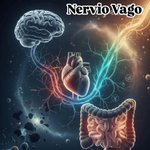
The vagus nerve is a physical tether that drops from the base of the brainstem and threads itself through the chest like a silver wire, looping around the heart and lungs before settling into the coils of the gut. It is less of a one-way broadcast and more of a massive eavesdropping device.
While we usually assume the brain is dictating terms, eighty percent of the traffic on this nerve is traveling upward. The brain spends the majority of its time listening to the rhythmic churning of the stomach and the expansion of the lungs, translating chemical whispers into what we experience as intuition.
It functions as a biological dampener. When the system is caught in a fight-or-flight loop, the vagus nerve acts as a weight on the gears, forcing the pulse to settle and inflammation to recede. High vagal tone is the difference between a system that resets after a shock and one that remains brittle.
The ways we can manually override this system feel almost absurdly tactile. Dunking your face in ice water triggers a vestigial diving reflex that forces the nerve to engage. Singing, humming, or a vigorous gargle vibrates the nerve fibers where they pass the vocal cords, sending a hum of safety back up to the brainstem.
The language of the subconscious is a specific frequency. We are finally learning how to speak it back to ourselves through devices that mimic these organic signals to treat depression and epilepsy, using mild electricity to remind the body how to return to itself.
vaguscure.com/blog/the-hidde…

manu ve retweeted
The standard advice on nutritional nerve support assumes clean eating is enough. You actually need raw materials like 70% dark chocolate to signal.
Omega-3 fatty acids act as the high-grade insulation for your internal wiring. Just as a fiber-optic cable requires a specific coating to prevent signal loss, these fats incorporate into nerve membranes to ensure messages travel at full speed.
This physical upgrade lowers inflammation and provides the structural integrity needed for rapid signaling. Without these building blocks, the system struggles to maintain the clear communication required for a balanced state.
Magnesium from seventy-percent dark chocolate provides the chemical support for parasympathetic tone. This specific mineral helps the system transition out of high-alert modes and back into a state of recovery and repair.
Supplements like magnesium glycinate and L-theanine serve as amplifiers for your recovery efforts. They do not replace breathwork or cold stimuli, but they create the internal conditions where those signals produce a much stronger response.
The way you consume these nutrients matters as much as the ingredients themselves. Chewing each bite twenty to thirty times engages the signaling loop between the gut and the brain, turning every meal into a chance to reinforce stability.
Consistency with these raw materials ensures the body has the hardware it needs to function. It is the difference between trying to run modern software on an outdated machine and giving your system the components to thrive.
The rest of the breakdown is worth a read.
skool.com/vagus/classroom/07…

manu ve retweeted

🫁 PULMONARY OXYGEN TOXICITY: WHEN OXYGEN BECOMES HARMFUL!
💨 Oxygen is a drug! Although essential for survival, prolonged exposure to high concentrations of inspired oxygen (FiO₂) can cause oxidative lung injury.
🔬 How Does It Happen?
High FiO₂ → ↑ Reactive Oxygen Species (ROS) → Oxidative Stress → Cellular Injury → Inflammation → Alveolar–Capillary Damage → ARDS-like Lung Injury.
⚠️ What FiO₂ Is Toxic?
Traditionally, FiO₂ > 60% is associated with increased risk, particularly during prolonged exposure. However, there is no universally safe cutoff.
Risk depends on:
- Oxygen concentration (FiO₂)
- Duration of exposure
- Antioxidant defenses
- Underlying critical illness
🩺 Potential Pulmonary Complications
🔴 Tracheobronchitis and airway irritation
🔴 Absorption atelectasis
🔴 Reduced lung compliance
🔴 Alveolar–capillary damage and pulmonary edema
🔴 Severe inflammatory lung injury resembling ARDS
🛡️ Antioxidant Protection
Glutathione, vitamins C and E, superoxide dismutase, and catalase help protect lung cells against oxidative injury. Critically ill patients may have reduced antioxidant defenses.
✅ Clinical Pearls for Respiratory Therapists
- Use the lowest FiO₂ that maintains adequate oxygenation.
- Titrate oxygen to individualized SpO₂ targets.
- Avoid unnecessary prolonged exposure to high FiO₂.
- Monitor oxygenation and respiratory mechanics.
- Remember: Short-term 100% oxygen may be necessary and appropriate during emergencies.
💡 TAKE-HOME MESSAGE
Oxygen toxicity is concentration- and duration-dependent. More oxygen is not always better!
🎯 The goal is adequate oxygenation while minimizing unnecessary hyperoxia.
🎨 Saleem Hamilah
#RespiratoryCare #RespiratoryTherapy #OxygenToxicity #OxygenTherapy #CriticalCare #ICU #MechanicalVentilation #PatientSafety #RCWEEK
🤖 Made with AI

manu ve retweeted
The standard advice on HRV assumes 1 daily score is enough, but its significance is only revealed when you pair that number with your specific life events.
Think of a raw HRV score like a single frame clipped from a feature film. Without the scenes that came before it, you cannot tell if the character is starting a journey or reaching a breaking point.
A dip in your score is merely a signal that requires a surrounding story to become useful. A watch registers your heart rate, but it has no way of knowing you spent the week shipping a high-stakes project or stayed up late with a restless child.
Effective change follows a four-part loop: noticing the signal, identifying the drivers, making one doable change, and verifying the result. Most users stall at the first step, treating their health dashboard like digital wallpaper that they glance at but never use.
Real insight occurs when you overlay metrics with your calendar. You may find that recovery scores drop predictably after a late-evening workout or a single glass of wine, even when your total sleep duration looks normal on paper.
When you examine your data history alongside life context, a low score is no longer an isolated mystery. It becomes a visible reaction to work intensity or specific habits, allowing you to build buffers into your schedule.
Converting these signals into a coherent story is the only way to move from measurement to decision-making. Once you identify the driver behind the number, you can stop guessing and start adjusting your training with precision.
The rest of the process is worth a look.
myultra.coach/blog/turn-wear…

manu ve retweeted
A low HRV score is linked to an increased risk of sudden cardiac death. This single metric reveals the hidden state of your autonomic balance and heart health.
Heart rate variability measures the tiny fluctuations in time between consecutive heartbeats. A healthy heart does not beat like a metronome; it constantly adjusts to shifting signals from your nervous system.
Because the vagus nerve modulates cardiac rhythm on a beat-to-beat basis, your HRV serves as a direct readout of autonomic tone. From that dynamic, two things follow.
First, a higher HRV reflects robust vagal tone and parasympathetic balance. When parasympathetic activity is strong, your heart rate slows and recovers efficiently, which is linked to better cardiovascular health, lower stress, and reduced mortality risk.
Second, a chronically low HRV signals vagal withdrawal and sustained sympathetic dominance. When fight-or-flight signaling takes over, the heart loses its natural flexibility, elevating long-term risks for coronary artery disease, heart attacks, hypertension, and burnout.
For anyone tracking this metric on a wearable, absolute numbers are deeply personal. Age, genetics, physical fitness, and time of day all shape your baseline, making individual trends far more meaningful than raw comparisons.
Targeted habits can actively support that autonomic resilience. Consistent aerobic exercise, seven to nine hours of quality sleep, and slow diaphragmatic breathing all help reinforce vagal regulation over time.
Watching that trend line offers practical insight into how well your body is actually adapting and recovering.
vaguscure.com/blog/the-vagus…

manu ve retweeted
Ujjayi breathing is not just a soothing sound. It is a way to use airway resistance to hit exactly 6 breaths per minute.
The technique works by creating a gentle constriction at the glottis—the opening between the vocal cords in the throat. This narrowing creates a deliberate hurdle for the air to pass through on both the inhale and the exhale.
By raising airway resistance, you force the respiratory system to move air more deliberately. This mechanical friction naturally stretches out the length of each breath cycle without requiring intense mental effort to count the seconds.
This physical resistance helps entrain the body toward a specific, slower rhythm. At this pace, the breath becomes deep and rhythmic, providing a steadying effect that is difficult to achieve through simple willpower alone.
Because the laryngeal vibration and the resistance can be sustained without interruption, the technique is uniquely suited for movement. It allows for continuous regulation during an hour-long practice, rather than being limited to a short seated session.
This consistent practice is reflected in the higher resting heart rate variability observed in regular practitioners. The technique supplies ongoing vagal stimulation—activating the nerve responsible for the body's rest-and-digest response—by using the throat to modulate airflow.
Understanding the physics of the glottis allows you to move beyond the auditory experience of the breath. You are using fluid dynamics to shift your internal state through nothing more than the physical shape of your airway.
The rest is worth a read at the link.
skool.com/vagus/classroom/02…

manu ve retweeted
The standard advice on the vagus nerve assumes it is 1 simple neck connection. This massive superhighway actually influences your heart, lungs, and kidneys.
This nerve bundle travels from the brainstem down through both sides of the neck, reaching deep into the chest and abdomen. It serves as the primary conduit for the autonomic nervous system, carrying signals that modulate brain circuits and the immune system.
Think of this system as a high-capacity fiber-optic cable servicing an entire city. While the main line is visible, the functional impact depends on the specific neighborhood branches that regulate the rhythm of the heart or the filtration of the kidneys.
Modulating these pathways can influence synaptic plasticity, which is the brain's ability to reorganize its neural connections. It also facilitates endocrine integration, where the nerve helps coordinate how different organs respond to hormonal signals.
The medical application of this reach is already established through devices approved for epilepsy, depression, and rheumatoid arthritis. These tools work by either stimulating or blocking signals to adjust inflammation and organ function across multiple systems.
However, the internal wiring is not identical for everyone. Your specific anatomy, nerve fiber thresholds, and even existing health conditions like heart disease change how these electrical signals are processed by the body.
Future therapies are moving toward closed-loop systems that use AI and biomarkers to provide personalized feedback. The goal is to target selective fibers within the nerve to ensure the right organ receives the intended signal without off-target effects.
Understanding this anatomical scope explains why a single nerve is relevant to so many different systems. The full breakdown of these mechanisms is worth a read.
today.ucsd.edu/story/using-t…

manu ve retweeted
Using 2 common kitchen spices is not just for flavor. It is a way to raise BDNF and stop blood sugar spikes from triggering stress signaling.
We often view spices as optional flavor enhancers rather than biochemical tools. However, turmeric and cinnamon work at a cellular level to disrupt the cycle of chronic inflammation that suppresses internal signaling.
Turmeric contains curcumin, a compound that can cross the blood-brain barrier to raise brain-derived neurotrophic factor, or BDNF. This protein supports the growth and maintenance of neurons, but the effect is only realized if the curcumin is actually absorbed.
Pairing turmeric with black pepper and a source of fat dramatically increases its bioavailability. This combination also works to block NF-kB, a protein complex that controls the DNA transcription of inflammatory signals.
Cinnamon provides a different kind of support by stabilizing blood sugar excursions. Sharp spikes and drops in glucose levels act as a metabolic stressor, triggering additional stress signaling that would otherwise disrupt your system's balance.
Adding ginger to this kitchen toolkit provides further benefit by inhibiting COX-2 enzymes. This helps lower the overall inflammatory load that prevents the body from releasing enough acetylcholine to properly quiet immune responses.
The goal is not a restrictive diet but a consistent pattern of including these functional ingredients. An 80/20 approach—focusing on whole, anti-inflammatory foods most of the time—maintains these improvements without the metabolic rebound of short-term restriction.
More on this dietary strategy in the full summary.
skool.com/vagus/classroom/e0…

manu ve retweeted

Entonces, la mayoría de los estudios indican el efecto antiinflamatorio de los análogos de GLP-1.
Yo me pregunto... ¿Cuál de todos los efectos es más importante para mi paciente?
La evidencia clínica es más sólida en cardiometabolismo.
DOI: 10.1210/clinem/dgag218

manu ve retweeted

EFECTOS ANTI-INFLAMATORIOS DE LOS GLP-1RAs
¡¡¡A leer, zagales!!!
Link en mi bio
o
waltersport.com/investigacio…

manu ve retweeted
🏃♂️❤️ El fitness cardiorrespiratorio importa, también después de los 70 años
🆕 Mayor VO₂peak se asoció con menor riesgo de eventos cardiovasculares durante 10 años de seguimiento
📉 Mantenerse fit: ↓36% en hombres y ↓42% en mujeres.
🔗 academic.oup.com/eurjpc/adva…
:::

manu ve retweeted
Las famosas reglas de Charlie Munger no enseñan a acertar siempre, sino a evitar errores costosos: cuestionar supuestos, detectar sesgos, analizar incentivos, buscar evidencia contraria y pensar consecuencias
En entornos complejos —y con IA— este modelo es especialmente útil

manu ve retweeted
The mechanical interface between the diaphragm and the vagus nerve (CN X) provides a direct physical pathway for autonomic modulation. During inspiration, the descent of the diaphragm stretches the nerve, while the exhalation phase facilitates release. This mechanical stimulation is integrated via the brainstem's pre-Bötzinger complex, which regulates respiratory rhythm, and the nucleus tractus solitarius (NTS), the primary relay for afferent signals from lung stretch receptors.
Respiratory sinus arrhythmia (RSA) serves as the physiological marker of this coupling. On inhalation, pulmonary stretch receptors signal the brainstem to transiently suppress parasympathetic outflow, leading to a modest tachycardic response. Conversely, the exhalation phase triggers the vagus nerve to release acetylcholine at the sinoatrial node. This vagal braking effect slows the heart rate and shifts the system toward parasympathetic dominance. Prolonging the exhalation phase relative to inhalation—specifically using a 4:6 or 1:2 ratio—maximizes this acetylcholine release and optimizes vagal tone.
Heart rate variability (HRV) quantifies this responsiveness. High HRV reflects robust vagal tone and correlates with improved emotional regulation and decreased systemic inflammation. Research into yogic pranayama, specifically Ujjayi and Bhramari, confirms these mechanisms. Ujjayi breathing increases prefrontal cortex activity and downregulates the amygdala. Bhramari pranayama utilizes vocalization to stimulate the auricular branch of the vagus nerve, providing a non-invasive method for rapid HRV elevation and autonomic stabilization.
skool.com/vagus/classroom/02…

manu ve retweeted
PAPEL DEL NERVIO VAGO EN EL INFARTO DE MIOCARDIO
¡¡¡A leer, zagales!!!
Link en mi bio
o
waltersport.com/investigacio…

manu ve retweeted
The vagus nerve is a physical object that requires a constant supply of construction materials just to stay insulated. Methylated B12 and omega-3 fatty acids act as a specialized repair crew for the myelin sheaths, physically wrapping the nerve fibers so electrical messages don't bleed into the surrounding tissue. Without this fatty armor, the signal between the brainstem and the gut loses its integrity, leaking energy into the void before it can reach its destination.
Inside the neurons themselves, a specific chemical assembly occurs. Choline provides the base, but it needs an acetyl group to become the neurotransmitter that actually slows the heart and calms inflammation. Apple cider vinegar provides that missing piece, allowing cells to finish the synthesis of acetylcholine without a middleman. It is a direct molecular hand-off that turns a kitchen staple into a neural brake.
While this is happening, fat-soluble benfotiamine slips through cell membranes that block ordinary B1, scrubbing away the inflammatory by-products that would otherwise corrode nerve tissue. It works alongside NAC, which keeps a reservoir of glutathione ready to neutralize oxidative bursts. Even the light you stand in matters; photons at 660 and 850 nanometers penetrate deep enough to hit the mitochondria living inside the vagal fibers. These organelles react to the light by churning out ATP, fueling the constant firing required to keep the body in a state of rest.
The system is even sensitive to physical movement. Rhythmic vibration or a simple passive swing shifts the fluid around the nerve trunk, flushing out metabolic debris that accumulates during high-stress states. It is a biological maintenance cycle that relies as much on fatty acids and vinegar as it does on specific frequencies of light and motion.
skool.com/vagus/top-recommen…

