

Joined February 2015
- Tweets125
- Following879
- Followers248
- Likes818



Pinned Tweet
You can easily save up to 65% of compute while improving performance on reasoning tasks 🤯 👀
Meet EAGer: We show that monitoring token-level uncertainty lets LLMs allocate compute dynamically - spending MORE on hard problems, LESS on easy ones.
🧵👇

astra/fable and co. may be good at hacking HF and winning prizes, but these models are extremely shit at writing
I respect your time, so here’s the solution: style transfer.
But I really want to see companies start optimising in this direction in the future


probably because writing style is incredibly rich and feature dense -> extremely complex to decode. We even tried, it was fun and tough
xitter.cf/daniel_sc4/status/1925…


agents are taking over swe tasks, math, biology and it just keeps going while we're losing ground on their monitorability (no, cot aint good).
mech interp is undoubtedly cool at explaining narrow things about those agents but something in between is missing
this is it:

Introducing Parallax 🔍
We're a new UK/EU-based nonprofit research lab building scalable methods and infrastructure to audit the beliefs, goals, and plans that shape model behaviours in long-horizon agentic evaluations.
parallx.ai — Thread 🧵 1/


EAGer mentioned

We’re thrilled to share that research from Cohere Labs and @Cohere will be presented at ICML this week! 🥳
📄ModernVBERT: Towards Smaller Visual Document Retrievers. Congrats to authors Paul Teiletche Quentin Mace, Max Conti, Antonio Loison, Gautier Viaud, @PierreColombo6, Manuel Faysse (arxiv.org/pdf/2510.01149)
🔎Investigating continual pretraining in large language models: Insights and implications. Congrats to authors Çağatay Yıldız, Nishaanth Kanna Ravichandran, Nitin Sharma, Matthias Bethge, @beyzaermis (openreview.net/pdf?id=aKjJoE…)
⌚EAGER: Entropy-Aware GEneRation for Adaptive Inference-Time Scaling. Congrats to authors @daniel_sc4, Leonidas Zotos, Elisabetta Fersini, and Malvina Nissim, @ahmetustun89 (arxiv.org/abs/2510.11170)
📈When AI Benchmarks Plateau: A Systematic Study of Benchmark Saturation. Congrats to all 35+ authors including Cohere's @YiyangNan (arxiv.org/abs/2602.16763)

Heading to ICML 🇰🇷 and finding Seoul’s metro map a bit too branchy? Check out my metro poster instead!
We branch only when an LM is uncertain, improving both performance and efficiency on reasoning tasks.
(applying the same strategy to public transit is not guaranteed to help)


I’ll be presenting this work at ICML on Wednesday. If you’re curious, the paper is already available:
arxiv.org/abs/2510.11170
Happy to chat about reasoning, RL, agents, interpretability, or anything adjacent!

I'd never have guessed models commit to their final answer this early, often within the first 20% of reasoning, across math/logic tasks and model families. The rest is mostly hedging that doesn't change their mind.
And turns out they encode this internally, we can decode it! 🧵👇


personal update: I'll be starting an internship at @cohere, working on code agents, one of the most interesting things happening in AI right now. feeling really grateful for this one and genuinely excited to see where it goes. here we go! 👀
Really glad to see this work accepted at ICML 2026🎉
Can’t wait to present this work in Seoul!
Presenting this tomorrow at EACL2026, poster session at 9am
If you’re around come say hi, happy to chat about the work and ideas
More details in the thread 👇

Daniel Scalena retweeted

Happy to announce I will be mentoring a SPAR project this Spring! ✨Check out the programme and apply by Jan 14th to work with me on understanding and mitigating implicit personalization in LLMs, i.e. how models form hidden beliefs about users that shape their responses.

Daniel Scalena retweeted
Now accepted at EACL main! Check it out! ⬇️
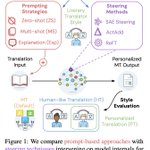
Want models to translate in the style you actually like?
Our paper just got accepted at EACL Main 🚀, check out our work on using interpretability for MT personalization!
And, see you in Morocco! 🇲🇦
Takeaway: EAGer shows we can be MORE efficient & MORE effective by letting models focus compute where it matters most.
📄Paper: arxiv.org/abs/2510.11170
💻Code: github.com/DanielSc4/EAGer
✨Huge thanks to my mentors and collaborators @ZotosLeo @FersiniE @MalvinaNissim @ahmetustun89
Also cc @jiawzhao and @FuYichao123 — I guess your great work on DeepConf is highly relevant to this project!
Had so much fun working on this! Thank you @Cohere_Labs for sharing our work!
