

Hello Internet, it's Daniel. I am an Assistant Professor of Economics at the University of Maryland. My research interests lie in behavioral & public economics.
DC/Maryland
Joined October 2016
- Tweets1.4K
- Following356
- Followers2.5K
- Likes2.4K




Daniel Reck retweeted
Enjoyed a glorious afternoon visiting with my wonderful constituents & listening to awesome music at WOODMOORstock. Lots of federal workers here hanging tough through a dark time—they’ll still be contributing to America long after Elon Musk & Donald Trump have been sent packing.


Daniel Reck retweeted

Hello! Excited to share my job market paper with #econtwitter
I study how barriers to social assistance disproportionately screen out people with poor mental health—despite their high need.
Summary below
Paper: 🔗(canishknaik.github.io/pdf/MH…)
@WelcomeEcon

Daniel Reck retweeted

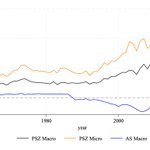
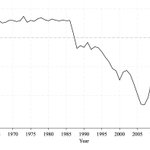
Hassett and Clingenpeel cite (indirectly) my work with @omzidar , Eric Zwick, and Matt Smith as finding that the 2017 TCJA ("Trump tax cut") increased domestic investment 20%. This is not accurate and significantly overstates the TCJA's investment effects. wsj.com/opinion/kamala-harri…

Daniel Reck retweeted

Read the proposal: hamiltonproject.org/publicat…
Tune in today at 10:30 AM EDT to hear from @RonWyden, @WendyEdelberg, @dashching, @lilybatch, @WilliamGale2, and more on partnership tax: hamiltonproject.org/event/ta…

Daniel Reck retweeted

Creation of a secure query system for IRS's Statistics of Income program can bolster evidence-based policymaking and program evaluation for state and local governments, from Amy O'Hara, Stephanie Straus, Ron Borzekowski, Paul Arnsberger, and Barry Johnson nber.org/papers/w32969

“Mexico will pay for the border wall” but for all public spending.

Another reason these toy examples involving publicly traded stock or houses are less relevant than one might expect

The discussions of unrealized capital gains for the very rich (ie those with wealth exceeding $100M) are often missing a key fact - two thirds of unrealized gains at the very top is from gains in private businesses
(From SCF data eml.berkeley.edu/~yagan/Capi…) @jasonfurman @MargRev

Daniel Reck retweeted

Also, as Daniel knows:
4. The bill gives you at least 9 years to pay the tax and
5. You can elect to just wait until you choose to sell to pay thr tax (plus an interest charge)
...so no, there will not be any fire sales.
We spent years writing the bill. And we're not morons.
Reasons this is wrong:
1) unrealized gains would be taxed on accrual —>the dollar amount is way too high
2) Any bank would happily lend Gates money. He would not need to sell stock.
3) the long-run price of MSFT is based on its profitability, not whether Bill Gates owns/sells.

"The unrealized tax is only for ultra wealthy, no big deal."
Let's play this out.
25% unrealized gains on people worth 100MM.
Bill Gates is worth 132 Billion.
Assume his unrealized tax due is about 30 billion.
He would need to sell 40 Billion in Microsoft shares, pay tax on that, just to pay the unrealized tax.
That would probably tank MSFT 10%.
7 million people own Microsoft stock.
Now repeat with META, GOOG, NVDA, AAPL, TSLA etc..
Daniel Reck retweeted

IIPF Scientific Committee chaired by @danhreck and @D_Langenmayr with President @wwwojtekk gave best paper awards 🏆at this wonderful #IIPF2024 congress in Prague @vsecz :
I’ve read three or four variations on this Tweet and at one point drafted my own. It’s the “death tax” campaign all over again.

If you were to actually read the bill, or even just the summary of it, you'd find that affected taxpayers (which, again, is only people who are worth at least $100m) can spread payments over nine years. Most can choose to wait even longer, until they do in fact sell.
Daniel Reck retweeted

This year's @IIPF_org congress will have a fantastic program! You can check out the full program at conftool.pro/iipf2024/index.…
Registration is still open until August 1st - come join us in Prague, it will be so much fun! To register, visit iipf2024.vse.cz/#program

ALT Screenshot of the IIPF program, which is also linked in the tweet
Daniel Reck retweeted
Developing a general, welfarist approach and new robustness criteria for how policy should be evaluated when behavioral frictions make revealed preferences inconsistent, from Canishk Naik and @danhreck nber.org/papers/w32813

I completely agree with this. There is some incredibly innovative and interesting work being presented by junior scholars at IIPF 2024!!!

Going through submissions for the @ITAXjournal award for best PhD student presentation at the @IIPF_org congress next week. The future of public economics is clearly in smart, clever, and capable hands! #iipf2024 #TaxTwitter
Daniel Reck retweeted
How to measure the potential impact of polling nonresponse using the concept of the total margin of error, from Jeff Dominitz and Charles F. Manski nber.org/papers/w32782

🔥 NEW RESEARCH 🔥 Canishk Naik & I posted a working paper.
We argue that a core issue in behavioral welfare economics - revealed preferences are inconsistent, so how do we model welfare? - can be addresed by borrowing math and intuition from the theory of social welfare.

The payoff from adopting this perspective is that we can formalize robustness criteria that resolve the incompleteness of dominance criteria like that of Bernheim & Rangel. These robustness criteria are the intrapersonal analogue of a preference for equity for social welfare.
This paper axiomatizes and generalizes some ideas in my earlier work, where coauthors and I studied this kind of problem from a more applied perspective.
You can find the paper here if you don't have access to NBER WPs:
danreck.com/s/Intrapersonal_…
Comments welcome!