

fermi foundation, https://xitter.cf/t.co/FEU3UuDufs, https://xitter.cf/t.co/f2RsVA1e9y, https://xitter.cf/t.co/yrDdMwVqGl
Liechtenstein/Austria
Joined July 2020
- Tweets519
- Following1.9K
- Followers1.1K
- Likes4.4K

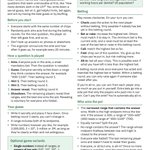





Ten days ago was Enrico Fermi's 125th birthday. To celebrate his life and work, we're planning to sponsor hundreds of Fermi Poker tournaments at schools and universities.
Learn more here: fermi.org

How to Play: Fermi Poker
Fermi Poker resembles poker, but instead of being dealt random cards, you make guesses about questions that seem unknowable at first, like "How many dentists work in the US?"

Daniel Fetz retweeted

I think @DavidDeutschOxf is correct that a non-coercive school is possible. Even an amusement park would get tiresome at some point. Instead, their best option is simply the town or city that they live in.
@danftz describes mini-cities, and they could be an option for onboarding kids to the richness that real life offers them, in a safe but not-patronizing way.
cato.org/blog/friday-feature…

Daniel Fetz retweeted

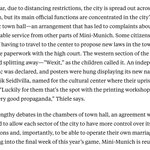
Kids running their own businesses, newspapers, banks, & governments for 3 weeks in summer? Austrian entrepreneur @danftz wants to spread the word about mini cities, including bringing them to the U.S. Learn more in today's @CatoInstitute Friday Feature! cato.org/blog/friday-feature…
I spoke with the @CatoInstitute about mini cities: child-run summer cities in Germany and Austria with their own currency, jobs, stock market, newspaper, courts and elected mayor. Almost unknown in the English-speaking world.
cato.org/blog/friday-feature…
"Had all 548 million children ever born in the United States faced the survival odds of today, only about three million would have died before the age of five, rather than the roughly 49 million who did."
danielfetz.substack.com/p/ho…
Daniel Fetz retweeted

For more than 3,000 years, communities in Oxfordshire, England have climbed a hill to chalk the White Horse of Uffington.
Without their work with hammers and buckets of chalk, this larger-than-life figure would disappear into the grass within 20 years. Archaeologists suspect this may have been by design: a monument that requires a community to maintain it is also a monument that continuously creates one.
The horse has outlasted empires thanks to community and multigenerational dedication. It is an argument that some of the most durable things we can build are the habits of showing up.
Ahmed Kabil shares the full story on Long Now Ideas: na2.hubs.ly/H068tS00


Daniel Fetz retweeted

As a high schooler I enjoyed snail mailing my solutions to math problems he posed in his monthly column, and receiving his replies by post. He was indeed a very special man.

I just learned that two weeks ago the world lost a very special man.
George Berzsenyi (1938-2026) mentored thousands of talented high school students over fifty years, including @VamsiMootha and many others who are now among America's best mathematicians and scientists.
Most notably, George Berzsenyi founded the USA Mathematical Talent Search. Unlike other math competitions, the USAMTS is about talent identification and development rather than just competition.
That has always been what set his work apart. As George put it in his essay "Talent Search versus Talent Development," which was also how I came across him, it bothered him that we identify tens of thousands of talented students through math competitions, then build a development program for ~60 and leave the rest to fend for themselves.
He spent his life trying to fix that. It was a life well lived. The flourishing of science, and civilisation with it, requires people like him.
May he rest in peace.
Some links if you want to learn more about George Berzsenyi:
The 2019 NPR profile of him is worth reading: npr.org/2019/04/07/707326070…
Citation for winning the Gung and Hu Award wfnmc.org/awberzsenyi.pdf
George writes about his upbringing in Hungary, and the humiliations and disappointments the family received by the Communists: childhoodhomestories.com/pos…
SpaceX started with a Fermi estimate.
In 2001-2002, Elon Musk looked at the cost of buying rockets (initially trying to buy refurbished ICBMs from Russia) and then estimated the raw material cost of a rocket (metals, fuel, etc.) and concluded the materials were only about 2-3% of the rocket’s price.
That gap between material cost and market price convinced him that rockets were drastically overpriced due to manufacturing practices and lack of competition, not physics.
He reasoned that if you built them more like cars (vertically integrated, mass-produced) you could slash costs by an order of magnitude. That estimate became the founding thesis of SpaceX in 2002.


Read more here: docs.google.com/document/u/0…

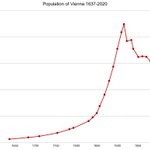
When people first hear about a miniature city like Mini-Munich, a temporary city run by children with its own currency, jobs, and government, they tend to picture an insular world: streets, storefronts, and institutions... with no connection to the larger city outside.
1/19

As they grow more competent and ambitious, the work extends outward: the newspaper reaches adults, the bakery serves parents, the commissions come from local firms.
The structure supports them until they no longer need it and decide it’s time to become fully independent.
18/19