

Architect | Artist | Doctor of History of Art ART ART ART iykyk → post-object readymade: CENTS
🇪🇺
Joined June 2009
- Tweets16.3K
- Following593
- Followers3.6K
- Likes72.7K




Martin Lehnen retweeted

dig a feature video on DOPEMIND's Collector Wall
w/ an in-depth look at his Cents
& selections of his words on the significance of the collection.
a great collector, a great Wall

I love collecting art with meaning.
Art that challenges me and takes me to new places.
CENTS by Rutherford Chang is next level concept art.
What started in physical world ended up being transformed to Ordinals 10K collection.
This is performance of value.
I study it.
Thanks @daidatep and @sovrnart
for my wall.


Martin Lehnen retweeted

THE FIRST WORKSHOP COLLAB. 🔨🔧🎨🤝
JPEG FRENS × NORMIES
NOVEMBER 13.
Two collections. One unmistakable culture.
Frens and Normies already feel like family.
A shared love for art, culture, and characters with a personality of their own.
Opening the Workshop together felt natural.
We’re bringing the iconic black-and-white pixel art of @serc1n’s Normies into the JPEG Frens universe.
Three limited trait pack tiers.
Three ways to go Normie:
◽ RARE → NATIVES
◽ LEGENDARY → ALIENS
◽ GRAIL → ZOMBIES
Built for the base Frens you already hold and about to make picking your favorite a lot harder.
Normies holders and holders of the corresponding JPEG Frens tiers (rares, legendaries, and grails) will have priority access.
Full claim mechanics and eligibility details are coming this week.
The Workshop starts with our iconic pixel friends.
See you on the other side. 🔧

Martin Lehnen retweeted

gm
10,000 Normies minted at 0.005 ETH ($9)
3010 burned, 368 customized
1989 were registered as an agent on Ethereum.
8 months, over 1.5 billion NormiesAPI usage, 10 murals, countless community built apps.
Normies is the normies way: Bring something new on the table, make it accessible, let everyone to be part of it.
Normies is not only a PFP project, it's a way to express yourself as an artist, as a builder.
Join us today.

Martin Lehnen retweeted
Rutherford Chang’s We Buy White Albums is now on view at GOLD in Hong Kong, occupying the entire “Side B” as one of the exhibition’s two main poles.
WBWA was built over nearly twenty years and consists of 3,417 numbered first pressings, transforming an icon of mass production into an archive of individual histories. It has toured the globe and maintains an enthusiastic fanbase. Chang's limited edition composite album is highly sought-after collector's item.
GOLD is a new interdisciplinary cultural space in Wong Chuk Hang, Hong Kong’s leading contemporary-art district. The show extends Chang's visibility across Asia, with coverage already appearing throughout Hong Kong and Taiwan.

Martin Lehnen retweeted
generative art is indeed one of the aspects of CENTS
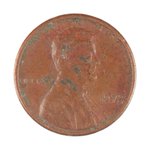
all surfaces begin as the most widely reproduced piece of physical art on Earth - the portrait of Lincoln made by Victor David Brenner in 1909 for the Lincoln cent
and Rutherford Chang applied a consistent rule set to meet these surfaces, archivally photographing the first 10,000 copper (pre-1983) pennies he gathered from apx 150,000 pennies that he got from exchanging at banks (until they ultimately banned him :p) and as change from shops.
He was extremely strict with the rule sets in all of his art, and the resulting visual (and audio) elements are created from these rules.
One could call this "time-based generative art".
But this generative visual (/audio) element is only one part of his work. Overall, his oeuvre resides in systems art.
The visual component is not primary, but rather a mode of entry into the underlying conceptual structure.
CENTS for instance has rich visual subtlety (which has been meticulously cataloged by the Trait Council and can be explored in a variety of ways on cents(dot)vision). But the artwork overall is a conceptual gesture, a performance of value.
It's this quality that Art in America recognized in placing Chang in the canon of systems art, among significant artists who "self-consciously chart a lineage between systems art past and present.” With CENTS for instance, Chang created a system that performs in an artistic and absurdist way the transformative gestures that Bitcoin brought to digital objects and to currency.
As a side note if you want to get crazy, CENTS is also an engine of generative objecthood, a work that breaks the fixity of the object's centralized definition and places it in a kind of cauldron of decentralized transformation where the fundamental nature of what it is as an object is generated continuously as participants' perceptions evolve.
These multiple natures of Chang's art, all of them equally valid, are why I call it "prismatic".
You can look at it through any of these facets and see something true.

Martin Lehnen retweeted

Assuming everything goes as planned, it's a little under 24 hours until this opens up so I thought I'd talk a little more about what this is, how it works, and what's so interesting (to me) about it. Part of the fun (again, for me) is that the idea started off as high concept art, then as I worked on it became silly web fun, then eventually found it's way back to art.


Martin Lehnen retweeted

We’ve lost an icon. Margaret Hamilton, a computer science pioneer best known for her work at MIT leading development of the flight software for the Apollo missions to the moon, has died at 90. Read about her legacy via MIT News: news.mit.edu/2026/margaret-h…

ALT Margaret Hamilton is reclined inside a NASA spacecraft module, surrounded by control panels and switches.

Martin Lehnen retweeted

GAN Poetics
Does an unfinished image ask more of its viewer than one that looks complete? And if so, what did we lose when the AI image field moved on to diffusion models, whose entire premise runs in the opposite direction: resolution, coherence, an image that looks like it was never generated at all?
For a few years, GANs left a sort of fingerprint: a smear, faces sliding into one another, unfinished images. It recurred across artists who had nothing else in common but the GAN models, so consistently critics gave this a name: GANism. Was that sameness a limit of the architecture, or a portrait of the people using it, the datasets being used? If a thousand artists bring a thousand intentions to the same generator and get back one look, where does authorship actually sit? With the artist, the dataset, or the machine? 10 years later, artists, with access to the most advanced diffusion models, are now going back to those GANs to explore them as expressive tools.
Diffusion models generate with a polish and control that GANs never had, but that polish arrives bundled with cost, with licensing, with infrastructure few individuals own outright. So where do artists go who want to keep working at the level of the pixel, the glitch, the visible seam, who find more to say in an unstable image than a resolved one? Is it strange that the technique researchers left behind is the one that remains open, inspectable, free to misuse, free to run on a laptop rather than rented compute? Does a technology's obsolescence to the field that built it create exactly the kind of margin an artist needs, a space left alone long enough to be reoccupied on different terms?
Is the artist's retreat toward the older, rougher, cheaper GAN a nostalgia, or a refusal... a way of insisting that an image should still show its work, still carry the evidence of a process rather than disappear into polish? And as diffusion gets faster, cleaner, and more expensive all at once, is the open, imperfect GAN becoming not a relic but a position? A deliberate place to stand and ask what we actually want images to do for us?
Here are some artists from the Daily Program @dailydotxyz who have explored these tools and aesthetics, each with their own unique intentions.
📺 7303711398_artificial_intelligence_wikiart_029 by @twt_cha_
Martin Lehnen retweeted
A brilliant article by @daidatep !
CENTS brings out the best ideas/notions/understandings when it comes to thinking about value and money.
What particularly struck me is how the performance of value is so inherently human - whether at individual, corporation or state level.

My new essay on medium:
>>> The Readymade of Loss <<<
Yves Klein, the CENTS Void, and a Value Objecthood Born of Non-Perception
Three CENTS sit in a single Bitcoin output of nearly 950 BTC. If every sat were a penny, that stack would reach a third of the way to the Moon.
No one burned them. Custodians that see only fungible bitcoin swept them up as loose change. Loss discovered, not performed: Duchamp’s readymade, not Klein’s burn.
Patient zero is a matched pair of pennies from 1971, the year Nixon closed the gold window. Klein demanded gold. The Seine has become the UTXO.
medium.com/@ml_54234/the-rea…

Martin Lehnen retweeted

1973: "Some of the scenes in WESTWORLD required the gunslinger’s POV, as seen through his 'electronic eyes'. A chap by the name of John Whitney, Jr. has devised an ingenious method of... converting the image into a fascinating mosaic pattern of varying shapes and colors."

Martin Lehnen retweeted
CENTS shows us the many manifestations of the performance of value. This aspect of the collection & Rutherford’s brilliance, makes CENTS an eternal performance and a continuous artwork
So it would appear few CENTS hitched a ride atop a 500 btc train straight to an exchange 🤣
New on cents-vision:
The Void – a new home for the CENTS that get swallowed by the machine.
It started with a false alarm. I run a small on-chain detector that watches every CENT change hands and catches the sales the marketplaces miss – offer-accepts and cross-platform trades that never show up in any feed. Yesterday afternoon it flagged a „sale” for nearly 100 BTC. Nobody pays 100 BTC for a handful of CENTS (yet! 😜), so instead of trusting it, we opened the transaction.
It wasn’t a sale at all. It was five Cents – #20, #60, #1859, #7061 and #8086 – being swallowed whole by an exchange. The transaction moved 578 BTC across three inputs and nineteen outputs, with not a single inscription-safe output among them: a major exchange sweeping its own wallets, and five Cents just riding along in the sats it happened to spend. Collateral!
We followed them. All five landed together in one 300 BTC cold-storage output, and the inputs traced back to a hot wallet that has cycled more than 780,000 BTC in its lifetime – a top-tier exchange. Somewhere upstream a collector had deposited these coins, and „the machine” simply ate them.
They are not lost. They sit in that wallet, fully intact and fully spendable – by an exchange that has no idea it is holding a piece of the collection. But they cannot be listed, cannot be traded, and cannot move on their own. They have been cancelled out of circulation. I started calling that state „voided“ – present on-chain, but null in practice.
The real danger is the next move. The day that big output is spent by a wallet with no regard for inscriptions, a CENT could leave as change to a random withdrawal – and that is how ordinals actually die. For now these five are simply benched: about 0.05 % of the whole collection, frozen in place.
So we built them a home. „The Void” is a new page that collects every Cent this happens to. For each one it shows the wallet now holding it, the size of the UTXO it is trapped in, the transaction that took it there, and the date it slipped in – every detail linking out to mempool so you can verify each step yourself. A matching Voided badge now appears on the Cents’s detail page.
The new tool finds them on its own. A Cent whose holding output is bundled with real Bitcoin (0.01 BTC or more) is not being held as a collectible, and the detector flags it automatically; a weekly scan keeps the page current. Each voided Cent carries one of three states – voided while it is trapped, escaped if it ever returns to a normal wallet, and consumed if it is spent away for good – so if one of these five ever claws its way back out, the Void will be the first to show it and I will definitely let you know if that ever happens …

Martin Lehnen retweeted

From the start, @normiesART has been built differently from the ground up. I realized that by customizing two Normies, I could create a stereoscopic 3D PFP. I discussed this possibility with @serc1n and @AdamWeitsman, and together we set off to make it a reality.
Having created stereoscopic 3D works for 20+ years and having a deep love and respect for the craft, I created NORMIE 3D as a nod back to the 1980s when red/blue 3D glasses were the go-to way to see depth in an image. The awesome thing about these two imges are they are future-proof 3D, meaning it can also be seen in 3D on VR and any future stereoscopic tech that comes in the future, on-chain forever.
You can explore the different ways of viewing this in stereoscopic 3D at coldie.normies.art
Burning 84 Normies to create this pair is symbolically fitting. Form & Function together.
Huge shout-out to Serc and Adam for doing a lil FAFO session in 3D with me. I'm really excited to see this come to life, and honored to have this work added to the Legendary Canvases collection alongside really great artists @beeple @lphaCentauriKid @ArtOnBlockchain @deekaymotion @jackbutcher @TimpersHD @piv_piv @serc1n


Martin Lehnen retweeted
It's inspiring to see how much building & writing the CENTS heads do
this is a 3D renderer that @0x613b10 made as an independent initiative.
It uses endpoints that @daidatep built for cents vision, another independent initiative.
Which in turn uses the index of emergent traits cataloged by the Trait Council, another independent initiative.
And these indie initiatives all use the indie turtles that go all the way down to the urinitiative.

some very cool updates to the 3D CENTS site
max shareability 👊👊
gif, png, mp4
trait-based search
transparent bkgnd
customizable studio settings
absolutely heartening to witness how much the community builds around this project
awesome work @0x613b10!!!
[and yes, the reverse of an irl cent is upside-down in relation to its obverse]
Martin Lehnen retweeted

When I started building JPEG Frens tech and teamed up with @cryptopeng1 we agreed that one thing mattered:
Don’t build only for what NFTs are today.
We have no idea where this space goes next.
But we want Frens to go there too and I want the Fren you mint on Wednesday to remain your Fren no matter what he becomes.
Same token. Same identity.
So Peng1 made sure we left that door open.
Worth a read ↓


Martin Lehnen retweeted

Step into the craziest visualization of the fourth dimension you have ever seen
Martin Lehnen retweeted
Vera Molnár in 1981: "One of my dreams… is to build a robot named Vera Molnar, who will …be able to grasp the underlying logic of my entire process and… meticulously follows every single order that I give him."


Martin Lehnen retweeted
now that the Sovrn site is finalllyyyyyyyy unflagged by twitter (fu x)
check out the CENTS site 😎
it's pretty cool
and I'm 99% sure you don't know about all of the shit on here
sovrn.art/cents