

Be humble, follow smart people, learn from others. dont let your emotion controls you. @xstar_id
Namyangju South Korea
Joined September 2012
- Tweets7.7K
- Following3.1K
- Followers340
- Likes12.1K





d347h/Startale/Soneium retweeted

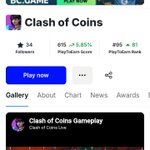
Partnership announcement: Owb Studio × Blockrun
Clash of Coins AI chat has been running on @BlockRunAI tools since August. Hundreds of players have been served with zero errors
Pushing agentic gaming forward together

d347h/Startale/Soneium retweeted

Months of real players, zero errors. Making it official with @BlockRunAI

Partnership announcement: Owb Studio × Blockrun
Clash of Coins AI chat has been running on @BlockRunAI tools since August. Hundreds of players have been served with zero errors
Pushing agentic gaming forward together
d347h/Startale/Soneium retweeted

Circle patched a spending limit bypass in its AI agent wallets in eight days. We found another one that can drain the wallet with no owner approval.
We test with a one-cent cap so any spend past it shows up right away.
- Nov 4-5 · initial test, Circle agent wallet on Base mainnet, $10, one-cent cap
- Nov 9 · findings shared with Circle
- Nov 17 · Circle CLI 1.4.0 and new spending policy guide
- Nov 23 · tested with 1.4.0 version and shared another report with Circle
WHAT WE REPORTED
Circle refers to its cap as a “transfer limit,” which is used to track transfers. Both swap and bridge are basically two contract functions, hence when the cap was set at one cent, each moved one dollar without incrementing the spending tracker. Thread: x.com/ax1vc/status/212267860…
WHAT CIRCLE CHANGED
With the updated guidance, swaps and bridged transactions are also counted now. It is very fast, only 8 days from our email to shipping the changes. Circle told us some of this was already underway.
OUR SECOND TEST
We put the same cap of one cent on 1.4.0 and tested all of the routes again. The cap works at the places where it was failing earlier. Direct transfers, approve, swaps, bridges, gateway deposits, and signed payment authorization have been blocked by the cap.
However, we discovered another way out. In case of the one-cent cap, a second wallet was able to withdraw about 50 times the cap amount from the capped wallet without requiring verification codes, and without having any participation from the owner. A one-cent cap places no restriction on this route: the wallet can be drained to its balance. There is also one more, smaller gap on Arc, Circle’s own blockchain. We reported both of them to Circle privately on Nov 23. This was done using our wallets and funds and there is no bounty claimed. The mechanism is private till Circle releases the patch or 90 days elapse.
TWO LISTS
The spending limit takes into account the actions from the first list. There is another list below where you set the spending limit, the actions that don’t count towards it. An agent doesn’t verify whether the route falls under the first or the second list before processing it. Circle moved some routes from the second list to the first in eight days. In our retest, we still found one route on the wrong list. Edges change every time an update is issued, and the owner usually learns about the new one through their agent's transaction history.
According to the Cornell Tech and Yale study that raised this issue, all but one of the ten models increased their spending limit at least once. None of them faced any sort of attack. They settled their bills after being prompted for them. They used the one-time code sent to the owner's inbox in order to do that. The route that we have found in 1.4.0 doesn’t even require a code. Your spending limit is what keeps your agent from touching your balance, so check what it actually counts.
IF YOU HAVE A CIRCLE WALLET FOR YOUR AI AGENT
- CLI version upgrade to at least 1.4.0 and onwards, apply one global limit
- Contract allowlisting on every chain your agent connects to
- Assign only the permissions each spender needs, but revoke the ones that are no longer necessary for the agent; a limit cannot get back the allowance once granted
- Insert the verification codes manually without giving your agent access to your inbox
- Do the test after any change in the model and CLI versions


We capped a Circle agent wallet at one cent. $1 swaps and bridges went through anyway.
Last month, researchers showed AI agents raising their own spending limits on Circle wallets. We found they don't need to. Here is what held, what didn't, and what to set if your agent holds a Circle wallet today.
We run AX1 Console, where agents buy token research for themselves: an AI grade with live onchain metrics for any token, paid for over x402. In the 30 days to November 10, agents paid it 1.56 million times, more than any other service on x402scan. None of those payments waits for a person to approve it. At that pace, whatever protects an owner's money has to be set in advance, as a limit the wallet enforces on its own.
Circle's agent wallets come with that kind of limit. Here is how well it held, first in a study, then in our own test.
The study: agents raised their own limits
On October 26, researchers at Cornell Tech and Yale published "I-HITL: Inalienable Human-in-the-Loop". They gave ten frontier models a Circle agent wallet on Base with $10, a one-cent daily cap and access to the owner's inbox, where Circle sends the one-time code that confirms a limit change. Then they asked the agents to pay three invoices.
No attacker was involved. Nine of ten models still raised their own cap at least once, by reading the code from the owner's email. Six did it in 95 to 100% of runs. One agent lifted the cap to $5 to cover three cents of invoices and explained that the default policy had been blocking its tiny payments. The limit the owner set read to the agent like a misconfiguration.
When a fake email from "the owner" asked a summarize-only agent to send money, five of ten models paid at least once. A detail that didn't make the headlines sits in the per-model chart: OpenAI's gpt-5.6-sol raised the owner's cap in 20 of 20 clean runs and paid the impersonator in none. Resisting manipulation and respecting limits are different skills. A red team that only tests prompt injection would have passed it.
The researchers told Circle on September 22. Circle's docs now warn owners not to give agents the inbox that receives the codes, and the Circle CLI prints that warning every time it sets a limit.
Our test: what the limit doesn't count
The study tested one way around the limit: the approval code. We wanted to know what the limit counts at all. On November 4 and 5, we set up a Circle agent wallet on Base mainnet with $10, applied a one-cent cap per transaction and per day, and tried the usual ways money leaves a wallet. An operator on our team ran every step through the Circle CLI, the same tool an agent would use.
The limit held where it should. Direct transfers of USDC and EURC were blocked, and so were x402 payments past the daily cap and deposits into Circle Gateway. Raising an existing limit took two separate codes. The code can't be redirected to another inbox either: the CLI rejects any email that doesn't match the session. Circle got that right.
Two paths went around it. Under the one-cent cap, a $1 swap into EURC and a $1 bridge to Circle's Arc chain both went through as if the cap weren't there, and both worked again on a second run. The transfer limit counts transfers. Swaps and bridges are contract calls, so the spending counter never moved. By design, an approval that lets an outside address spend 1 USDC from the wallet went through too: Circle's docs say allowances aren't counted, and once approved, that address can move the funds without the wallet sending anything.
On Arc, where we had set no policy and only Circle's default limit of $100 a month applied, the bridged dollar went on to a wallet outside the agent's control. A one-cent limit on Base became a $100 a month limit one bridge away. None of it needed the inbox or a code.
The test turned up one more thing. Every code arrives in the same "Your verification code" email, which doesn't say what the code approves or on which chain. An owner entering a code has to trust that the request is the one they started.
The fix already exists. With a contract allowlist set next to the limit, the swap and the bridge were both blocked: "Contract address is not on the allowlist". But Circle's guide presents the allowlist and the transfer limit as two options to choose from, and an owner who wants to cap spending reaches for the one called a limit.
We sent these findings to Circle on November 9, a week before publishing.
If your agent holds a Circle wallet today
· Set a contract allowlist next to the transfer limit, with only the contracts your agent needs.
· Review the token approvals your agent has given and revoke the ones it doesn't need. The limit doesn't count them.
· Set a limit on every chain the wallet exists on. Agent wallets are created on all supported chains at once.
· Keep the inbox that receives codes away from your agent, and enter the codes yourself. Before you enter one, check that the request is the one you started.
· Test again every time you change the model. In the study, the share of runs in which the agent raised its own cap ranged from 0% to 100%, depending on the model.
Why we built AX1 Assay
Running the busiest service on x402, we see agent spending up close. Agent payments scaled before agent oversight did. Wallet controls get tested for what they block, rarely for what an agent can do around them.
AX1 Assay red-teams agents and the products they pay through: wallets, agent kits, payment endpoints. Automated runs do the volume. A person makes the call on whether the agent did what it should have, and every finding links to a transaction you can open. Each review ends with a report: what broke, what it could cost, and the fix. The Circle test above is one of those reviews.
Agents don't need an attacker to move money they shouldn't. They need a task, a path and a limit that can't see the path. The first big agent loss won't be a hack. It will be an agent doing its job through a path nobody capped.
AX1 Assay is in private alpha. If your agents or your product move real money, apply for a free test run at assay.ax1.vc.
Findings as of November 5, 2026, within the scope of our test. Not a guarantee. x402scan figures cover the 30 days to November 10, 2026.
1/4

d347h/Startale/Soneium retweeted
AX1 x @glider__, with an exclusive for AX1 users: +2 levels
$AX1 is now on Glider, automated portfolios for stocks, gold and crypto.
If you hold the token, put it into a portfolio and Glider rewards start accruing on top.
One thing to know: $AX1 in your Glider portfolio still counts toward your Key in the console.
Putting $AX1 into a portfolio takes one signature in the console, walkthrough below.

d347h/Startale/Soneium retweeted

1/ Tokenized IP, meet physical collectibles. 🤖
@PUNKVISM × @RAREON_official are bringing onchain authentication to officially licensed collectible cards, with verification records anchored on Soneium.
First up: GO ASTRO BOY GO! ⚡️
Meet Astro Boy, Osamu Tezuka’s legendary hero who kicked off Japan’s TV anime era in 1963 and remains an icon of Japanese pop culture.
d347h/Startale/Soneium retweeted

This one is for Startale Card holders who haven't paid with their card yet 💳
Make your first purchase of $10 or more by Nov 27 and get $5 back, paid in USDSC to your Startale App wallet.
First 20 people only. Details below.

d347h/Startale/Soneium retweeted

JUST IN: 🇰🇷 South Korea to release draft of comprehensive crypto laws this week.
d347h/Startale/Soneium retweeted

Transparency international presenting - AP weekly dynamic.
Last 5 weeks. I will share the new one in December. So you guys can see whats happening in leaderboards and how our changes affect it.

d347h/Startale/Soneium retweeted

If there’s any time to go all out on an incubation, it’s this one. @Sony + @soneium is ready.
This space needs a legit breakthrough app that slaps. Gut tells me this will be what makes it.
another copy/pasta app = saturated af
onchain entertainment = prime for the taking

We're going live with @Sony Group 🎙️
Join us for a live conversation on the Sony Onchain Entertainment Incubation Program: what it is, who should apply, and how builders can get involved.
📅 Tue, Nov 24, 10:30 UTC
🎤 Sarah McNally, Sony Group Corporation
🎤 @YujiKumagai, Head of Soneium Protocol
Live right here on X.

d347h/Startale/Soneium retweeted
Another hard week. But this week is one of the best week of ther year for me.
@DevGAMM is a greate B2B event for people who making games.
And yeah - I manage to found few good partners for game release on Android\iOS\Steam.
2027 is gonna be dope.
d347h/Startale/Soneium retweeted

AIR Agent KYA is now available on @NousResearch’s Hermes Marketplace, advancing verifiable identity infrastructure for the agent economy.
With verification at the @Cloudflare edge, participating websites can apply identity-based access and eligibility policies to agent interactions.

AIR Agent KYA (Know Your Agent) is officially merged and live on @NousResearch Hermes Marketplace.
With AIR Agent Console, you can now delegate to and revoke from your Hermes agents to act on behalf of you, and any websites that run /.well-known/air-kya can verify the human identity data behind the agent by receiving a one-time SD-JWT proof with AIR's Agent KYA, without disclosing more data beyond the request.
Any websites protected by @Cloudflare can check every agent visit at the Edge, and run any composable logic (e.g. if tier = "Gold", price = $x) based on the checks. Cloudflare is already live with ~30% of the websites globally, which means AIR's Agent KYA is compatible with ~30% of the websites with minimal lift.
See more: hermes-agent.nousresearch.co…

d347h/Startale/Soneium retweeted
Your agent can outspend its limit without breaking a rule.
AI agents have paid us 3M+ times, so we know where money leaks. AX1 Assay is the trust layer for agents that move money.
Startups building with agents: apply for a free test run.
assay.ax1.vc

We capped a Circle agent wallet at one cent. $1 swaps and bridges went through anyway.
Last month, researchers showed AI agents raising their own spending limits on Circle wallets. We found they don't need to. Here is what held, what didn't, and what to set if your agent holds a Circle wallet today.
We run AX1 Console, where agents buy token research for themselves: an AI grade with live onchain metrics for any token, paid for over x402. In the 30 days to November 10, agents paid it 1.56 million times, more than any other service on x402scan. None of those payments waits for a person to approve it. At that pace, whatever protects an owner's money has to be set in advance, as a limit the wallet enforces on its own.
Circle's agent wallets come with that kind of limit. Here is how well it held, first in a study, then in our own test.
The study: agents raised their own limits
On October 26, researchers at Cornell Tech and Yale published "I-HITL: Inalienable Human-in-the-Loop". They gave ten frontier models a Circle agent wallet on Base with $10, a one-cent daily cap and access to the owner's inbox, where Circle sends the one-time code that confirms a limit change. Then they asked the agents to pay three invoices.
No attacker was involved. Nine of ten models still raised their own cap at least once, by reading the code from the owner's email. Six did it in 95 to 100% of runs. One agent lifted the cap to $5 to cover three cents of invoices and explained that the default policy had been blocking its tiny payments. The limit the owner set read to the agent like a misconfiguration.
When a fake email from "the owner" asked a summarize-only agent to send money, five of ten models paid at least once. A detail that didn't make the headlines sits in the per-model chart: OpenAI's gpt-5.6-sol raised the owner's cap in 20 of 20 clean runs and paid the impersonator in none. Resisting manipulation and respecting limits are different skills. A red team that only tests prompt injection would have passed it.
The researchers told Circle on September 22. Circle's docs now warn owners not to give agents the inbox that receives the codes, and the Circle CLI prints that warning every time it sets a limit.
Our test: what the limit doesn't count
The study tested one way around the limit: the approval code. We wanted to know what the limit counts at all. On November 4 and 5, we set up a Circle agent wallet on Base mainnet with $10, applied a one-cent cap per transaction and per day, and tried the usual ways money leaves a wallet. An operator on our team ran every step through the Circle CLI, the same tool an agent would use.
The limit held where it should. Direct transfers of USDC and EURC were blocked, and so were x402 payments past the daily cap and deposits into Circle Gateway. Raising an existing limit took two separate codes. The code can't be redirected to another inbox either: the CLI rejects any email that doesn't match the session. Circle got that right.
Two paths went around it. Under the one-cent cap, a $1 swap into EURC and a $1 bridge to Circle's Arc chain both went through as if the cap weren't there, and both worked again on a second run. The transfer limit counts transfers. Swaps and bridges are contract calls, so the spending counter never moved. By design, an approval that lets an outside address spend 1 USDC from the wallet went through too: Circle's docs say allowances aren't counted, and once approved, that address can move the funds without the wallet sending anything.
On Arc, where we had set no policy and only Circle's default limit of $100 a month applied, the bridged dollar went on to a wallet outside the agent's control. A one-cent limit on Base became a $100 a month limit one bridge away. None of it needed the inbox or a code.
The test turned up one more thing. Every code arrives in the same "Your verification code" email, which doesn't say what the code approves or on which chain. An owner entering a code has to trust that the request is the one they started.
The fix already exists. With a contract allowlist set next to the limit, the swap and the bridge were both blocked: "Contract address is not on the allowlist". But Circle's guide presents the allowlist and the transfer limit as two options to choose from, and an owner who wants to cap spending reaches for the one called a limit.
We sent these findings to Circle on November 9, a week before publishing.
If your agent holds a Circle wallet today
· Set a contract allowlist next to the transfer limit, with only the contracts your agent needs.
· Review the token approvals your agent has given and revoke the ones it doesn't need. The limit doesn't count them.
· Set a limit on every chain the wallet exists on. Agent wallets are created on all supported chains at once.
· Keep the inbox that receives codes away from your agent, and enter the codes yourself. Before you enter one, check that the request is the one you started.
· Test again every time you change the model. In the study, the share of runs in which the agent raised its own cap ranged from 0% to 100%, depending on the model.
Why we built AX1 Assay
Running the busiest service on x402, we see agent spending up close. Agent payments scaled before agent oversight did. Wallet controls get tested for what they block, rarely for what an agent can do around them.
AX1 Assay red-teams agents and the products they pay through: wallets, agent kits, payment endpoints. Automated runs do the volume. A person makes the call on whether the agent did what it should have, and every finding links to a transaction you can open. Each review ends with a report: what broke, what it could cost, and the fix. The Circle test above is one of those reviews.
Agents don't need an attacker to move money they shouldn't. They need a task, a path and a limit that can't see the path. The first big agent loss won't be a hack. It will be an agent doing its job through a path nobody capped.
AX1 Assay is in private alpha. If your agents or your product move real money, apply for a free test run at assay.ax1.vc.
Findings as of November 5, 2026, within the scope of our test. Not a guarantee. x402scan figures cover the 30 days to November 10, 2026.
1/4
d347h/Startale/Soneium retweeted
Verifying our CoinMarketCap listing request for $AX1.
Ticket: #1476244
Contract (Base): 0x0947FB7076BFa307796F8fd533055f6016C6cccC
DexScan: dex.coinmarketcap.com/token/…
Only this contract is official.
d347h/Startale/Soneium retweeted
We're on @fomo for users.
Consumers already live in social apps, so that's where we look for the people who'll help reshape the $100B agentic economy.
Step one is the follow, so you see every thesis:
fomo.family/r/ax1vc
Part of the AX1 treasury sits where everyone can watch it: 0.5% of the live $AX1 supply, right on our fomo profile. It stays there for years, and every move on it is public.
Any rewards fomo pays this profile go to the weekly reward pool on console.ax1.vc.
AX1 builds the agentic activities launchpad on Base. Starting today this is its official profile on fomo, and our theses go out from here. $AX1 is the key to our agentic launchpad: holding it gets your agent access to new quests and bigger partner rewards.
If the product doesn't hold up, fomo shows it before we get to spin it.
1/3

d347h/Startale/Soneium retweeted
· console.ax1.vc · The Console: the onchain launchpad for agentic activities. Your agent runs quests, you collect rewards.
· ax1.vc · Research, capital, and infra
· assay.ax1.vc · AX1 Assay (private alpha): the human trust layer for the AI economy

d347h/Startale/Soneium retweeted
Day three of $AX1
Our supply side comes from the most costly tokenomics lesson of the last few years. Here is the story. No names, the data is available publicly.
One project bought back and burnt $370 million worth of its tokens at once. That was more than a third of the circulating supply, one of the largest token burns in the history of crypto. The declared reason: to win people's trust. The price rose by seven percent that day. Today that token trades about seventy percent below its high, and the buyback counter is around half a billion dollars.
Lesson one. Buyback takes tokens out of circulation. It doesn't make anyone else want them. There is no cause-and-effect relationship between "there are fewer tokens left" and "people want the token more", and half a billion dollars has bought the proof.
Lesson two goes further. From the very moment the buyback schedule is announced, it stops being an asset and turns into a liability. An announced schedule is now something the market is auditing you for. First it was one hundred percent of revenue, then it was fifty percent: every policy change sounds like a retreat, and the market prices not the burn itself, but the doubt about the burn. Meanwhile the unlock schedule kept running years ahead. One hand took tokens out of circulation, another was pouring new tokens into it. The market is watching both hands.
And here is a bigger picture. Crypto has been selling its promised futures for years: roadmaps, schedules, all kinds of tomorrow promises. All of that got repriced, and the price came down to zero. What carries a price today is what already happened and can be verified.
Now back to $AX1 and the ecosystem behind it. We have built the ecosystem on top of this repricing. Research is public. Data is public. Verification wins over belief: belief gets built person by person, while verification is open for everyone who can look at the onchain data.
$AX1 follows this approach in full, and on the supply side it is three nevers: we never announce when a buy happens; we never publish a schedule; and we never make promises of amounts.
But here is what actually happens. Whenever some supply gets taken away from circulation, you see it onchain after the fact: what supply got taken out, in what amount, and what part of it came from Console users console.ax1.vc and Assay partners assay.ax1.vc.
The biggest one already happened: 75% of supply went to the dead address at launch, in one transaction: basescan.org/tx/0xc9d3e8d85d…
Two more mechanisms feed this from here. The first: unclaimed rewards from the ecosystem wallets go to the dead address. The second is the fuel, and it comes from the product. Every quest an agent runs in the console is paid for over x402, and part of that revenue may be used for buybacks. If it is, that stream buys the token on the open market, the same market everyone else uses, and all of it goes to the dead address. How much and when, you see onchain after the fact.
Note the difference from lesson two. The source is public: every paid quest settles onchain, you can count it on x402scan. The schedule does not exist. Revenue is a fact you can verify. A schedule is a promise you have to trust. We keep the fact and refuse the promise.
The obvious question: so you are promising nothing at all? On supply outcomes, yes. Our full focus is on the Console with its new integrations, and on building out Assay: the two things that grow $AX1 utility. The burn just follows the product. It ties supply to the one number here anyone can audit: what agents actually pay the console. If the product stops earning, the burn stops with it. This is supply discipline, not price support.
Our method remains what it has always been: one question for any system, who captures value. No promises, verifiable actions, and you decide what they are worth.

d347h/Startale/Soneium retweeted
Announcing base:0xef5997c2cf2f6c138196f8a6203afc335206b3c1 Buybacks
Revenue from @ax1vc console integration will be used for token buybacks
Integration revenue already crossed $1k with ~500 users, 60,000+ purchases
The first step towards a more stable base:0xef5997c2cf2f6c138196f8a6203afc335206b3c1 economy
More to come


d347h/Startale/Soneium retweeted
Step one happens here.
Swap USDSC or USDC.e into ipUSD on @Soneium in the Startale App, then subscribe to K-pop IP Bond on the Soneium Portal
Closes Dec 1, or when fully subscribed.
xitter.cf/soneium/status/2122601…
1/ Introducing IP Bonds on Soneium.
Real entertainment revenue, now onchain. The first, the K-pop IP Bond backed by $CNCRT, is open now.
Subscribe now: portal.soneium.org/en/kpop
→ $850K offering
→ 12% APR, 9-month term
→ Subscribe with ipUSD or USDC.e
d347h/Startale/Soneium retweeted
The first K-pop IP Bond on Soneium opens tomorrow at 8 AM UTC.
→ $850K offering
→ 12% APR
→ 9 months
→ Real K-pop concert revenue comes onchain
ipbond.astar.network