

👾_research_👾
Rio de Janeiro
Joined August 2022
- Tweets821
- Following1.8K
- Followers3.2K
- Likes980






HODLING DROPS: HOW I GOT PLAYED BY MY OWN NUMBERS
all the numbers in the last post are real, and so are the screenshots. the conclusion drawn from them is false, and it's built exactly the way most provocative posts about holding get built.
out of twenty drops, one grew. $HYPE from @HyperliquidX: 438.8 tokens, claimed on november 29, 2024, worth $878 at claim, $18k now. the other nineteen were worth about $9.8k at claim, and now all of them together come to about $1.3k, down 87%.
so the $19.3k "if you just hold" is 93% one token. take hype out and holding turns into $1.3k against the $9.8k i took by selling at claim. the same profit-taking i was mocking wins by about seven times over.
the rest is bent with wording. the $44.7k "at the peaks" adds up tops the tokens hit in different months, that sum never sat in a wallet for a single day. the $34k "left on the table" only comes out if you sell each of the twenty exactly at the highs. the line "didn't need to guess" hides exactly what did need guessing: which one of the twenty would take off. and i never gave a single example of those advisers with untouched bags.
i won't draw a conclusion from one wallet, that's the same trick in the other direction. @KeyrockHQ analyzed 62 drops from 2024, after 90 days only 8 were in the green. i have 1 out of 20. these stats don't sit well with me, so i'll keep selling at claim from here on.


I SHOULD HAVE DONE NOTHING
twenty drops since 2023, and i handled every one of them the same way: claimed and sold straight into stables. the chats call this locking in profit, and i spent three years locking it in.
today i finally did the math. at claim, all those drops brought me $10.7k. the exact same tokens would be worth $19.3k today, and at the peaks it was $44.7k.
so the "lock it in" advice i got in every chat cost me $34k. and it's most often handed out by people whose own bags sit untouched.
even if you forget about the peaks, just by not touching anything i'd be $8.6k richer. that didn't take any guessing or sitting on charts, not hitting sell would have been enough.
CLOSING THE @AAVE TOPIC. THIS IS THE FOURTH POST AND THE LAST ONE.
almost a month ago i dropped $30k into them. the money went to their contract, and the dashboard is still empty. i wrote to support, and ever since it feels like i'm begging them for my own money. not a single answer of substance, nobody ever explained what happened. then the whole thing fizzled out.
i'm not posting the tx, otherwise my dms fill up with "crypto recovery specialists", and that's the last thing i need.
for a protocol with billions in tvl my $30k is probably pocket change. one real person would have been enough, someone to open an explorer and answer like a human being. in a month they couldn't find one. a fucking month.
to me aave is now in the same category as scams, just with nicer design and louder partners.
if you've got serious money sitting there, keep in mind: something breaks, and you're dealing with it on your own. i've been dealing with it for a month.
go fuck yourselves, @aave.

ALMOST A WEEK AGO @aave TOLD ME THEY'D IDENTIFIED THE ISSUE, WERE WORKING ON IT, AND DIDN'T NEED ANYTHING ELSE FROM ME. NOW THEY'RE SAYING THE EXACT OPPOSITE.
First support said the case had been escalated. Then they sent another update saying the issue was identified and the team was actively working on it. I was explicitly told there was nothing else I needed to do. After that, almost a week of silence.
Now I get another email saying they're "still waiting on some information from me before they can move forward." What information? Where was that request? And why does it directly contradict the previous messages in the same ticket?
This case involved roughly $30 000, and at this point the biggest problem isn't response time. It's that the support thread looks like nobody actually owns the case. One message says they have everything and are working on it, then a week later another message acts like the delay is on me.
If a case involving around $30k can sit like this for a week and support can't even keep its own story straight, that's completely fucked.

THEY TOOK $650K FOR A TOKEN YOU COULD NEVER SELL. NOW THEY’RE PRESTOCKS
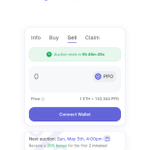
prePO raised that money on arbitrum in 2022 and 2023, and to me what happened next is a slow rug. the team rebranded into @PreStocks and now sells tokenized OpenAI.
the old prePO app, where you could check your PPO balance, is a 404 and so is their github org. @prepo_io is locked, and the medium post with the public sale results has been deleted. so tonight i went through everything that’s still online, before more of it disappears.
the presale was september 20, 2022. 193 wallets put in $390,244 at $0.06 and it sold out in 17 minutes 50 seconds. the public sale ran after that at $0.069 to $0.20 and took another $250k. seed investors had paid $0.013, so retail paid between 4.6x and 15x the seed price, and both public rounds together bought about 1% of the supply while the team kept 25%.
from day one PPO was non-transferable. the FAQ, which is somehow still up, sold this as a feature: holders would vote to unlock transfers, estimate H2 2023, even though the same page admitted voting wasn’t possible yet. one of their own conditions for unlocking was “the return of a crypto bull market”. btc went past $100k and PPO is still sitting in the same wallets it was bought into.
while the token was frozen they kept selling it. in january 2023 they opened PPO bonds on bond protocol at $0.05 and called it 50% off a $0.10 “market” price, for a token that had no market at all. by january 23, 70 wallets had bonded $8,458, and one of them posted their dashboard that night: 2,002 PPO, market value $0.
march 2023 brought early deposits for their $ARB pre-token market. your ETH went in as wstETH with 2% taken on the way in and 3% on the way out, and the “rebates” were paid in PPO. people who deposited in march paid that 2% out of their ETH before the fees were scrapped in june.
in may 2023 they ran a “transferability survey” and paid for the answers in more PPO. in october they sunset v1 and promised a v2, and the medium blog ends there.
august 2025, prePO comes back as PreStocks on solana. their launch post lists “freely transferable” as a selling point and doesn’t mention PPO once. i looked for any migration or statement about PPO holders and found nothing.
today 1,225 wallets still hold PPO on arbiscan at $0, and no exchange lists it. PreStocks advertises 100K+ holders and $1.75B in volume. it’s the same company with the same founder, it just changed chains and left the first holders behind.
@RWAFoundation_ lists @PreStocks among its 18 member teams, next to securitize and maple. before you put your name next to a team, you might want to ask what happened to the last people who trusted it.
@XavierEkkel, you raised that $650k. what’s the plan for PPO holders? if there isn’t one, say so. and put the deleted post back up so people can see what they were sold.

BLUR IS SHUTTING DOWN ITS FRONTEND. YOUR PERP DEX IS RUNNING THE SAME PLAYBOOK
@blur_io closes its website next month. the token is still around, but there won't be a site to trade on.
what three years of incentivized volume looks like:
> monthly volume, march 2023: ~$1.43B
> monthly volume, now: under $7M
> BLUR, early 2023: above $5
> BLUR after the announcement: ~$0.015, ~$44M market cap
that's about −99.5% on volume and −99.7% on the token.
the playbook back then:
> seasons
> points for volume
> bigger multipliers for bidding and listing
> airdrop to whoever traded the most
critics said at the time that most of that volume was farmers trading against themselves for points. when the incentives ended, the volume ended with them.
now open any perp dex with a points program. seasons, points for volume, boosts, a leaderboard. it's the same machine pointed at perps.
the difference is blur traded jpegs. here you're doing it with 50x leverage and paying funding on top.
worth pulling up blur's 2023 volume chart next to your favorite venue's and checking again after its last season ends.
if you still have a blend loan:
> new loans stop matching on november 12
> repay before then or the loan defaults
> after that blur says it will provide a tool to withdraw assets
VARIATIONAL PUSHED THE TGE. YOUR POINTS ARE ALREADY WORTH LESS
variational moved its TGE to Q4. the official reason is "significant strategic partnerships". points keep printing in the meantime.
the setup:
> airdrop: 32% of supply, fully unlocked at TGE
> team + investors: 50%, locked 12 months
> emission: 150,000 new points every week until TGE
> polymarket median FDV: ~$1.53B
the dune simulator had roughly 9.15M points by the end of Q3. if TGE lands at the end of Q4, that's close to 11M.
same 32% pool, ~20% more points. if you farmed through Q3 and stop now, your share drops about 17%.
at the $1.53B median:
> one point at 9.15M total: ~$53
> one point at 11M total: ~$44.5
every week of delay adds 150k points, about 1.6% of the pool. those points go to whoever keeps trading. so to hold your share, you keep paying fees on a venue that hasn't told you when it ends.
meanwhile the team and investor 50% doesn't care about the delay. their slice is the same size on any date.
nobody announced a cut to the airdrop. they announced a new quarter, and on this math those come out about the same.
if you're farming variational right now: are you farming for the drop, or paying to avoid being diluted?
HE PERP DEX MARKET HAS BEEN FLAT FOR NINE MONTHS. NEW VENUES KEEP LAUNCHING
perp dex share of global perp volume, per @castle_labs:
> dec 2025: 14.25%
> sep 2026: 12.33%
the market hasn't grown in nine months. in the same stretch dozens more venues shipped with seasons, XP and referral codes. 261+ have launched since Hyperliquid.
do the math:
> total onchain perp OI: $14.64B
> hyperliquid: 56.8%, about $8.32B
> everyone else: about $6.32B
> split across 260 venues: ~$24M each on average
two hundred and sixty venues share less OI than hyperliquid holds alone.
Lighter was top 3. it opened at a $2.5B FDV and lost 70% of its volume within weeks, after farmers moved to the next venue without a token.
every new perp dex shows up with a pitch deck where the market goes up and to the right. the last time that line went up was last winter.
next time someone sells you "the next hyperliquid", ask whose volume it takes. if the answer is other perp dexs, you're farming a project that splits $6B of OI with its neighbors and pays for it in points. and the points get paid for with your fees.
question for anyone running three seasons in parallel: what FDV are you plugging into your math, and where did that number come from?
WE'RE ALREADY COUNTING PROFITS FROM A TOKEN THAT MIGHT NEVER EXIST.
Yesterday I wrote about points and how the actual payout can fall miles short of the number in a farming guide. Looking at @AbstractChain, I think I was already getting ahead of myself.
People farmed XP there hoping it would eventually lead to tokens. Now there's talk of a possible shutdown. All those estimates depend on a project making it to a token launch in the first place.
I've noticed that a "conservative estimate" usually means picking a lower token price. Cut the valuation in half and the calculation looks more reasonable. We still leave a few things in it:
> the token launches
> XP earns an allocation
> the account qualifies
A lower price doesn't account for any of those falling through.
That's what bothers me about putting a dollar value on points accounts. The XP total is right there, down to the last digit. It gives us something precise to work with, so we start calculating. The uncertainty gets buried underneath the arithmetic.
I'd like to see more farming guides explain where the promised payout came from before explaining how to earn more points. Sometimes the whole calculation starts with something the team never actually said.
xitter.cf/AbstractChain/status/2…

5 WAYS TO MAKE YOUR DICK BIGGER. CAN'T HELP YOU THERE. BUT I CAN TELL YOU HOW YOU CAN GET SCAMMED FARMING POINTS.
You find a guide to farming points. The author estimates the token's future valuation and calculates the reward. Your points keep going up in the app, the math looks convincing, and you decide to join in. Let's say six months later, it looks like this:
- 6 months of farming.
- $300 in costs.
- 1,000,000 points.
- $1,000 in expected token rewards based on someone else's math.
Except the project may never have promised you that last number. You've been earning points, but that doesn't confirm your wallet is entitled to tokens. If token rewards and eligibility rules haven't been announced, you could spend months paying to participate and end up with nothing.
Even if tokens are distributed and you qualify, the valuation in the guide might not hold up once the token hits the market. You expected to get 1,000 tokens and sell them for $1 each. You got them, but could only sell for $0.10. You walked away with $100 after spending $300. The tokens were distributed, and you still ended up down $200.
Back then, pointless swaps at least felt like spending money in the hope of an uncertain reward. Now the counter shows progress every day. That makes it easier to believe the farm is already paying for itself and spend a little more.
Here's how you can get played: show you points accumulating and let you fill in the promise of a payout yourself. Then it turns out you assumed you'd qualify for rewards, took the token price from a forecast, and the only numbers you knew upfront were your costs.
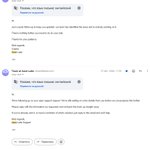
ALMOST A WEEK AGO @aave TOLD ME THEY'D IDENTIFIED THE ISSUE, WERE WORKING ON IT, AND DIDN'T NEED ANYTHING ELSE FROM ME. NOW THEY'RE SAYING THE EXACT OPPOSITE.
First support said the case had been escalated. Then they sent another update saying the issue was identified and the team was actively working on it. I was explicitly told there was nothing else I needed to do. After that, almost a week of silence.
Now I get another email saying they're "still waiting on some information from me before they can move forward." What information? Where was that request? And why does it directly contradict the previous messages in the same ticket?
This case involved roughly $30 000, and at this point the biggest problem isn't response time. It's that the support thread looks like nobody actually owns the case. One message says they have everything and are working on it, then a week later another message acts like the delay is on me.
If a case involving around $30k can sit like this for a week and support can't even keep its own story straight, that's completely fucked.
GOT MY MONEY OUT. I'M NEVER GOING BACK TO @aave OR @avax.
Had to pull my 30,822 USDT straight from the smart contract. The deposit tx went through, but Aave's UI showed $0 and "No Positions." My funds were there, credited to my address, while the app was telling me to make my first deposit. So I had to check the contract myself and figure out how to withdraw manually.
Then Avalanche's official RPC kept acting up during my withdrawal attempts. I couldn't reliably send txs. With my position already missing from the UI, I also had to figure out whether my withdrawal had even reached the network.
And we're calling this mass adoption. You put in $30k, see $0, and can't get your money out the usual way. How many users know they can check a contract and withdraw through a block explorer? What are they supposed to think when even their tx hash doesn't show up?
I got it sorted and got my money back. Someone without that experience could've assumed they'd lost everything and given up. Their funds could still be sitting in the contract while they're staring at an empty dashboard with no idea how to get them out.
I'm not doing this again with my own money.
PUBLIC BLOCKCHAINS MAY HAVE A PROBLEM WE STILL BARELY ACCOUNT FOR: TRANSPARENCY ACCUMULATES FOREVER.
In Privacy is Existential, @valkenburgh argues that privacy is a condition for neutral infrastructure. But that leads to an even more uncomfortable conclusion.
Every transaction Ethereum publishes today remains available for analysis tomorrow.
Which means a blockchain can become far less private retroactively.
Today, an analytics system may only see a transfer between two addresses. A few years from now, it may be able to connect those same addresses to a person, an exchange, a company, an IP cluster, a purchase history, or dozens of other signals that simply don't exist yet.
The user hasn't revealed anything new.
Only the observer has become better at reading the old data.
That's a strange asymmetry: cryptography can protect a transaction at the moment it happens, while a public ledger leaves that transaction exposed to future generations of analysis tools.
And as those tools improve, the nature of the network changes with them.
What once looked like a neutral record can gradually become an input for sanctions screening, scoring, tax enforcement, MEV, investigations, and new obligations imposed on infrastructure.
And the data can't be taken back.
We tend to treat transparency as a property of a blockchain. It may be more accurate to treat it as debt.
Every new block adds more information that someone may be able to reinterpret far more precisely in the future than we can today.
So the privacy debate is much bigger than whether users have "something to hide."
The real question is this:
Should financial infrastructure preserve enough data forever for someone in the future to reconstruct almost a person's entire economic life?
If the answer is no, privacy can't remain something we keep layering on top of a public system with separate apps.
At some point, it has to become a property of the infrastructure itself.
GOT MY MONEY OUT. I'M NEVER GOING BACK TO @aave OR @avax.
Had to pull my 30,822 USDT straight from the smart contract. The deposit tx went through, but Aave's UI showed $0 and "No Positions." My funds were there, credited to my address, while the app was telling me to make my first deposit. So I had to check the contract myself and figure out how to withdraw manually.
Then Avalanche's official RPC kept acting up during my withdrawal attempts. I couldn't reliably send txs. With my position already missing from the UI, I also had to figure out whether my withdrawal had even reached the network.
And we're calling this mass adoption. You put in $30k, see $0, and can't get your money out the usual way. How many users know they can check a contract and withdraw through a block explorer? What are they supposed to think when even their tx hash doesn't show up?
I got it sorted and got my money back. Someone without that experience could've assumed they'd lost everything and given up. Their funds could still be sitting in the contract while they're staring at an empty dashboard with no idea how to get them out.
I'm not doing this again with my own money.
I DEPOSITED 30,822 USDT INTO @aave. THE SITE SHOWED $0 AND ASKED ME TO MAKE MY FIRST DEPOSIT.
The transaction on Aave V4 on Avalanche succeeded. The funds left my wallet, the correct wallet was connected, and the dashboard showed "No Positions." No warning about delayed data. Just zero and a "Deposit Asset" button. Lovely timing to ask for a deposit right after I've sent over $30,000.
Had to query the smart contract directly. The deposit was there, credited to my address and earning interest. A simulation of the full withdrawal succeeded too. Meanwhile, at the time of checking, Aave's API returned an empty list of positions because it hadn't processed the transaction yet. The site presented that empty response as my balance.
Here's what pisses me off: the interface confidently tells you "you have nothing" when it hasn't even caught up with your deposit. You see $30,000 leave your wallet and an empty dashboard. Figuring out whether the transaction failed or the data service fell behind somehow becomes your job.
Why the hell do I have to query a smart contract to find my own money after a basic deposit into Aave?
THE SAME $10,000 BTC TRADE ACROSS FIVE PERP DEXs. THE CHEAPEST FEE DOESN'T ALWAYS MEAN THE CHEAPEST TRADE.
Take the same setup everywhere: $10,000 BTC long, market entry, hold for 7 days, market exit, no VIP discounts. Then count what actually matters - trading fees, execution and funding.
Using a 7-day funding snapshot from mid-September, @Lighter_xyz charges $0 in trading fees, but the BTC long still paid about $15.70 in funding, plus execution cost. @variational_io also charges $0 in trading fees, but roughly $14.70 went to funding, with spread added on top. So "0% fees" still doesn't mean the position costs nothing.
On @Aster_DEX, the round trip costs $8 in taker fees. Add about $11.20 in funding and the total reaches roughly $19.20 before slippage. On @HyperliquidX, the same entry and exit cost $9, while funding adds another $16.30. That's roughly $25.30 before execution costs.
Then @edgeX_exchange shows why funding can completely change the comparison. The round trip costs $7.60 in trading fees, but during the sampled week BTC funding was negative for longs. A $10k long would have received about $8.40, leaving the position roughly $0.80 net positive before execution costs.
So the comparison looks very different once you stop ranking DEXs by taker fee alone:
Lighter: $0 fees + ~$15.70 funding + execution
Variational: $0 fees + ~$14.70 funding + spread
Aster: ~$19.20 before slippage
Hyperliquid: ~$25.30 before execution
edgeX: ~$0.80 received before execution
The point isn't that one of these DEXs is always cheaper.
It's that funding can matter more than the trading fee itself. Hold the same position for a week and a 0% fee venue can still cost you $15+, while another exchange can pay enough funding to cover its entire trading fee.
So instead of asking "which perp DEX has the lowest fee?", ask:
IF I OPEN THIS POSITION HERE AND HOLD IT FOR THIS LONG, WHAT IS MY TOTAL COST FROM ENTRY TO EXIT?
That answer can change every week.

Crypto Twitter is far too quick to assume rich people can see the future.
Especially when a huge short shows up on Hyperliquid. The size is impressive. The address checks out. All that's left is to invent the catastrophe the whale spotted before everyone else.
Meanwhile, that person might have a pile of BTC sitting on another exchange. They hedged part of it and got on with their day. They still benefit if BTC goes up. They just lose less if it drops.
Anyone copying the trade gets only the short. The whale's Bitcoin isn't included.
What bothers me is the habit of turning someone else's position into a forecast. Public data tells us what they did in one account. Somehow, that's enough to confidently explain what they expect from the entire market.
And the bigger the number in the screenshot, the less often anyone asks: do we even know what else they hold?
A very expensive trade can make for very cheap content.

THE EXCHANGE CAN SURVIVE A CRASH BY CLOSING YOUR HEDGE.
When you hold ETH and short the same amount, there's a simple assumption behind the trade: both legs will stay open until you decide to close them. ETH falls, the short offsets the loss, and you can ride out the move.
But the exchange has its own risk to manage. If other traders' accounts go negative and normal liquidations can't resolve the shortfall, the protocol has obligations backed by insufficient collateral. That's when ADL can kick in, forcibly reducing positions on the opposite side of the market.
Hyperliquid spells this out in its documentation. Profitable positions can be selected, with priority determined by unrealized PnL and leverage. Being in the green doesn't guarantee you get to keep your short open.
For the protocol, closing those positions helps contain risk. But the ETH in your separate wallet is still there. You built one strategy out of two positions, and the system just changed one of them.
That short may even close at a profit. You got paid for the decline that already happened. But your protection against the next leg down is now smaller, or gone entirely. Forced position reduction and a haircut on profits are different things, a distinction the authors of “Risk-Based Auto-Deleveraging” explicitly discuss.
So you can size your hedge correctly, leave enough collateral, and still end up exposed to the very move you were trying to protect yourself against.
That's why, when choosing between @HyperliquidX, @Lighter_xyz, @entropyIO and other perp DEXs, I want to understand whether they use ADL and exactly how it works. For a hedge, being able to keep the position open through a crash can matter more than the fee you paid to enter it.
You control your own leverage. But your hedge can still depend on how much everyone else's leverage the exchange can withstand.

Hyperliquid's ADL rules:
hyperliquid.gitbook.io/hyper…
Risk-Based Auto-Deleveraging:
arxiv.org/abs/2603.15963
I SOLD SOME OF MY ETH'S UPSIDE FOR CASH UPFRONT. MY @ryskfinance DASHBOARD SHOWS $1,216.06 IN MONTHLY INCOME.
I'm comfortable with a trade where I choose an acceptable selling price for ETH in advance and collect a premium. If the market is above that price at expiry, that portion of my position gets sold at the agreed price. The option premium has already been paid.
That's what appeals to me about Rysk. You can use the portion of your holdings you were planning to sell after a rally. That position gets a clear purpose: collect a premium and, if the option is exercised, sell on the agreed terms.
Imagine checking a quote for your ETH and seeing the amount you'll receive as soon as you open the position. You can then weigh up a specific trade-off: is that payment worth committing to sell your coins at the specified price on the chosen date?
If it is, you have a reason to open the position. Especially if you were already planning to trim it after a rally.
The screenshot shows my total accumulated income on Rysk: $2,238.28. That's income from the positions. If the coins fall in value, your overall result can still be negative. If they rally sharply, you'll have to sell below market price. The displayed APR is an annualized figure, with no guarantee of the same future returns.
I'm interested in that trade-off for the part of my portfolio I'm willing to sell. The premium for that commitment arrives immediately.
See how much buyers are offering for your chosen selling price. If you're happy with the amount, open your first position.
app.rysk.finance/join?code=r…

YOUR MONEY CAN BE STOLEN, AND THE "AUDITED" LABEL CAN STILL BE TRUE.
The team really commissioned a review. The auditors really examined the code. But the path used to steal the funds may never have been included. After the hack, the report remains genuine. Your balance has changed.
An ack3 study examined 135 crypto security incidents between January 1 and June 29, 2026. @jgattermayer is one of the paper's authors.
The researchers found evidence of prior audits for the projects involved in 68 incidents. They classified 46 as "outside identified audit scope." In 20 cases, the affected component fell within at least one review. Two could not be resolved from the available evidence.
What interests me is how much reassurance users read into the word "audited." Here are five conclusions I draw from this.
1. An audited contract can obey whoever stole the key.
Suppose an administrator can mint tokens or upgrade the system. An attacker who steals that key may be able to submit a dangerous instruction with a valid signature. The contract can accept it and execute it exactly as designed.
The permissions already built into the system may be enough to steal funds. So alongside "was the code reviewed?" comes another question: who can control the money, and what happens if their access is compromised?
2. New yield can be offered under an old audit.
Imagine an audited vault connected to a new strategy. Funds now pass through another protocol, bridge or price feed. The risks have changed, even if nobody touched the vault contract itself.
A new APY appears on the deposit page. The auditor's logo stays beside it. A user could easily assume the review covered everything involved in generating that return. The report may cover only one part.
3. More deposits make a successful attack more valuable.
If a protocol grows from $5 million to $500 million, the potential prize grows a hundredfold. An attacker may find it worthwhile to spend more time searching for vulnerabilities, researching employees and preparing a way in.
That growth alone does not prove the protocol has become less secure. But a large TVL cannot automatically be treated as evidence of safety. Other people's deposits can build confidence while making the protocol a more attractive target.
4. Five deposits can depend on one vulnerable component.
You spread your funds across several services. Each has its own team, interface and audit reports. But if all your positions depend on the same bridge, collateral asset or external system, one failure can affect them together.
Different names in your wallet do not tell you how independent the risks are. You need to trace what each deposit actually depends on.
5. An old audit can keep attracting new money.
A project adds integrations, changes settings and adjusts permissions. The report stays on the website and continues to give people a reason to deposit.
The document's age alone proves nothing: unchanged code may still match the reviewed version. But every significant change raises the question of whether the earlier findings still apply. Even several audits can overlap in coverage and leave the same gaps.
Now for the 94.4% figure, which is easy to turn into a misleading headline.
Among those 68 incidents, attacks classified as outside identified scope accounted for 94.4% of reported losses: roughly $680.97 million out of $721.24 million. By incident count, the figure was 46 out of 68, or 67.6%.
The two largest attacks heavily influenced the loss figure. Exclude both, and the outside-scope share falls to 72.1%.
The classifications rely on publicly available evidence the researchers found. They cannot establish that a component outside the identified scope was never reviewed by anyone. In some cases, the scope of other reviews could not be determined.
And this dataset contains incidents that happened. It cannot tell us how much an audit reduces the probability of a hack, because it does not include a comparison with all the projects that avoided one. ack3 itself provides security services, a relationship the authors disclose in the paper. The data and source material are available here: ack3.ai/research/defi-hacks-….
So before depositing, I want more than "we have an audit." I want to know which version was reviewed, which dependencies and permissions were considered, and what changed afterward.
Next to the "Deposit" button, show me the auditor's logo and what their audit didn't cover.

KRAKEN'S COMPETITORS ARE BUILDING ITS DISTRIBUTION NETWORK.
A trader can choose @Bybit_Official over @krakenfx, buy tokenized stocks and never open a Kraken account. The group behind Kraken can benefit anyway. It owns the company supplying @xStocksFi.
In January 2026, @Payward, Kraken's parent, completed its acquisition of @BackedFi , the company behind xStocks. Bybit, @Gate and other platforms distribute those assets. Rival exchanges are offering customers a product from Kraken's own corporate group.
For those exchanges, the decision makes sense. They get another market to offer existing customers while a specialist handles token issuance and backing. Building that operation themselves would take time and money.
But when a rival promotes xStocks, adds trading pairs or attracts traders, some of that work strengthens Payward's product. The exchange grows its own business while helping a competitor's parent expand its distribution.
I think the bargaining power builds as that support spreads. Once an asset works across exchanges, wallets and DeFi applications, the next platform has a reason to support it too. Customers already use it elsewhere. Other businesses have already done some of the work.
Changing issuers then becomes a bigger decision. Another token can track the same stock and still need its own trading pairs, liquidity and integrations. An exchange can offer the replacement, but the existing market doesn't move across automatically.
Exchange trading volume won't fully capture this. Payward's products can gain adoption while traders remain loyal to competing platforms.
A rival could celebrate taking customers from Kraken while building its stock offering around xStocks. The more those customers use the product, the harder changing suppliers could become. Winning the customer and becoming dependent on a competitor can happen in the same transaction.
