

Cyberthint - Unified Cyber Threat Intelligence Platform #threatintelligence #cti #cyberintelligence #cybint
Cyber Space
Joined June 2019
- Tweets570
- Following2
- Followers5.4K
- Likes120







Cyberthint Unified CTI & DRP Platform's new version "v4.0" has been released and is available to all existing customers.
What does this new version include?
- New Interface Design
- New Features: Vendor Risk Scanner, Event Log Analysis, Real-time DDoS Monitoring. (Also, many of the existing modules have been powered by AI.)
- Non-credit System! Unlimited Queries: Free & Unlimited Takedown, Automatically Malware/IoC/Log Analysis, Fraud Detection, Vendor Risk Scan
Interested? You can make a reservation to try it for free, feel free to email us about it: info[at]cyberthint.io
#cti #drps #cybersecurity #informationsecurity #infosec #cyberthint #threatintel #threatintelligence

#ThreatHunting
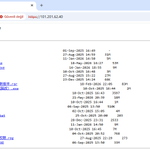
Open Directory (Index of /) -> 101.201.62[.]40
Process:
- All files in the directory (.exe, .part, .reg, .bat, .sh) were examined.
- Static and dynamic analysis was applied to suspicious samples.
- Code segments were evaluated for common origin detection using SHA-256 comparison.
Static and Dynamic Analysis Findings:
- The PE code sections (CODE sections) of the four different samples presented as HWID spoofer, Steam installation, motherboard replacement tool, and Windows activator have the same SHA-256 hash value (9251b16208...). The fact that only the .rsrc sections differ indicates that the core code is common, but the embedded payloads have been modified.
- The detected mutexes, SMTP configurations, and C2 indicators show similarities to the previously reported XRed/XRedRAT infrastructure. During the analysis, functions related to keyboard logging, SMTP communication, and remote command execution were detected.
- The SteamSetup_iELl2y3l_.exe.part instance does not have a valid Valve digital signature and shares the same code section as the other three instances.
- Hiding -> High entropy of 7.75–7.96 observed in the .rsrc partition (indicator of compressed or encrypted content); Synaptics.exe is silently writing to disk within the NSIS installation structure.
In Summary: At first glance, the package appeared to be a game cheat/activator archive, but analysis of the files revealed the true picture;
Key Components:
- Backdoor: QTspoofer硬刷工具.exe, SteamSetup_iELl2y3l_.exe.part, 一键主板修改_微星无脑改_.exe, 激活系统.exe — XRed/XRedRAT similarity.
- 关杀毒.exe(.part) -> UPX packed; it includes functions designed to disable security products.
- 大志无敌解码.exe -> It includes functions for modifying Windows Defender configurations.
- 注册表管理.exe -> Dropper carrying 9 MB encrypted payload.
- 重装工具_密码vip0.EXE -> It includes password protection, driver usage, encryption, and anti-debug techniques.
- 请打开我-关闭管理员权限.reg -> EnableLUA=0 modifies the UAC configuration.
- 修改显示器.exe -> EDID changers can be used for hardware identity manipulation purposes.
#IOCs:
- C2 / Network:
xred.mooo[.]com, xred.site50[.]net, freedns.afraid[.]org, api.ilanzou[.]com, share.weiyun[.]com, xyboot[.]com
- E-mail / Extraction:
xredline1[@]gmail.com, xredline2[@]gmail.com, xredline3[@]gmail.com
- Mutex:
Synaptics2X
- Extracted Files:
Synaptics.exe
Synaptics.dll
SUpdate.ini
SSLLibrary.dll
cachex.ini
autorun.inf
- Registry / Persistence:
[HKEY_LOCAL_MACHINE\SOFTWARE\Microsoft\Windows\CurrentVersion\Policies\System] "EnableLUA"=dword:00000000
[HKEY_LOCAL_MACHINE\SOFTWARE\Microsoft\Windows\CurrentVersion\Policies\System]
reg add "HKEY_LOCAL_MACHINE\SOFTWARE\Policies\Microsoft\Windows Defender" /v "DisableAntiSpyware" /d 1 /t REG_DWORD /f
reg add "HKEY_LOCAL_MACHINE\SOFTWARE\Policies\Microsoft\Windows Defender\Real-Time Protection" /v "DisableBehaviorMonitoring" /d 1 /t REG_DWORD /f
reg add "HKEY_LOCAL_MACHINE\SOFTWARE\Policies\Microsoft\Windows Defender\Real-Time Protection" /v "DisableIOAVProtection" /d 1 /t REG_DWORD /f
reg add "HKEY_LOCAL_MACHINE\SOFTWARE\Policies\Microsoft\Windows Defender\Real-Time Protection" /v "DisableOnAccessProtection" /d 1 /t REG_DWORD /f
reg add "HKEY_LOCAL_MACHINE\SOFTWARE\Policies\Microsoft\Windows Defender\Real-Time Protection" /v "DisableRealtimeMonitoring" /d 1 /t REG_DWORD /f
#ThreatIntelligence #DFIR #MalwareAnalysis #OpenDirectory #OSINT #BlueTeam #CyberSecurity #Cyberthint


🚨 Threat Research
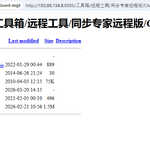
The research started from an open "Index of" directory accessible at 103.80.134[.]8[:]8085.
Process Followed:
- The "SEWanClt.exe", "Domains.dat", and related configuration files located in the open directory were examined.
- The relevant ZIP packages were obtained, and static and dynamic analyses were performed.
Under Review: "SEWanClt.exe"
Summary of Static and Dynamic Analysis:
1. Main Component — RAT (SEWanClt.exe). A 1.58 MB PE32 file compiled with Borland Delphi (fake build timestamp: 1992-06-19).
The DATA partition's entropy of 7.83 points to embedded encrypted data. The imported functions provide a complete surveillance profile:
- Keyboard recording (SetWindowsHookEx)
- Remote input injection (keybd_event / mouse_event / SendInput)
- Voice recording (waveInOpen)
- Backdoor listening (socket / listen / accept)
- Screen capture (BitBlt)
- Privilege escalation (AdjustTokenPrivileges)
2. In Delphi form definitions, voice listening (VoiceSpy), remote command shell (RCmdRun / StdIORedirect), and transparent cover window (TransMouse) were found.
When a form header encoded in UTF-7 was decoded, "本机已锁定" (This machine is locked) was obtained — a screen locking function is present, but no ransomware operation was found during the investigations.
📌 Toolkit
The analysis resulted in a Delphi-based remote management/monitoring platform consisting of at least 16 components belonging to the same ecosystem.
Key Components:
- Persistence: %APPDATA%\SyncEXPwan, System32\WanStarter.exe, HKLM\CurrentVersion\Run + RunOnce
- Dropped Files: DeskSide.exe, DXGICap2.dll, DXGICap3.dll, Locker.jpg, Domains.dat, IPlist.dat
- Mutex: Global\AppRescuer2MapLocker
- Defense Evasion: DisableTaskMgr, DisableRegistryTools
#ThreatIntelligence #DFIR #MalwareAnalysis #ThreatHunting #CyberThreatIntelligence #MalwareResearch #OSINT #BlueTeam #IncidentResponse #CyberSecurity #Cyberthint


We believe that publicly available and accessible cybersecurity solutions add value to the ecosystem. At Cyberthint, we are pleased to be a sponsor of the DriverShield (drivershield.io) platform.

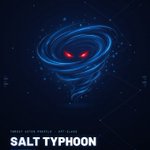
🌪 ️80+ countries. 200+ organizations. Undetected for 3 years.
Salt Typhoon, a China-state-linked APT group targeting global telecommunications infrastructure, is ramping up its operations in 2026.
Why is it so dangerous?
- No malware; exploits vulnerabilities in internet-facing endpoints (Cisco, Ivanti, Palo Alto).
- C2 traffic is hidden behind legitimate services like Google Sheets.
- Conclusion: Traditional EDR and perimeter security alone are insufficient.
Cyberthint's research team has published the Salt Typhoon threat analysis report, covering tradecraft, IOCs, and defense guidelines.
📄cyberthint.io/wp-content/upl…
#SaltTyphoon #Cybersecurity #ThreatIntelligence #APT #CTI #EarthEstries #GhostEmperor #FamousSparrow #UNC2286 #UNC5807 #RedMike #OPERATORPANDA

During our routine threat hunting activities, we detected a new active #ClickFix campaign.
Typical; what initially appears to be "robot verification" is actually direct malware distribution.
ATTACK CHAIN
1️) Fake verification page → 151.243.18[.]254
2️) User is prompted to run a PowerShell command
3️) The Base64 encoded command script is decoded and connected to C2 → 94.26.83[.]199
4️) Payload is downloading → /download
CRITICAL POINTS
- The file name changes with each download: "imagetransfer.exe", "audiobackup.exe", "archive_report.exe", "new-photo.exe"
- Each downloaded file has a different name but the same SHA256 hash
- TLS SNI Camouflage: "ecs.office.com", "cdn.steamstatic.com"
TECHNICAL BEHAVIORS
Base64 encoding, obfuscation, payload download via PowerShell, %TEMP% drop, silent execution with "-WindowStyle Hidden", console hiding, runtime parsing (GetProcAddress)
CAPABILITIES
Persistence (registry + startup), clipboard data collection, webcam access, file system discovery, command execution.
#IOCs
IPs: 151.243.18[.]254, 94.26.83[.]199
Paths: /check, /download
Hash (SHA256): 7d3654531c32d941b8cae81c4137fc542172bfa9635f169cb392f245a0a12bcb
Registry: HKCU\Software\Microsoft\Windows\CurrentVersion\Run
#threathunting #malwareanalysis #powershell #blueteam #soc #dfir #ioc #cyberthreat #cyberthint


The New Model of Threat Actors: AI-Powered 0-Day Operations
As the Cyberthint Team, we have analyzed cases where artificial intelligence is no longer used merely as an advisor for attackers, but as a direct operator. Campaigns documented in the fourth quarter of 2025 demonstrate that the discovery of a zero-day vulnerability has evolved from a specialized process taking months to one that can be automated in a matter of minutes.
Featured Cases:
- GTG-1002 (Chinese state-sponsored): 80-90% of the operation was delegated to AI, AI discovered and exploited a 0-day vulnerability in live operation.
- LAMEHUG (APT28 / GRU 26165): A malware that generates commands at runtime by sending queries to the Qwen2.5-Coder model via Hugging Face.
- MalTerminal: The earliest identified example of its kind, generating ransomware and reverse shell code on runtime using GPT-4.
- PROMPTFLUX: A polymorphic dropper that rewrites its source code hourly using the Gemini API.
Why the current classical detection model is insufficient, what the defense side should invest in, the operational discipline of the actors, and more, all here 🔗cyberthint.io/the-new-operat…
#CyberSecurity #ThreatIntel #AIThreats #ZeroDay #APT28 #GTG1002 #MalwareAnalysis #LLMSecurity #Infosec #Cyberthint #ThreatHunting #RedTeam #CTI

Thai-Based Malware Staging Server Uncovered
During our recent threat hunting operations, we identified an exposed open directory hosted on a Thai ISP infrastructure, serving on a non-standard port.
What initially appeared as a misconfigured Lighttpd server quickly revealed a far more concerning picture upon deeper analysis.
🧩 Infrastructure Fingerprint
• Host: 183.89.248.17[:]60000
• Web Server: Lighttpd on Debian GNU/Linux
• ISP: Triple T Broadband (3BB), Nonthaburi, Thailand
⚠️ Malicious Artifacts Identified
Static analysis of the binary retrieved from the directory revealed the following indicators:
- ELF Binaries (Linux x86-64 — GCC Debian 10.2.1); "case-kkthai"
Two separate ELF executables with identical import tables but differing obfuscated string blocks — consistent with a build-time payload differentiation pattern:
•ptrace + /proc/[PID]/as access → Process Memory Injection capability
•argv[0] manipulation with hardcoded failure string "E: neither argv[0] nor $_ works." → Process Cloaking attempt
•fork + execvp + waitpid chain → Daemonization & Persistence mechanism
•putenv + getenv → Runtime environment manipulation
#CTI #ThreatIntelligence #ThreatHunting #MalwareAnalysis #OpenDirectory #InfoSec #CyberSecurity #ProcessInjection #ELF #Thailand #opendir


Critical Data Exposure: Unprotected ERP Database & KYC Documents Discovered
During our threat hunting operations, we identified an open directory at the address "148.66.129[.]125." This situation appears to have a much greater impact than a typical misconfiguration.
📂 What's Exposed?
This server is not just misconfigured — it appears to be an actively used ERP/MDM (Master Data Management) system (‘simpmdmExpro’) with its entire backend left publicly accessible:
- ‘material_master_128167.sql’ — Full material master database dump
- ‘duplicate_records_50000_99999.sql’ — 50K+ record dataset
- ‘simpmdmExpro_contabo_10_april.sql’ — Live production database backup
- ‘simpmdmExpro.zip’ — Complete application archive
- ‘/simpmdm/’ — Live application directory
⚠️ Most Critical Finding: KYC Document Leak
Example; Inside the exposed zip file, the path ‘simpmdmExpro/UploadDocument/KYC/’ contains hundreds of sensitive identity & financial documents:
- Customer invoices (2023–2025)
- Financial statements
- Identity verification documents (PNG/JPEG scans)
- Internal request and communication files
#CTI #ThreatIntelligence #DataLeakage #InfoSec #CyberSecurity #ThreatHunting #OpenDirectory #opendir #GDPR


New RaaS Platform Discovered: HYFLOCK
In our recent extensive threat hunting operations, we uncovered a new, previously undocumented RaaS (Ransomware-as-a-Service) platform operating on the Tor network: HYFLOCK (http[:]//e5hdifgit6ua7k4ggmltume7kbyryksdnlrkc55we33fnshgxfeqgsyd[.]onion/)
Our team not only mapped the outer surface of the target (traces like Chinese comment lines hidden in CSS files), but also went behind the authentication layer, directly accessing the operational management panel and the current user manuals (v1.0.0) used by cybercriminals. This firsthand intelligence clearly reveals the corporate workings of modern ransomware groups.
Here are the critical findings we've uncovered from the depths of Operation HYFLOCK:
🔍 Cross-Platform Builder Automation: Affiliates can log into the panel and compile target-specific malware (encryptor) within minutes. The system supports Windows, Linux/NAS, and ESXi platforms. A new hash is generated with each compilation, rendering static analysis security measures ineffective.
⚙️ Advanced Operating Parameters:
The parameters included in the guide show how attackers adapt their tactics (TTPs) depending on the target:
"--gpospread": Automatic deployment via GPO in Active Directory environments (with Domain Admin privileges).
"--network-only": Only encrypt network shares and cloud storage areas.
"--delete-shadows": Deleting shadow copies prevents recovery.
💰 Trustless Business Model and Separation of Powers:
The system operates with an 80% affiliate commission and a 20% platform commission. The most notable OPSEC (Opposition-to-Personal Security) measure is that affiliates never have access to the decryptor. Once negotiations are complete, the key is directly transmitted to the victim by the system administrators. This strict rule prevents commission evasion while also protecting infrastructure administrators.
🌐 Underground Market: HYFLOCK is not just a ransomware panel; it also houses an integrated marketplace ecosystem where attackers can buy and sell exploit code, leaked databases, and privilege escalation tools among themselves.
The traces of Chinese developers we identified in the code structure and the global marketing of the platform with Russian/English interfaces demonstrate the latest stage in international subcontracting within the cybercrime world.
The images show the panel's internal interface and details of the directory used by the attackers among themselves.
#CTI #ThreatIntelligence #Ransomware #HYFLOCK #RaaS #CyberSecurity #InfoSec #MalwareAnalysis #ThreatHunting #Cybercrime


New #Wallet #Drainer Campaign Aimed at Developers!
Attackers are exploiting the #GitHub notification infrastructure and #Google Share redirections using as a weapon to bypass email security filters.
#Web3 developers carefully selected via #OSINT are lured to a fake #OpenClaw #Airdrop page, where their wallets are instantly drained.
Detailed technical analysis, TTPs, and an #IoC list are available in our research report: 🔗 cyberthint.io/lotl-threat-in…
#CyberSecurity #Web3 #WalletDrainer #GitHub #CTI #Phishing #Cyberthint #ThreatIntel #ThreatIntelligence

We discovered a new BEC infrastructure: What happens when a 20-year-old domain is used in a BEC attack? An analysis of a phishing attack using a malicious SVG File.
The "001VIEW_Remittance_Advice.svg" file we analyzed is malware disguised as a remittance advice. It contains JavaScript obfuscated with XOR and Base64.
...
📝 You can read our analysis here: cyberthint.io/what-happens-w…
#BEC #Phishing #ThreatIntel #Cyberthint #CyberSecurity #InformationSecurity

KarstoRat Malware Analysis: A Small Bug Revealed the Developer!
We have completed our comprehensive investigation into KarstoRat, an advanced modular malware first detected in February 2026.
In the world of cybercrime, anonymity is often an illusion. Sometimes, a single digital footprint can be enough to bring down an entire operation.
📌 Full Technical Report: cyberthint.io/case-study-kar…
🛡️ Detection Rules (Sigma, Yara, Snort) now available in our repo: github.com/cyberthint/Detect…
#CyberSecurity #KarstoRat #ThreatIntel #MalwareAnalysis #Infosec #OSINT #CyberEspionage #DigitalForensics #DetectionEngineering

ZeroDayRAT - Mobile Espionage and Financial Theft Platform
As the Cyberthint research team, we analyzed a new mobile threat called ZeroDayRAT, which is being marketed in the Telegram underworld and claims to target both Android and iOS devices with a 1-click attack.
🔍 Key Findings:
- Capabilities: Live camera/microphone monitoring, Keylogger, and Crypto Wallet theft (Clipboard Injection).
- Distribution: Security filters are bypassed using shortened links via WhatsApp and GitHub Pages.
- HUMINT Analysis: The seller accepts the XSS Forum Escrow service for credibility.
This threat straddles the fine line between a genuine MaaS operation and scam marketing. Detailed technical analysis and IoCs in our report. 🔗 cyberthint.io/zerodayrat-a-n…
#ZeroDayRAT #CyberSecurity #MobileSecurity #ThreatIntel #MalwareAnalysis #Infosec #Android #iOS #Cyberthint #MobileThreat #Espionage

🚀 The Anticipated Report is Out: 2025 Global Cyber Threat Intelligence and 2026 Forecasts
2025 was a year that changed the rules of the game in cybersecurity. Attackers are no longer just encrypting data; they are halting production lines and crippling supply chains.
In our 2025 Global Cyber Threat Intelligence Annual Report, prepared by the Cyberthint Threat Hunters team, we analyze the most critical incidents of the past year, address security vulnerabilities, and shed light on the cyber threats and AI-versus-AI war that await us in 2026.
📊 What's in Store for You in the Report?
🔹 Ransomware Evolution: Behind the scenes of the Jaguar Land Rover and Ingram Micro attacks and Operational Shutdown tactics.
🔹 Black Market 2025: The shift from identity theft to session hijacking. Why is MFA no longer sufficient?
🔹 Zero-Day Exploits: The rise of access brokers and 2025's most critical vulnerabilities (Ivanti, Oracle EBS, Fortinet, and etc.).
🔹 2026 Predictions: AI-SOC structures making decisions independent of human intervention and autonomous attack agents.
🔹 And furthermore...
This report is not just a situation assessment; it is a roadmap for your 2026 strategy.
📥 You can visit our webpage to read or download the report: cyberthint.io/global-cyber-t…
#CyberSecurity #CTI #ThreatIntelligence #Ransomware #AI #Cyberthint #Infosec #2025Report #CISO

"Frogblight" Banking #Malware Targeting #Türkiye
We analyzed #Frogblight, a new Android malware targeting users in Türkiye and spreading via fake "e-ifade/ Dava Dosyası" applications.
🔍 Technical Insights & Origin:
- Infection: Fake UYAP links sent via SMS.
- Capabilities: Steals bank credentials and SMS messages (OTP) via WebView injection.
- Critical Findings: Turkish comment lines were found in the malware's source code. Additionally, our GitHub analysis indicates that the attackers are linked to the dangerous Coper (MaaS) malware and may be part of an experienced criminal network.
🔗Detailed technical analysis and IoC list are available: cyberthint.io/there-is-a-law…
#Frogblight #AndroidMalware #CyberSecurity #CTI #ThreatIntel #BankingTrojan #MalwareAnalysis #fr0g #Coper
