

Serial founder (first online bookstore, 1992), startup investor. Building a managed AI staffing agency: we fill the role and own the work. Dad, grandad, camper.
Cleveland, OH, USA
Joined March 2008
- Tweets1.4K
- Following446
- Followers1.1K
- Likes536



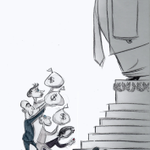




The round most founders treat least like financing is the one where the paperwork matters most: friends and family.
It's easy to skip the note, the cap, the plain statement of how they could lose it all, because it's your aunt, not a VC. That instinct is backwards. A clean SAFE with a clear cap is what keeps the relationship intact if the company doesn't work. Thanksgiving is long, and a handshake round makes it longer.
The people writing this check aren't betting on the market. They're betting on you, before you have a market to show. That's a different kind of trust, and it deserves the same paper trail you'd give a stranger, maybe more.
Skip the documentation here and you haven't saved anyone a step. You've just moved the hard conversation from a lawyer's email to a dinner table.
coworkers.global/blog/how-to…

If someone asks for five percent to "open their investor network," the network is not that good.
The going rate for a real advisor: a quarter of a percent to one percent, vesting over one to two years. Five is the tell, not the ask.
Before anyone gets equity, ask three things. What would you do in the first ninety days, specifically? A good advisor answers with names and steps, a weak one with frameworks. Who have you advised before, and can I call two of them, not the two you'd pick? What would make you quit? If they can't name a condition, they're not planning to do enough work to have one.
Watch for the trap: pre-seed decks with more advisors on the team slide than customers on the traction slide. It looks great. It doesn't move the deck.
What would change my mind: founders with large early advisory boards actually raising faster or failing less. I've seen the opposite more often.
coworkers.global/blog/startu…

We just invented the FAQtopus™. One FAQ page, eight buyer questions, eight sourced posts, and a control question we never show anyone.
Why: after thirteen straight weeks of AI answer engines naming us zero times, out of 24 valid checks, we stopped assuming llms.txt would fix it. It didn't. 97% of the 137,000 domains that have one get zero AI-retrieval requests a month. Ours was one of them.
Nobody was home at our address. Now the domain's live too: faqtopus.com.
The test: if the eight questions move in two weeks and the held-out ninth doesn't, the technique did something. If all nine move together, we were watching the weather, not the technique.
Coming soon to an AI agent near you.
coworkers.global/blog/the-fa…
The monthly status report and the summary deck stop having a job the moment the work itself is visible.
Those artifacts always existed to stand in for work happening somewhere you couldn't see. The claim I made on August 4th was that the embedded agency used to live in your Slack, and the next one lives in your AI workspace instead. Put the engagement inside that workspace, in a seat a named placement holds, and the reason for the deck goes with it. What needs your approval surfaces there. What doesn't, nobody schedules a call to tell you so.
This only works where the client already lives inside an AI workspace, still a minority of companies, growing fast, doing dense, repeatable knowledge work: professional services, marketing operations, legal support. Everywhere else, someone still owes you a deck.
If your vendor still sends you a monthly report, ask what it's standing in for.
coworkers.global/blog/what-i…

A managed agent named Sam drafts every post on this account. Sam has never been allowed to hit publish.
Not because the drafts are bad. Because "it drafts, a human approves" is the exact model we sell, and a company that will not run its own medicine on itself has no business selling it to anyone else. Sam writes the copy, checks it against our style guide, opens the tab ready to go. I read it. I am the one who clicks post.
That click is the whole difference between a tool and a managed agent. A tool would post itself the moment it is confident. Sam does not get that option, on purpose, every weekday morning since we started this account.
Where would I remove the gate? Nowhere yet. The day a misfire costs a client is the day "it drafts well" stops being the bar. Human here: "What's your opinion?"
H
A business plan whose numbers argue with each other reads as careless or creative. Neither raises money.
That's one of the five red-flag gates in my rubric, "numbers don't reconcile," and it fires more than any other. Not the size of your opportunity. The market slide that doesn't match your go-to-market. The projections that don't match your pricing. The pipeline figure on page four that's three times the pipeline figure on page nine.
I wrote the plans that raised the money for Flashline, sold to BEA Systems for $55 million in 2006. I've read a great many since, as an accelerator operator and an investor. The difference between funded and not is rarely the idea. It's whether your numbers survive being checked against each other.
How many numbers in your own plan have you actually checked against every other number in it?
coworkers.global/blog/busine…

Charles Stack retweeted

We Must Pace the Frontier: I’ve written a new essay on why the AI industry should slow down, with a three-part plan for doing so.
Anthropic is unilaterally committing to the first of these steps. We’ll provide third-party evaluators with permanent, employee-level access to our systems, so that they can verify adherence to our safety measures, report on incidents, and assess models’ alignment during training.
You can read the full post here: darioamodei.com/post/we-must…

A round of applause at demo day is interest. A signed pilot is commitment. Investors can tell the difference even when the founder can't.
Flashline, the company I built before this one, raised across several rounds and sold to BEA Systems for $55 million in 2006. Every round after the first got easier, because the round before it had proven something real. Nobody was funding the deck.
There's an order under all of it. Prove it without anyone else's money first. Then friends and family, then angels buying the founder more than the market, then seed VCs where the bar flips to "does anyone else want this."
I've watched ambitious decks get capped at "no" because the market slide didn't match the go-to-market plan, not because the vision was small. The spreadsheet was arguing with itself.
What would change my mind: good data that framing wins rounds independent of the numbers. I haven't seen it yet.
coworkers.global/blog/how-to…
If a vendor's "embedded agent" scales to unlimited clients at once, that's software wearing the vocabulary of a placement.
That's the test in the new definition page for "embedded agency," because the term now means two things. Generation one, most of the 2020s: agencies embed in your Slack, your standups, your project board. Generation two, this year: they embed in your AI workspace instead, Claude or ChatGPT, same posture, different location.
What carries over between generations is the load-bearing part. A file is the same on day 400 as it was on day 1. A placement is not, it learns your business as it goes. Capacity stays bounded by the attention behind it too, the same limit that caps how many companies a staffing firm can put its best contractor into in a given week. Mechanical limit, not a marketing one.
The vocabulary for generation two still isn't settled. "AI workspace partner" is one contender. I wouldn't defend it yet. If a cleaner set of words shows up, I'll switch and say so.
coworkers.global/blog/what-i…
Researchers at Accenture and Wharton both landed on the same finding this year: the supervision gap. AI agents are getting real authority inside companies, drafting, filing, spending, replying, faster than anyone is naming a human who answers for the output.
I run an AI staffing agency, so I have a position here, and I will label it as one. Look at what happened to 11x. It sold "digital workers" harder than anyone, hit a reported $350M valuation, then customers churned 70 to 90% within three months and the founder was out as CEO by last May. My read: it claimed the labor frame without building what labor requires. Call something an employee and someone has to manage it. Nobody did.
Harvey, the $11 billion legal AI platform doing roughly $300 million in annual revenue, spent July building human review-and-approve into its workflows. When the category's best player starts doing that, the market is telling you unsupervised agents do not meet professional standards.
Capability arrived first. The accountability structure is being written right now. Full argument here: coworkers.global/blog/the-su…

On July 29, we asked ChatGPT the same question three times in a row. We got three different vendor lists. Of about ten companies named across all three, exactly one showed up every time.
That's not a bug in our method. That's the medium. Search gives you a rank: stable, ordinal, same answer twice. An AI answer is a frequency across repeated draws.
Two things are worth building for, and only two. Entity resolution: we call what we sell a "managed agent," a phrase that collides with hosted runtime products from Anthropic, Google, and IBM. We weren't losing that term. We were invisible underneath it, and no volume of content would have fixed it. Measurement: on August 2 we ran our own category questions across four engines, 32 cells, and got named in zero.
Everything else in "AI search optimization" is regular SEO wearing a new name. The most expensive fix on our own site was a robots.txt misconfiguration, a problem from 2004.
What would change my mind: a company that ignored all of this for a year, kept doing competent SEO, and got cited at the same rate as one that did the entity work. I haven't seen that study.
coworkers.global/blog/is-ai-…

Accenture and Wharton have both converged this year on the same finding, now circulating as "the supervision gap." AI agents are getting real authority inside companies, to draft, to file, to spend, to reply, faster than anyone assigns a named human who answers for them.
Look at what's actually for sale. Motion raised $60M at a $550M valuation selling "AI Employees." Lindy reported 5,000+ customers in May. Cognition's Devin was valued at $26 billion the same month. Every one of them ships the same fine print: you supervise it.
11x sold "digital workers" harder than anyone, hit a reported $350M valuation, then reported churn hit 70 to 90% at three months and the founder was out by May 2025. My read: they claimed the labor frame without building what labor requires.
A temp agency doesn't mail you a person and disappear. It screens, trains, places, supervises, and answers for the work when it's wrong. That relationship, not another builder tool, is what I think the agent economy is missing.
The whole case, and what would change my mind: coworkers.global/blog/the-su…
Twelve straight answers, across four AI engines, and not one of them named a vendor.
I asked ChatGPT, Claude, Gemini, and Perplexity the same question three separate weeks in August: what's the difference between a managed agent and an AI employee. All four converge on the same line, and it's not the line that matters.
Managed agent describes how the thing is run. AI employee describes what job it does. One answers "who operates this." The other answers "what does this do all day." Neither answers the question a buyer actually needs answered: who's accountable when the output is wrong.
A managed agent framing can describe software nobody at the vendor has looked at in weeks. An AI employee framing can describe the same thing with a friendlier name and a headshot. Both labels can be true. Neither tells you what to check before you hand it real work.
We lead with "managed agent" because it names the mechanism, not because the term has settled: a role, filled, supervised, and owned by us. My view could change. If buyers start asking for "an AI employee" instead of pushing back on that term, that's the signal. I haven't seen it yet.
Where the four engines agree, and where we actually land:
coworkers.global/blog/manage…

I have started companies in five different decades: 1992, 1999, 2009, 2013, and now 2026. For thirty years, week one looked the same: recruit people, raise or spend money, wait weeks before a stranger could see anything real.
That broke this year.
A founder installs a desktop AI app, creates a folder, writes a short instructions file. Total cost: about $20 a month and six to eight focused hours. It used to take three months, plus a month for a first hire just to learn the business.
Dump every old note, deck, and abandoned pricing model into that folder and the agent hands back four files, including every contradiction in your own thinking you never wrote down. I have never met a founder whose notes agreed with themselves.
The company is a folder, not the chat window. Instructions live in files. Every artifact gets saved. When sources conflict, the conflict gets written down, never silently resolved.
None of it replaces week two: twenty real people, real conversations. And none of it replaces the one job that was never up for automation.
Judgment is not the residue left over after automation. It is the job.
coworkers.global/blog/how-id…

Business process automation has been right in concept and wrong in implementation for thirty years. Not the diagnosis, the build.
1990: Michael Hammer told everyone "don't automate, obliterate." A generation of reengineering consultants obliterated a lot of load-bearing work along with the waste. 2000s: BPM suites produced beautiful diagrams and binders nobody opened once the engagement ended. 2010s: RPA bots that broke every time a vendor moved a button, until the bot farm needed its own maintenance department.
The lean diagnosis was right every time: knowledge work is stuffed with waiting, rework, and copy-paste between tools. What killed every wave was implementation cost and nobody managing what got built.
AI does not fix a broken process by running it faster. What it actually changes is the cost of the discipline that always worked. Mapping a process used to mean months of consultant workshops. A managed agent that already works inside your tools can draft the map in hours. Then strip first: delete steps, merge steps, move approval to the last gate, before automating anything. The best automation is still a deleted step, zero cost, zero maintenance, zero failure surface.
Our own rule: never spend a token where a filter would do, and never let software own an irreversible act.
We are running this on our own content pipeline before we sell it to anyone, and I am not quoting a savings number until we have measured one:
coworkers.global/blog/lean-b…

A per-query cost assumption we built our AI-visibility budget on was wrong by 50x. We caught it on the first live API call, not the tenth.
That's the real lesson from thirty days running two commercial AI-visibility trackers against our own measurement pipeline. Not which tool won. That the instrument itself needs verifying before you trust anything it reports.
Independent research backs this with numbers worse than either tracker admitted: citations held for only about 33% of queries over a 28-day window, and 87% of query-and-platform pairs fell below a basic stability threshold. A same-day repeat that flips from hit to miss isn't a bug. It's how these engines behave.
The upside: the same tools that mismeasured us also diagnosed us. Both trackers, independently, showed our visibility living in exactly one query frame. That told us our problem was authority, not indexing, and it reordered our whole work plan.
Run one real query by hand before you model anything on a dashboard. A tool you've verified is worth ten you've merely bought.
coworkers.global/blog/ai-opt…

A brand's AI-visibility score can swing 32 percentage points depending on nothing but which surface you check it from: logged into ChatGPT, logged out, or the API. Same brand, same day, same questions.
That instability is the real finding buried in the AI-optimization toolstack we just mapped: twenty-plus trackers, from a $1 billion measurement unicorn (Profound, $96M Series C in February) down to two free dashboards most sites haven't turned on yet.
We put real money down and ran two commercial trackers head to head for thirty days. Day one was an education. One tool read us as a coworking-space company and proposed WeWork as a competitor. The other quietly swapped which surface it was measuring, with no error shown anywhere.
One popular fix turned out to be theater. Ahrefs checked 137,000 domains that added an llms.txt file. 97% got zero requests from AI crawlers.
The category-by-category map, prices included: coworkers.global/blog/ai-opt…