

Asst Prof @ Fairfield University | Paleoanthropologist & Evolutionary Anatomist👂 🧠 💀
Fairfield, CT
Joined January 2011
- Tweets1.4K
- Following815
- Followers892
- Likes4.9K




Pinned Tweet
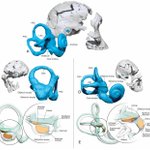
Out today in @PNASNexus! We present evidence for a new way to characterize the vestibular organs, challenging traditional assumptions about how the human inner ear is organized. academic.oup.com/pnasnexus/a…
Christopher M. Smith retweeted

For those of you who enjoy fossil monkeys, a write-up of our recent work on new species from Lemudong'o: icp.cat/index.php/ca/sala-de…
And in English: icp.cat/index.php/en/sala-de…

Christopher M. Smith retweeted

🚨Postdoc job alert: Come work with my paleontology & evolution group @GeosciencesEd in Edinburgh!
Researcher in Cognitive Evolution Over Deep Time. You'll study how brains & neurons have evolved over time, and predict neuron count in extinct species!
jobs.ac.uk/job/DTC355/postdo…

Christopher M. Smith retweeted

How can we clarify early clade diversification? Inner ear morphology helps resolve the affinities of key fossil primates at the base of the Old World monkey, ape, and human phylogenetic tree
pnas.org/doi/10.1073/pnas.25…

Christopher M. Smith retweeted

Our novel research approach - named morpho-phonetics - combines geometric-morphometrics with mel-frequency cepstral coefficient (MFCC) analysis. Now out in JASA:
doi.org/10.1121/10.0046100

Christopher M. Smith retweeted

1/9🚨 New paper out now, open access in JHE 🚨
Can a single isolated arm or leg bone tell you what species it belonged to? This study tests this across all extant great apes — with real consequences for how we identify fossil hominins.
sciencedirect.com/science/ar…
🧵👇
Great opportunity to do some really interesting science with an incredible mentor! I know from experience 😊👇

Dr. Hammond is recruiting a postdoctoral researcher to join her newly formed Hominin Origins Research Group at the Institut Català de Paleontologia Miquel Crusafont (ICP-CERCA).
icp.cat/index.php/es/icp-4/t…
Christopher M. Smith retweeted

Mice that spent 35 days in space exhibited changes in 669 genes in a region of the inner ear known as the saccule, which houses gravity-sensing otolith organs. The study could help astronauts readapt after long-duration spaceflight. In PNAS: ow.ly/7spP50ZBWCR

ALT A schematic illustration of the inner ear. The saccule (circled in red) is selectively affected by long-duration spaceflight. CREDIT: Chikara Abe.
Christopher M. Smith retweeted

🚨 PhD opportunity 🚨 Join @palevoprim as part of the #ReVol project (@CNRS @WitsUniversity Joint PhD Programme)! Spend 3 years investigating the southern African fossil cercopithecoids to reconstruct past ecology and behavior through skeletal morphology and dental microwear.

Christopher M. Smith retweeted
Interesting paper by my postdoc @PaleoNicole! Full disclosure, this is work she did before arriving to my group. Nicole and colleagues show that humans are not alone in having very difficult births.
Just look at the cephalopelvic fit for New World Monkeys 😬😱
@ICP_MCrusafont

A tight fit between the birth canal and the baby’s head is not unique to humans, with comparable or tighter fits found in other primates. Findings suggest birth-related constraints have evolved in multiple ways across primates: spklr.io/6013EOZol
@NatureEcoEvo

Christopher M. Smith retweeted

If you are interested in our research, lab members, and for PhD and Postdoc opportunities, this website is for you! Link: fabbrilab.com

New paper out in @PNASNews led by @CazenaveMarine1 shows different locomotor repertoires in Swartkrans Paranthropus and Sterkfontein Australopithecus! mpg.de/26471037/swartkrans-p…

Christopher M. Smith retweeted
When the asteroid hit, why did birds survive when all other dinosaurs died?
It's a question I ponder in my upcoming book The Story of Birds. But first, I explore it here for @sciam !
scientificamerican.com/artic…

Christopher M. Smith retweeted

If you're attending Anatomy Connected 2026, check out our session on navigating the publication landscape in anatomical sciences with presentations by the Editors-in-Chief of all 3 @AnatomyOrg journals!
Friday 4/17 4:00-5:30pm in Ruidoso/San Miguel 220/215

Christopher M. Smith retweeted

I am honored to have our #cassowary #biofluorescence study highlighted in the @NatGeoAnimals story that came out today! Thank you to writer, @toochoicetaylor and @NatGeo for having interest in our research!
@NYITCOMResearch @NYITCOMAR @diceCT @TetZoo
nationalgeographic.com/anima…

Christopher M. Smith retweeted
World’s most dangerous bird has bizarre, glowing headgear | Science | AAAS science.org/content/article/…
Thank you to Perri Thaler for her article in @ScienceMagazine @aaasabout about our new #cassowary publication in @SciReports!!

Christopher M. Smith retweeted
Finally our latest paper in the Journal of Mammalian Evolution is out!!!
Have a look at what an additional Oreopithecus partial cranium can tell us about the phylogenetic position of this enigmatic Late Miocene Italian ape.
rdcu.be/fa21y
#paleoanthropology #APES
Why does this matter?
Because the “peripheral vestibular system” isn’t one unified module.
The semicircular canals and otolithic organs are distinct systems with different evolutionary trajectories.