




Karl retweeted

Binance Hack Debrief…What now for Crypto? The Bren Book xitter.cf/i/broadcasts/1vKpPNMBe…

Karl retweeted

Binance will be "hacked"...
2026 or 2027.
There is no bottom in the market until Binance is hacked.
It's part of the script.
Karl retweeted

BREAKING: World's largest crypto exchange Binance hacked with over $5.6 billion stolen:
• $1.45 billion $BTC
• $875 million $ETH
• $234 million $TRX
• $50 million $XAUT
• $1.57 billion $USDT
• $823 million $USDC
• $75 million $WBETH
• $88.5 million $RLUSD
+ $447.5 million additional cryptocurrencies
This is the largest hack in crypto history.

Karl retweeted

User funds are safe!
It does look like a hack on Binance. Appreciate the quick freeze from Tether (~$971m) and Circle (~$823m).
I don't manage Binance (.com) anymore, but as a shareholder, I expect all user funds will be fully covered.


Karl retweeted

sorry but the whoile druckenmiller and elon tweet, followed by a binance hack all within the same day isnt a coincidence lol


Karl retweeted
$BTC bottom is in..Prepare for Robinhood Round 2…Midterms Bullish? xitter.cf/i/broadcasts/1AxRnZQjY…


Karl retweeted

Claude Code just found proof that every app on your phone is listening to your conversations. TikTok, Instagram, Facebook, Snapchat. they're using what you say out loud to build your feed. i have the data to prove it.
i've suspected this for months but last week something happened that made me finally check.
i was on a call with my friend and told him i'm thinking about breaking up with my girlfriend. didn't text it. didn't search it. just said it out loud with my phone on the table. two hours later she opens TikTok next to me and her entire feed is breakups. "signs your relationship is over." "how to heal after a breakup." she looked at me and said "why is TikTok showing me this." i said i don't know. but i did know.
i connected my iPhone to my MacBook and ran Claude Code that same night.
it scanned every app's background microphone activity for the last 90 days. not just the apps that asked for microphone permission. apps that were supposed to only have access to photos or location but were activating the microphone anyway.
what it found:
→ TikTok activated the microphone 347 times while the app was "closed" in the background
→ Instagram → 211 background activations
→ Facebook → 189
→ Snapchat → 94
every activation lasted between 3 and 15 seconds. enough to catch a sentence. every one of them tagged a keyword and cached it locally on the phone with a timestamp.
Claude Code pulled the full keyword cache:
→ "breakup" — tagged 4 hours before her feed changed
→ "moving out" — from a conversation with my mom last Tuesday
→ "wedding venue" — from a call with my sister about her engagement that i never searched once
→ "protein powder" — said it out loud to my roommate, had ads for it within an hour
→ "flight to tokyo" — mentioned it at dinner, saw travel ads the same night
those keywords were sitting in a local cache on my phone organized by app with timestamps. TikTok had the most entries. Instagram was second. every single keyword matched a conversation i had out loud near my phone.
the scariest one was "wedding venue." my sister told me she's getting engaged on a private call. i never searched it. never typed it. within a day my explore page had engagement rings and venue tours.
then Claude Code checked a second phone in the same room. my girlfriend's. same keywords. same timestamps. both phones were picking up the same conversation and tagging it independently.
i asked Claude Code how to shut it down. it mapped every app's microphone access and built a permission audit.
what i did:
→ revoked microphone access from every app that doesn't need it to function
→ disabled background app refresh for TikTok, Instagram, Facebook, Snapchat
→ turned off "Hey Siri" which keeps the microphone in passive listening mode 24/7
→ revoked "nearby interaction" permission which uses ultrasonic audio between devices
Claude Code confirmed all four apps lost background microphone access after the changes. i checked her phone too. same steps. took about 3 minutes per phone.
within 48 hours both our feeds went completely random. generic content. nothing personal. nothing from our conversations. that's when i knew for sure it was real.
the full step by step and the prompt are in the first reply. takes 3 minutes. save it so you don't lose it and send it to anyone who's ever said "my phone is definitely listening to me." it is. now you can prove it and shut it down.


Readers added context they thought people might want to know
2 days before, OP claimed to have found spyware on his "wife's phone":
x.com/starmexxx/stat…
Now, in this post, he talks about his "girlfriend":
x.com/starmexxx/stat…
OP has a history of fake AI content:
"Spy camera" found in hotel room: x.com/starmexxx/stat…
Spyware on "friend's computer": x.com/starmexxx/stat…
OP selling AI products: x.com/starmexxx/stat…
Flagged as AI: x.com/i/grok/share/b…


Karl retweeted

Your crosschain trades have been slow, broken and overpriced for months.
Relay, used by Fomo & Pumpfun, has led traders to worse fills, missed trades and poor experiences. We refused to let this go on.
Introducing Pump Bridge: 2x FASTER, 12x FEWER buy errors & the BEST fills 👇
Karl retweeted

Been seeing all the quantum-attack talk, so I used AI to explore an idea: what would a memecoin with a post-quantum seal on its origin look like? That experiment became Quantum Seal. The proof starts with a digital birth certificate: the mint address, creator, token name, ticker, initial supply, timestamp and a hash of the metadata URI. These details are encoded in a fixed format so a verifier can reproduce exactly the same bytes. We hash that message with SHA3-512, then sign the resulting commitment using ML-DSA-65, a post-quantum signature algorithm. A separate SHA3-512 fingerprint commits to the proof record, including its public key and signature. That final fingerprint was included in the same Solana transaction that created the token. The full proof stays off-chain; its fingerprint is permanently recorded with the launch. Here’s where to look:
solscan.io/tx/4TSGgkvf4csfDN…
The launch transaction Open the launch on Solscan Under Instruction Details, expand #5 — Memo Program v2. You’ll find a string beginning with PQB1:. That is the commitment to the external proof. Solscan may label this instruction “Unknown”; expand it to see the memo data. The external proof record:
api.npoint.io/bee368d18e7347…
This is the public JSON record used for verification. The included public key lets people check the signature without needing any private key. Keep a copy: the on-chain fingerprint preserves the commitment, but it does not store the complete proof.
The token itself solscan.io/token/5RpZVdZmpuw…
What does verification actually involve? Reconstruct the message using the protocol’s exact byte format and calculate its SHA3-512 commitment. Verify the ML-DSA-65 signature against that commitment. Calculate the proof record’s fingerprint and compare it with the PQB1: memo. Compare the signed mint, creator, name, ticker, metadata URI hash and supply with the launch transaction. The fingerprint is calculated from the protocol’s encoded record—not simply by hashing the downloaded JSON text.
The local proof passed verification and matched the launch memo and displayed launch details. Anyone checking independently should repeat those checks against the published record. That’s the “seal”: a verifiable connection between this token’s launch and a post-quantum-signed origin record. The metadata URI hash commits to the URI string; it does not freeze whatever a website serves at that address. AI-assisted, experimental and unaudited. The post-quantum component authenticates the launch record through external verification; token transactions continue through Solana’s standard authorization system.


Today I call upon the blockchain industry to calmly begin planning for "bunker mode". My personal recommendation is to set in motion a controlled mass migration of assets to fresh addresses, i.e. addresses whose pubkeys remain hidden behind a hash.
Holders, starting with large and sophisticated ones, should consider moving the bulk of their funds to addresses that have never signed a transaction. And when they do sign one, they should also move remaining funds to a new address (possibly generated from the same seed phrase).
Don't rush. While I believe there is cause for action a rushed migration would do more harm than good. Don't panic either. Moving assets to protected addresses is a simple, preventative step which does not require new cryptography or new wallets.
IMO it is now reasonable to brace for the possibility that ECDSA breaks before qday, in the worst case in months not years. By "break" I mean fast private key recovery (e.g. in one week) on available hardware (e.g. a large GPU cluster).
Recent days have been humbling for human mathematical intuition. Long-held, unquestioned hypotheses have fallen. This includes the n log(n) bound for integer multiplication and the 3SUM conjecture. In hindsight, May's unexpected disproof of the Erdős unit distance conjecture was our warning shot.
Yesterday's OpenAI drop made it clear that mathematical superintelligence is upon us. They say there are weeks where decades happen. We are about to live through weeks where centuries of mathematical progress happen. Could our magic 64-byte ECDSA signatures be too good to be true? Was it just security through obscurity all this time?
Elliptic curves feel especially vulnerable to superintelligence. Curves carry rich structure, with room for fancy tricks like Schoof, Frobenius, pairings. (By contrast, hashes are designed to minimise algebraic structure.)
Separately, as Ewin Tang can attest, an efficient quantum algorithm sometimes foreshadows an efficient classical one. We should be open to the possibility of a classical counterpart to Shor that breaks elliptic curves and RSA at once.
Also noteworthy is the striking under-representation of cryptographic breakthroughs among the 722 mathematical results OpenAI published. I've witnessed first-hand the US government censoring academic quantum cryptanalysis results. Backroom interventionism is my base case.
I urge large, sophisticated actors to lead by example. Project11's "risq list" (bitcoin-risq-list.projecteleven[.]com) is a great tracker of exposed BTC pubkeys. Binance, Bitbank, Robinhood, Bitfinex, and Tether have an opportunity to harden their cold storage. Next month I'll address institutions in London in a live Q&A (forum.ethereuminstitutional[.]org/london-2026).
Again, please do not rush. Wallets holding under 50 BTC enjoy partial cover from "Satoshi's shield", i.e. his 20K exposed addresses that hold 50 BTC each. Load-bearing signers like oracles and L2 security councils should consider rotating ECDSA pubkeys with every signed message and/or multi-signing with a hash-based schemes like SPHINCS.
Exiting bunker mode safely will require post-AI cryptography. My inclination is to go all-in on hash-based cryptography and avoid structured mathematical assumptions entirely, whether from curves, lattices, or isogenies. A single battle-tested hash (e.g. from the SHA or BLAKE families) yields plausible post-AI security.
The Ethereum roadmap on strawmap[.]org fully embraces hash-based cryptography with end-to-end formal verification as a response to the quantum threat. Those timelines must now be revisited and accelerated in light of mathematical superintelligence. I'll be pushing for maximum defensive acceleration.
Karl retweeted

Today I call upon the blockchain industry to calmly begin planning for "bunker mode". My personal recommendation is to set in motion a controlled mass migration of assets to fresh addresses, i.e. addresses whose pubkeys remain hidden behind a hash.
Holders, starting with large and sophisticated ones, should consider moving the bulk of their funds to addresses that have never signed a transaction. And when they do sign one, they should also move remaining funds to a new address (possibly generated from the same seed phrase).
Don't rush. While I believe there is cause for action a rushed migration would do more harm than good. Don't panic either. Moving assets to protected addresses is a simple, preventative step which does not require new cryptography or new wallets.
IMO it is now reasonable to brace for the possibility that ECDSA breaks before qday, in the worst case in months not years. By "break" I mean fast private key recovery (e.g. in one week) on available hardware (e.g. a large GPU cluster).
Recent days have been humbling for human mathematical intuition. Long-held, unquestioned hypotheses have fallen. This includes the n log(n) bound for integer multiplication and the 3SUM conjecture. In hindsight, May's unexpected disproof of the Erdős unit distance conjecture was our warning shot.
Yesterday's OpenAI drop made it clear that mathematical superintelligence is upon us. They say there are weeks where decades happen. We are about to live through weeks where centuries of mathematical progress happen. Could our magic 64-byte ECDSA signatures be too good to be true? Was it just security through obscurity all this time?
Elliptic curves feel especially vulnerable to superintelligence. Curves carry rich structure, with room for fancy tricks like Schoof, Frobenius, pairings. (By contrast, hashes are designed to minimise algebraic structure.)
Separately, as Ewin Tang can attest, an efficient quantum algorithm sometimes foreshadows an efficient classical one. We should be open to the possibility of a classical counterpart to Shor that breaks elliptic curves and RSA at once.
Also noteworthy is the striking under-representation of cryptographic breakthroughs among the 722 mathematical results OpenAI published. I've witnessed first-hand the US government censoring academic quantum cryptanalysis results. Backroom interventionism is my base case.
I urge large, sophisticated actors to lead by example. Project11's "risq list" (bitcoin-risq-list.projecteleven[.]com) is a great tracker of exposed BTC pubkeys. Binance, Bitbank, Robinhood, Bitfinex, and Tether have an opportunity to harden their cold storage. Next month I'll address institutions in London in a live Q&A (forum.ethereuminstitutional[.]org/london-2026).
Again, please do not rush. Wallets holding under 50 BTC enjoy partial cover from "Satoshi's shield", i.e. his 20K exposed addresses that hold 50 BTC each. Load-bearing signers like oracles and L2 security councils should consider rotating ECDSA pubkeys with every signed message and/or multi-signing with a hash-based schemes like SPHINCS.
Exiting bunker mode safely will require post-AI cryptography. My inclination is to go all-in on hash-based cryptography and avoid structured mathematical assumptions entirely, whether from curves, lattices, or isogenies. A single battle-tested hash (e.g. from the SHA or BLAKE families) yields plausible post-AI security.
The Ethereum roadmap on strawmap[.]org fully embraces hash-based cryptography with end-to-end formal verification as a response to the quantum threat. Those timelines must now be revisited and accelerated in light of mathematical superintelligence. I'll be pushing for maximum defensive acceleration.
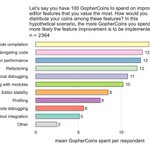
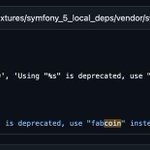
I just found something genny and crazy!
Go (Golang), by Google, created GopherCoin a fictional currency that they used in a varity of scientic experiments. They used GOPHER to pay different respondents and agents.
You can review their work and paper on Github github.com/golang/website/bl…

Karl retweeted
$BTC and $ETH coiling Up for Its next leg higher. What will it take for "retail" to return to crypto? RH Chain cooked or just getting started xitter.cf/i/broadcasts/1YxNrbywe…
Karl retweeted
Is the $BTC bear market bottom in?
Mike Willams thinks so
"My hunch is it is in."
"There is no country that can stop printing money."
"Agents will be a larger economy than all humans have ever created."
"You'll just walk down the street one day and the building will show up."
FT @Tru_DigitalNext