

"🚀 Crypto Investor & Enthusiast | 💡 Tech Evangelist | Exploring the future of finance through blockchain innovation | Sharing insights & empowering others.
Joined December 2023
- Tweets4K
- Following1K
- Followers142
- Likes8.7K





Keddy ⭐️ retweeted

🚨 THEY SAID THE FBI DIRECTOR WAS “MISSING IN ACTION.”
Then Kash Patel dropped THIS on the Senate.
Watch the media bury it.
Predecessors took 33 days off a year.
Kash: 4 days this year.
They used Reagan National like a personal lily pad — $3.5 MILLION of YOUR money.
He killed that. Andrews and government fields only. Taxpayers off the hook.
Least personal travel of ANY FBI Director in history.
Highest work days. Highest results.
📉 Murder rate down 20 points
💊 Enough fentanyl seized to kill a quarter million Americans — 20% fewer kids dying of overdoses
🎯 ALL 10 of the FBI’s Most Wanted captured
💰 Six of the world’s top fraudsters — $2 BILLION stolen from Americans
👶 11,000 child victims found and located
🚔 54,000 violent felons arrested by the FBI alone — 90% increase in 18 months
That is making America safer than it’s ever been.
Media won’t run this. You will.
🎥 Watch him say it. Then RT it.
#MAGA #FBI #KashPatel #AmericaFirst #DrainTheSwamp
Keddy ⭐️ retweeted

The CLARITY Act didn't advance in the Senate today, which was a disappointment. While it's possible bi-partisan conversations continue and it lives to fight another day, we can't wait on Congress anymore.
The SEC and CFTC have the tools they need to create clear rules under existing authority, and I expect will begin working on this in earnest.
So clarity is coming to crypto regardless.
And of course GENIUS is already the law of the land for stablecoins, which is even more permissive on rewards. There were some concessions we made on CLARITY that were tough to swallow, so perhaps it's for the best.
Crypto can't be uninvented. With clarity emerging through the regulators, we'll continue updating the financial system.
Keddy ⭐️ retweeted

Canada’s boreal forest — the source of much of the wildfire smoke drifting into the U.S. — isn’t like our managed forests in the lower 48.
It’s the largest intact forest ecosystem on Earth: roughly 1.3 billion acres (about 78 times larger than Alaska’s Tongass, our biggest national forest, and 7 times larger than all 154 U.S. National Forests combined). It stretches in an almost continuous belt from the Yukon to Newfoundland.
Why can’t they just do controlled burns like we do here?
Because most of it is remote, roadless wilderness.
• Less than 9% of Canada’s population lives in the boreal region.
• Less than 1% of the forest itself is developed.
• Vast areas have no roads and are only accessible by aircraft or winter roads.
You can’t send crews in to do prescribed burns across a billion+ acres of inaccessible terrain the way we can in populated areas near roads and communities in the U.S. Wildfire has been nature’s primary management tool in these ecosystems for thousands of years.
Smoke reaching the Northeast isn’t new either. It happened in 1950, 1988, 1995, 2002, 2017, 2021, 2023, 2025, and now 2026. Weather (especially upper-level wind patterns) determines where the smoke goes, not just where the fires are burning.
Blaming Canada’s government for “not controlling” these fires is political theater. The scale and inaccessibility make large-scale suppression or prevention across that wilderness fundamentally different — and in many places, practically impossible — from managing forests near U.S. population centers.
Nature runs that forest. Politicians don’t. Let’s stop pretending otherwise.
Keddy ⭐️ retweeted

Let me explain why an AI art company just built a full-body medical scanner, because almost everyone is reading this as a random pivot.
Ultrasonic CT works by firing sound through your body and recording the ripples that scatter back. Half a million emitters the size of a grain of sand, surrounding you in water, each one listening. What comes back is noise. Reconstructing a clean 3D image of muscle and tissue from that scattered acoustic mess is an inverse problem, and it is brutally hard. The hardware is the easy part. Butterfly Network already makes the chips. The reconstruction is where every previous attempt stalled.
That reconstruction is the exact problem Midjourney spent years getting good at. Turning ambiguous input into a coherent image is what they do. They aimed it at sound waves instead of text prompts.
This is why the scan takes 60 seconds while a full-body MRI takes 60 to 90 minutes. Close to 100x faster, no radiation, no magnets, resolution down to a fraction of a millimeter.
Then read the part most people skipped. The scans happen at a spa. Hot tubs, cold plunges, and a machine that quietly images your whole body while you relax. The scan is a side effect. You barely notice it.
Run it forward. The plan is 50,000 machines doing a billion scans every month. Midjourney has no investors and no quarterly hardware margin to chase. The payoff was never the scan fee.
A billion monthly full-body scans is the largest longitudinal map of human anatomy ever assembled. Every model trained on it gets sharper, and every sharper model makes the next scan worth more. This was always an image company. They just found a kind of image nobody else could generate.

Keddy ⭐️ retweeted
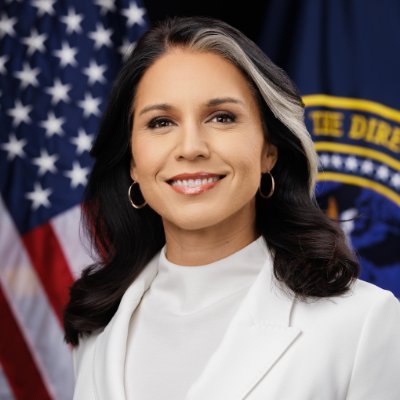
Today, on my final day as Director of National Intelligence, I’m releasing never-before-seen communications and documents exposing how Dr. Fauci provided millions in US taxpayer dollars to fund dangerous gain-of-function research at the Wuhan lab, worked with politicized elements within the Intelligence Community to suppress the truth about his actions and hide the virus’ lab-leak origins, and lied to Congress while under oath in 2024. It’s time you know the truth.
odni.gov/index.php/newsroom/…
Keddy ⭐️ retweeted

There have recently been some discussions on the ongoing role of L2s in the Ethereum ecosystem, especially in the face of two facts:
* L2s' progress to stage 2 (and, secondarily, on interop) has been far slower and more difficult than originally expected
* L1 itself is scaling, fees are very low, and gaslimits are projected to increase greatly in 2026
Both of these facts, for their own separate reasons, mean that the original vision of L2s and their role in Ethereum no longer makes sense, and we need a new path.
First, let us recap the original vision. Ethereum needs to scale. The definition of "Ethereum scaling" is the existence of large quantities of block space that is backed by the full faith and credit of Ethereum - that is, block space where, if you do things (including with ETH) inside that block space, your activities are guaranteed to be valid, uncensored, unreverted, untouched, as long as Ethereum itself functions. If you create a 10000 TPS EVM where its connection to L1 is mediated by a multisig bridge, then you are not scaling Ethereum.
This vision no longer makes sense. L1 does not need L2s to be "branded shards", because L1 is itself scaling. And L2s are not able or willing to satisfy the properties that a true "branded shard" would require. I've even seen at least one explicitly saying that they may never want to go beyond stage 1, not just for technical reasons around ZK-EVM safety, but also because their customers' regulatory needs require them to have ultimate control. This may be doing the right thing for your customers. But it should be obvious that if you are doing this, then you are not "scaling Ethereum" in the sense meant by the rollup-centric roadmap. But that's fine! it's fine because Ethereum itself is now scaling directly on L1, with large planned increases to its gas limit this year and the years ahead.
We should stop thinking about L2s as literally being "branded shards" of Ethereum, with the social status and responsibilities that this entails. Instead, we can think of L2s as being a full spectrum, which includes both chains backed by the full faith and credit of Ethereum with various unique properties (eg. not just EVM), as well as a whole array of options at different levels of connection to Ethereum, that each person (or bot) is free to care about or not care about depending on their needs.
What would I do today if I were an L2?
* Identify a value add other than "scaling". Examples: (i) non-EVM specialized features/VMs around privacy, (ii) efficiency specialized around a particular application, (iii) truly extreme levels of scaling that even a greatly expanded L1 will not do, (iv) a totally different design for non-financial applications, eg. social, identity, AI, (v) ultra-low-latency and other sequencing properties, (vi) maybe built-in oracles or decentralized dispute resolution or other "non-computationally-verifiable" features
* Be stage 1 at the minimum (otherwise you really are just a separate L1 with a bridge, and you should just call yourself that) if you're doing things with ETH or other ethereum-issued assets
* Support maximum interoperability with Ethereum, though this will differ for each one (eg. what if you're not EVM, or even not financial?)
From Ethereum's side, over the past few months I've become more convinced of the value of the native rollup precompile, particuarly once we have enshrined ZK-EVM proofs that we need anyway to scale L1. This is a precompile that verifies a ZK-EVM proof, and it's "part of Ethereum", so (i) it auto-upgrades along with Ethereum, and (ii) if the precompile has a bug, Ethereum will hard-fork to fix the bug.
The native rollup precompile would make full, security-council-free, EVM verification accessible. We should spend much more time working out how to design it in such a way that if your L2 is "EVM plus other stuff", then the native rollup precompile would verify the EVM, and you only have to bring your own prover for the "other stuff" (eg. Stylus). This might involve a canonical way of exposing a lookup table between contract call inputs and outputs, and letting you provide your own values to the lookup table (that you would prove separately).
This would make it easy to have safe, strong, trustless interoperability with Ethereum. It also enables synchronous composability (see: ethresear.ch/t/combining-pre… and ethresear.ch/t/synchronous-c… ). And from there, it's each L2's choice exactly what they want to build. Don't just "extend L1", figure out something new to add.
This of course means that some will add things that are trust-dependent, or backdoored, or otherwise insecure; this is unavoidable in a permissionless ecosystem where developers have freedom. Our job should make to make it clear to users what guarantees they have, and to build up the strongest Ethereum that we can.

Keddy ⭐️ retweeted

Mario Nawfal was unfollowed by Elon, who accused him of spreading fake news.
What Elon doesn't realize is that the account he made famous through constant retweets has extracted millions from its followers through crypto.
A thread on some of the biggest grifts promoted by him🧵

I feel this is amazing and will help both countries flourish. Canada has an immediate opportunity to pick Indian talent in engineering and technology and make huge moves in the overall tech sector.

We’re negotiating a free trade deal with India. This will be a game changer for Canadian workers and businesses — unlocking a massive new market.
We’re working fast — I met Minister @PiyushGoyal to review our progress so far and explore the opportunities ahead for both our countries in energy, agri-food, tech, and education.

ALT Prime Minister Carney meets with the Indian Minister of Commerce and Industry, Piyush Goyal, in Ottawa, Ontario.
2
1
51


Keddy ⭐️ retweeted
NEW YOUTUBE VIDEO !!! 🚨🚨🚨
"If I Wanted to Make My First $1 Million in 2026, I'd Do This"
Watch Now & SUBSCRIBE 👉 youtu.be/vDwsKolc9Vo

Keddy ⭐️ retweeted

🚨 BOMBSHELL TIMELINE EXPOSED: THEY’RE DROPPING TICKS FROM PLANES ON PURPOSE! 😱
March 12th (mid-March whistleblower drop): An anonymous worker for a private Ontario charter company spills it ALL on a forum. They’re getting PAID A FORTUNE to load up small planes with BOXES containing MILLIONS of ticks, twice a year, spring and fall.
This year? They switched to cold-hardy DEER TICKS (the Lyme disease super-spreaders) bred in a lab.
Dropped from single or dual-prop planes over specific regions in Ontario. Pilot + one “dispersal handler.” Boxes in, ticks out. Just like that.
Fast forward to late April / early May: Farmers and locals start REPORTING finding literal BOXES of ticks in fields and properties. Not random, sudden surges, ticks falling from nowhere, exploding populations. Right on cue after the planes allegedly did their dirty work.
Coincidence? HELL NO.
This is biological warfare. They flood us with migrants, crush the economy, ship billions abroad… and while we’re distracted, they’re engineering a tick nightmare to sell us vaccines (hello, Pfizer’s new one), keep us sick and dependent, and depopulate the countryside. Bill Gates vibes, WEF playbook, old-school bioweapons research all over again.
The whistleblower warned us in MARCH.
The boxes showed up in APRIL.
The “wave” of ticks is here NOW.
How much more proof do we need?
Demand flight logs.
Name the company.
Ground the planes.
This isn’t climate change or “nature”, this is planned.
Share this before they scrub it!
#Whistleblower #Ticks #Biowarfare #BigPharma #WEF


Keddy ⭐️ retweeted

$SUI has a giant vision.
The vision is not possible on any other blockchain.
Few accept this.
Possibly the best investment in the market before Clarity.
Remember this post. I will.
Keddy ⭐️ retweeted

We’ve agreed to a partnership with @SpaceX that will substantially increase our compute capacity.
This, along with our other recent compute deals, means that we’ve been able to increase our usage limits for Claude Code and the Claude API.
Keddy ⭐️ retweeted
Mark it up

The final rewards text in the CLARITY Act is now public.
We’ve been clear throughout this process: much of this debate was based on imagined risks, not real evidence, nor was it based on a real understanding of how crypto actually works.
Nevertheless, the crypto industry showed up to engage. Through months of meetings, the @WhiteHouse, @USTreasury, @BankingGOP, @SenThomTillis and @Sen_Alsobrooks finally arrived at a compromise.
In the end, the banks were able to get more restrictions on rewards, but we protected what matters – the ability for Americans to earn rewards, based on real usage of crypto platforms and networks. We also ensured the US can be at the forefront of the financial system – which in this competitive geopolitical era is paramount.
That’s important for innovation, consumers and America's national security.
Now that this issue is behind us, it’s time to focus on the broader bill. While this debate has been underway, lots of progress has been made on other areas like token classification, defi, and tokenization. We’re excited to review the full, final text, and for the bill to move forward.
It’s time to get CLARITY done.
Keddy ⭐️ retweeted

Energy Infrastructure Is Coming Online
PinLink’s energy operation in the UAE is approaching energification in the coming months, bringing new megawatts of production capacity into the ecosystem.
This energy directly underpins mining and compute infrastructure, forming the base layer of yield generation. By integrating energy at the protocol level, PinLink strengthens control over cost, uptime, and output.
Real-world production is becoming directly connected to on-chain value.

Keddy ⭐️ retweeted

🚨 FAKE LEDGER APP ON APPLE STORE WIPES OUT ENTIRE BTC HOLDINGS
A fake Ledger Live app on Apple’s Mac App Store just wiped out a user’s life savings.
American musician Garrett Dutton lost 5.92 $BTC ($424K) after downloading what looked like the official app and entering his 24-word seed phrase.
On-chain investigator ZachXBT traced the stolen Bitcoin exchange deposit addresses and publicly questioned how the app made it through Apple’s gatekeeping.
No comment yet from Apple.


Keddy ⭐️ retweeted

Everyone's acting like Karpathy's LLM knowledge base is some PhD-level project.
It's 3 folders, 1 text file, and 30 minutes.
I broke down the full system with copy-paste prompts for every step.
And I told you where it breaks so you don't waste time finding out the hard way.


Keddy ⭐️ retweeted

Wow, this tweet went very viral!
I wanted share a possibly slightly improved version of the tweet in an "idea file". The idea of the idea file is that in this era of LLM agents, there is less of a point/need of sharing the specific code/app, you just share the idea, then the other person's agent customizes & builds it for your specific needs.
So here's the idea in a gist format: gist.github.com/karpathy/442…
You can give this to your agent and it can build you your own LLM wiki and guide you on how to use it etc. It's intentionally kept a little bit abstract/vague because there are so many directions to take this in. And ofc, people can adjust the idea or contribute their own in the Discussion which is cool.


LLM Knowledge Bases
Something I'm finding very useful recently: using LLMs to build personal knowledge bases for various topics of research interest. In this way, a large fraction of my recent token throughput is going less into manipulating code, and more into manipulating knowledge (stored as markdown and images). The latest LLMs are quite good at it. So:
Data ingest:
I index source documents (articles, papers, repos, datasets, images, etc.) into a raw/ directory, then I use an LLM to incrementally "compile" a wiki, which is just a collection of .md files in a directory structure. The wiki includes summaries of all the data in raw/, backlinks, and then it categorizes data into concepts, writes articles for them, and links them all. To convert web articles into .md files I like to use the Obsidian Web Clipper extension, and then I also use a hotkey to download all the related images to local so that my LLM can easily reference them.
IDE:
I use Obsidian as the IDE "frontend" where I can view the raw data, the the compiled wiki, and the derived visualizations. Important to note that the LLM writes and maintains all of the data of the wiki, I rarely touch it directly. I've played with a few Obsidian plugins to render and view data in other ways (e.g. Marp for slides).
Q&A:
Where things get interesting is that once your wiki is big enough (e.g. mine on some recent research is ~100 articles and ~400K words), you can ask your LLM agent all kinds of complex questions against the wiki, and it will go off, research the answers, etc. I thought I had to reach for fancy RAG, but the LLM has been pretty good about auto-maintaining index files and brief summaries of all the documents and it reads all the important related data fairly easily at this ~small scale.
Output:
Instead of getting answers in text/terminal, I like to have it render markdown files for me, or slide shows (Marp format), or matplotlib images, all of which I then view again in Obsidian. You can imagine many other visual output formats depending on the query. Often, I end up "filing" the outputs back into the wiki to enhance it for further queries. So my own explorations and queries always "add up" in the knowledge base.
Linting:
I've run some LLM "health checks" over the wiki to e.g. find inconsistent data, impute missing data (with web searchers), find interesting connections for new article candidates, etc., to incrementally clean up the wiki and enhance its overall data integrity. The LLMs are quite good at suggesting further questions to ask and look into.
Extra tools:
I find myself developing additional tools to process the data, e.g. I vibe coded a small and naive search engine over the wiki, which I both use directly (in a web ui), but more often I want to hand it off to an LLM via CLI as a tool for larger queries.
Further explorations:
As the repo grows, the natural desire is to also think about synthetic data generation + finetuning to have your LLM "know" the data in its weights instead of just context windows.
TLDR: raw data from a given number of sources is collected, then compiled by an LLM into a .md wiki, then operated on by various CLIs by the LLM to do Q&A and to incrementally enhance the wiki, and all of it viewable in Obsidian. You rarely ever write or edit the wiki manually, it's the domain of the LLM. I think there is room here for an incredible new product instead of a hacky collection of scripts.