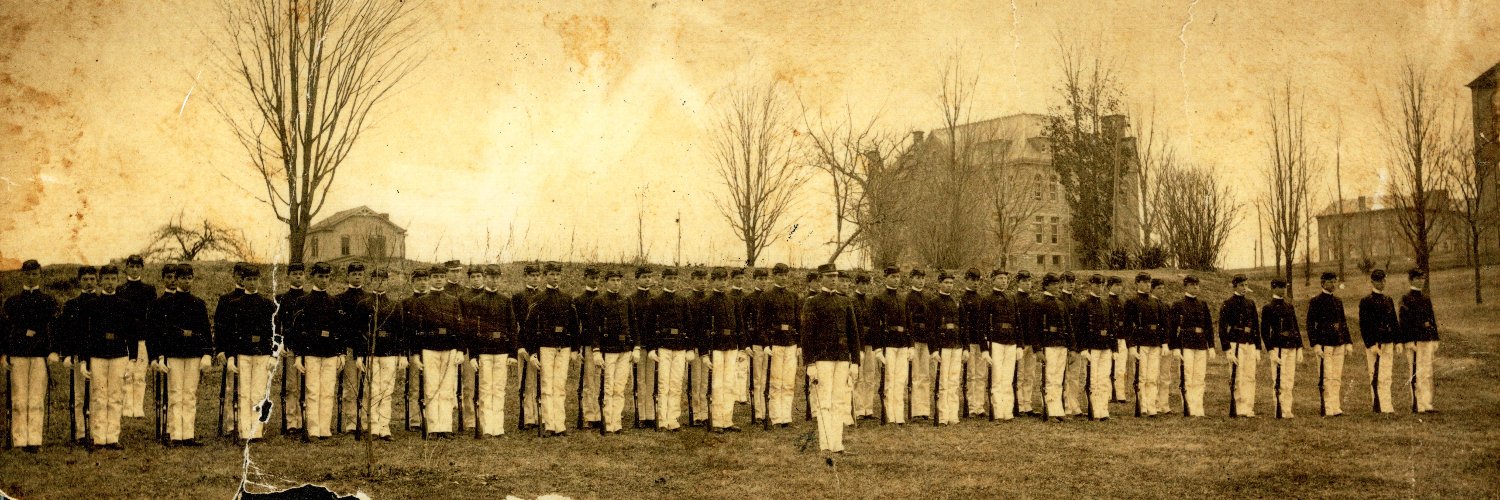

Virginian, Hokie, academic advisor, World War 1 historian, traveler, bibliophile, wine and whiskey enthusiast.
Blacksburg, VA
Joined July 2015
- Tweets211
- Following73
- Followers118
- Likes1.5K






Daniel Newcomb retweeted

WW1 in the Headlines:
Last week firefighters in Slovenia were prevented from penetrating into a wildfire due to the fire setting off unexploded ordinance from the First World War.
taskandpurpose.com/news/this…

Daniel Newcomb retweeted
Once America entered the war the US Committee on Public Information worked with songwriters and publishers to produce and promote propagandistic songs to encourage support of the war effort among the American population. (3/3)
Daniel Newcomb retweeted
By the afternoon their music would be for sale on the streets! By night musicians would be playing those songs in bars for the ready and willing ears of their listening public. (2/3)
Daniel Newcomb retweeted
In the 1910s much of the American population either didn't read or didn't read English. But, some could get their news from songs. Songwriters would read newspapers, and then compose songs within hours based on what they read that morning. (1/3)

Daniel Newcomb retweeted

#VTRSAP2022 Germany/Italy is back safely in the US! Thank you @byjessicadeters @deucevt and Daniel for leading the group. First track down, 3 to go!


Daniel Newcomb retweeted
We shall hold the enemy towards nightfall
and they will move
mutely into the dark behind us,
only the creaking cart
disturbing their sorrowful serenity.
(3/3)
Daniel Newcomb retweeted
Past them have hastened
processions of retreating gunteams
baggage-wagons and swift horsemen.
Now they struggle along
with the rearguard of a broken army.
(2/3)
Daniel Newcomb retweeted
"The Refugees" by Sir Herbert Read, written in 1914 during his service with the Green Howards in France:
Figures with bowed heads
They travel along the road:
Old women, incredibly old
and a hand-cart of chattels.
They do not weep:
their eyes are too raw for tears.
(1/3)

Daniel Newcomb retweeted
Learn about the many ways #WW1 transformed @virginia_tech by visiting @VPIWW1's new digital exhibit How WW1 Changed Us: Virginia Tech ➡️ vpiworldwarone.lib.vt.edu/ex…
@VT_LiberalArts @VT_History @VTSandsman @VTCorpsofCadets

Daniel Newcomb retweeted

With so many players at the table, the effects of this scattered conflict are still being reassembled. Join us on Feb. 28 as Dr. Roger Reese surveys the Russian Civil War and how it changed the world today. Online | RSVP: ow.ly/GZSk30sbEmA | 3/3

Daniel Newcomb retweeted
🚨 Appreciation and Shout Out
Our new digital exhibit would not have been possible without @JBuckingham00! Over the past few months, he helped edit, research, & write the exhibit. He was solely responsible for exhibit design & construction.
We know this Hokie is going places!

Daniel Newcomb retweeted
In war soldiers often have to tend each other's wounds before medical care can arrive or be found. This bandage issued to German soldiers during the First World War was covered with illustrations which indicated the correct ways to bind wounds.
#ww1 #medicalhistory #worldwar1


Daniel Newcomb retweeted
Excited to announce that our digital exhibit - How WW1 Changed Us: Virginia Tech - is now open!
Visit our exhibit here ➡ vpiworldwarone.lib.vt.edu/ex…
#virginiatech #hokies #VT150 #blacksburg #ww1 #worldwarone #worldwar #worldwar1 #digitalhistory

Daniel Newcomb retweeted
Here are just four of my personal favorite portraits from Burnand’s series:
- Ahmed Abokob (Djibouti)
- Le Naplong (Vietnam)
- Coulma Cone (Senegal)
- G.W. Kimberley (Great Britain)


Daniel Newcomb retweeted
Burnand’s series reminds us that the Allied armies & their support were diverse. At least 45 countries are represented in Burnand’s series including: Algeria, Armenia, France, Russia, Great Britain, Thailand, Vietnam, the US, Japan, China, India, Madagascar, Mali, & more.
Daniel Newcomb retweeted
One of #WW1's greatest unknown artists was Swiss-born Eugène Burnand (1850-1921). His last great project was a series of 101 pencil and pastel portraits representing men from the Allied nations.

Daniel Newcomb retweeted
How did the #FirstWorldWar lead @virginia_tech to hire its first female instructor?
Find out by reading our newest story on our @VPIWW1 blog here ➡️ blogs.lt.vt.edu/vpiww1/2020/…
