

Co-founder @holisticwealth_ | Wealth Manager |Investments | Insurance | Taxes| Estate planning | Credit cards | ARN 285284
AMFI Registered MFD
Joined August 2013
- Tweets34.8K
- Following650
- Followers22.6K
- Likes9.2K








Pinned Tweet
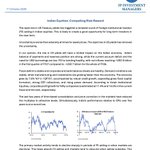
Prashant Jain’s view for the next 3 years.
Challenge is not that these returns will not come. It’s about when does it come?
All of it could come in the third year may be. How patient can you remain?


A ₹15k SIP will not make you rich. Here’s the maths.
₹15k a month for 15 years at 12% grows to ₹74.9 lakhs. ₹27 lakhs of that is your own money. After 6% inflation it buys what ₹31 lakhs buys today.
Fifteen years of never missing a month. ₹31 lakhs in today’s terms.
Now the fix everyone reaches for.
Find a fund doing 14% instead of 12% and you end at ₹38 lakhs instead of 31. Two extra percentage points held for fifteen years buys you ₹7 lakhs. Not the answer.
What moves it is the amount. ₹50k a month ends at ₹1.04 crores in today’s money. For ₹1 crore you need about ₹48k a month.
Or keep the ₹15k and raise it 10% every year. Same fund, same return, ₹54 lakhs instead of 31.
That 10% is not a market decision. It’s an income decision.
Compounding multiplies what you feed it. It cannot invent what you never put in.
CA Niraj Dugar retweeted
As of yesterday., KOSPI is up 36 pct ytd of which samsung and hynix have contributed 32 pct. So rest of mkt is up 4 pct. 563 of 822 stocks are negative.
This year has been story of extreme differentiation everywhere.
You must spend 80% of your time in wealth creation activity - your job, business etc and 20% in optimisation.
Most people do the reverse.
CA Niraj Dugar retweeted

Over 30 years, the PE strategy beats the plain SIP by about ₹4 lakh, roughly 1.3%.
To get that 1.3%, you’d have had to:
Track Nifty PE every month for 30 years
Watch a cash pile grow for months, sometimes years
Put all of it into the market at once, usually when the news was terrible
The plain SIP investor got almost the same result by doing nothing.
Your SIP doesn’t need a strategy. It needs you to keep it running.
You learn every day when you talk to people about money.
Someone who has worked all their life in a gov job now wants to grow their retirement corpus at high rates of returns in the next 2 years.
Greed does not care about your age.
CA Niraj Dugar retweeted

retail investors would have been in much better position had they spent 20% of the time doung research on overall personal finance than doing research on IPOs.
1) chances of allocation is very thin in good IPOs
2) overall networth invested in single IPO is very miniscule
🤯
You’re 45 and just resigned. Your health cover ended with your last working day.
A new policy now means tests, higher premiums and 3 years of waiting 👇
“My company already covers me” is one of the most expensive assumptions in personal finance.
Here’s why:
→ It ends when your job ends. Switch or retirement, the cover goes with it
→ Your employer sets the terms every year. Sum insured, parents’ cover and room rent caps can change with their budget
→ Buying fresh later means medical tests, higher premiums and up to 3 years of waiting for pre-existing conditions
Many people say, “I’ll just convert my office policy when I leave.”
You can. Your waiting period credit usually carries over.
But the simplest route is your company’s current insurer and companies often switch.
Group perks like maternity cover or no room rent cap may not carry over, and you pay the full premium yourself.
Medical costs are rising ~11.5% a year. A ₹5 lakh bill today could be ~₹15 lakh in a decade.
Buy a personal policy while you’re healthy. It doesn’t depend on your job or your employer’s insurer.
Keep the office policy as a bonus layer, not the foundation.
ARN 285284. Not financial advice. Mutual fund investments are subject to market risk.
Reading books and quotes in bull markets is fun. You start believing that you will be life long equity investor. Living the quotes is very hard.

Knowing who sold you insurance helps. Proving what they promised is the harder part.
Here’s what the new IRDAI rule changes and what you still need to check.👇
From 1 January 2027, three documents have to name the person who sold it to you.
The proposal form, the policy and the certificate of insurance, plus the branch phone number and email.
That fixes a real problem. Today, when a policy does not match what was promised, half the complaint is spent finding out who said it. The employee has moved, the code sits with someone else, the bank calls it a referral.
But a name only tells you who sold it. Not what he said.
The conversation at the counter is not part of your contract. The policy wording is. The benefit illustration is. The verbal promise is not.
Two more things. The rule covers intermediaries, so banks, brokers and aggregators. Individual agents are not inside this amendment.
And what protects you today is unchanged. 30 days of free look from the day the policy reaches you. Read it in that window, check it against the illustration, and keep every message in writing.
A name makes people traceable. Accountability still comes from reading what you signed.
CA Niraj Dugar retweeted
There's always a forecast. You're hearing the same stories again. Oil prices going to $300 plus.

I don't see anyone talk about this but PV sir has posted 5000 plus videos on Youtube. Great work. The consistency is mind-blowing. Every time I have doubts about my own content journey, I just go and take a look at his channel to continue doing the work.

Shinkansen is very expensive. Tokyo to Kanazawa is 9k per head
If bullet trains run at same pricing in India, do you think they’ll be successful? 🤔
One mistake that many consultants and influencers are making is not taking GST registrations.
If your annual income is more than 20 lakhs and you’re not salaried, please comply with GST regulations.
Non-compliance can be expensive in the long run.
You earn ₹2 lakh a month.
You just spent 20 minutes hunting for a ₹50 discount on dinner.
That’s ₹380 of your time spent to save ₹50 👇
Net worth isn’t spending money.
₹1 crore can be a flat with an EMI, an EPF you can’t touch and ₹40,000 in the bank.
The idea still holds. We get richer and keep fighting over ₹200 like it’s rent. That costs time, not just money.
Earning ₹2 lakh a month and spending 20 minutes to save ₹50? You valued your hour at ₹150.
So build the threshold on:
→ Net worth: 0.01% of it. ₹1 crore means anything under ₹1,000
→ Income: ~1% of monthly take-home
→ Goals: SIPs and EMIs paid first
But don’t set it on net worth alone. ₹1 crore of net worth can be a flat with an EMI, an EPF you can’t touch and ₹40,000 in the bank.
Once your threshold is set, anything that costs less gets a yes without a debate.
Anything that costs more, think as hard as you like.
Be disciplined with big money. Be generous with your time.
ARN 285284. Not financial advice. Mutual fund investments are subject to market risk.


It’s ok to skip a couple of sips a year. You don’t need to have 100% hit rate. Direction is important.
What’s important is continuing them during bad markets. Running them for long periods. Increasing the amounts with income.
Simplify -
Investments - ppf, epf, NPS and mutual funds.
Insurance - health, term, accident, and critical.
Credit cards - 2-3. Pick between cash backs or travel rewards
Bank accounts - 1 primary account and 1 secondary. Additional only if you need relationship based accounts.
Real estate - primary residence for living.
Cars - 2 if both are working, otherwise 1 is enough.
If you’re unable to figure your finances, reach out to us at Holistic wealth -
forms.gle/cFnUWqRhVejZreiy9
