

Forgotten tales about old computers
Joined April 2017
- Tweets905
- Following85
- Followers1.1K
- Likes1.1K





Lost Computer Tales retweeted

The earliest DOS source code was found on printer paper in Tim Paterson's garage so we've open sourced it on 86-DOS 1.00’s 45th anniversary! This is next-level software archaeology for study, preservation, and plain ol’ curiosity. Go dig in and learn how it was recovered! #DOS #RetroComputing
opensource.microsoft.com/blo…

Lost Computer Tales retweeted

マウスの歴史を一冊にまとめたいわゆるマウスの本「マウスは世界を変えた〜エンゲルバートからMacintoshへ(仮題)」を執筆中です。ものになるかは未定ですがすでに100頁は越えたのでなんとか形にしたいと考えています😊
写真は表紙に使うビジュアル案です!
#mactechlab

Lost Computer Tales retweeted
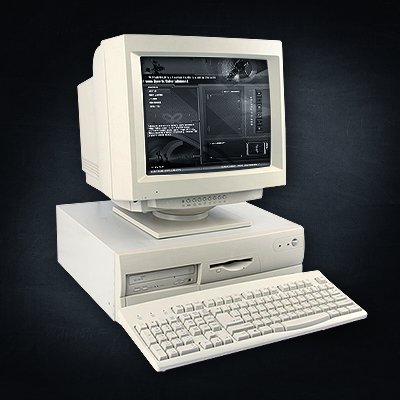
On November 24, 1995, The IETF organization published the RFC 1866 specification for HTML 2.0. HTML 2.0 supported forms, tables, graphics, and a number of new tags, such as !DOCTYPE, head, body, etc.
#WebDesignHistory

ALT The HTML 2.0 specification in 1995
Lost Computer Tales retweeted

BASICODE: A Bit Like Java, But From The 1980s
hackaday.com/2025/10/14/basi…
Lost Computer Tales retweeted
It is with sadness that we announce the passing of Professor Simon Lavington,.A pioneer in computing & devoted historian. We were honoured to award Professor Lavington the 2024 Honorary Fellowship. Our thoughts & condolences are with his family. His impact is immeasurable.
Lost Computer Tales retweeted

National Museum of Computing at Bletchley Park. Day 1 of the Macintosh Fixathon #Acorn #cheesewedges
#TNMOC #Macintosh #Macintosh #ClassicMacintosh #BletchleyPark #computers


Lost Computer Tales retweeted

Layers was AT&T’s proprietary windowing system, shipped with the UNIX PC (PC 7300), predating the widespread adoption of X11. Layers acted like a graphical multiplexer—a distant ancestor of tmux or screen—but ran directly on a bitmap display with rudimentary window management.


Lost Computer Tales retweeted
First Transistor Computer Reborn
hackaday.com/2025/09/21/firs…

Lost Computer Tales retweeted
Remembering UCSD p-System, the Pascal Virtual Machine
hackaday.com/2025/04/21/reme…


Lost Computer Tales retweeted

Walkmac, prototype (1986)
This is one of the few preserved and operating prototypes of a Mac portable computer in the world, built by Colby Systems. They had a modular structure, a removable floppy disk drive and an HDD, which were all placed in special metal cassettes.


Save it! Reasons:
1. One of the first ARM devices for the general public;
2. The last British (European) computer with true historical significance;
3. One of the most elegant home computers in existence;
4. The last British (European) home computer that is not a PC clone.

You’ve got an #Acorn #Archimedes #A3010. Do you save it or swap it? If saving, then why? If swapping, then for what? #RetroSaveOrSwap #RetroComputing #ComputerHistory #RetroGaming #VideoGames


Oscar Peterson using a Synclavier II digital synthesizer with a DEC VT100 terminal and a VT640 Retro-Graphics expansion.
youtu.be/FI-4HNQg1JI?t=209
#retrocomputing #rchvid
Lost Computer Tales retweeted

Feeling pretty smug walking past all those luddites on the streets, rocking the absolute latest in portable computer technology.


Lost Computer Tales retweeted
Where Did the Japanese Computers Go?
hackaday.com/2024/09/22/wher…