
NDSEG Fellow / PhD @uncnlp with @mohitban47 working on automating env/data generation + program synthesis formerly @allenai @neclabsamerica
Boston, USA
Joined June 2023
- Tweets749
- Following1.5K
- Followers753
- Likes3.8K



Pinned Tweet
Can an LLM act as a selective model of a GPU during evolutionary search, by reasoning + forecasting a kernel’s runtime but deferring to a GPU when unsure? We produced 12k kernels + runtimes from evolutionary search, costing 400M reasoning tokens + 600 GPU-hours to answer this.
In our work GPU Forecasters, we study language models as selective surrogates for GPU kernel optimization.
1️⃣ Off-the-shelf LLMs can forecast how a GPU responds to a candidate kernel with non-trivial accuracy. If we rank candidates by these predictions and measure only the top 10% on a GPU, the fastest kernel we find is within 20% of the best in the pool.
2️⃣ We want LLMs to not just be accurate but also calibrated, so that we can use their uncertainty for selective prediction: during search, we should trust only confident forecasts and verify less confident forecasts by sending them to the GPU.
3️⃣ We train an open-weights surrogate (GPT-OSS-20B) with RL to improve both accuracy and calibration. Calibration-shaped rewards improve both confidence reliability and ranking ability, while correctness rewards alone do not.
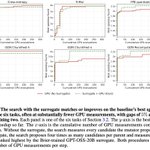
4️⃣ Inside a real kernel search, the surrogate finds faster kernels than an equal-GPU-budget baseline by considering more candidates per measurement.
5️⃣ We release 12,388 LLM-generated GPU kernels with measured runtimes spanning 118 operations, CUDA and Triton backends, 3 GPU types, taking 400M tokens + 600 GPU-hours to produce. This dataset can be used for analyzing LLM-driven evolutionary program search dynamics, post-training LLMs for kernel code generation, and things we didn’t get a chance to explore, like training reward models!
Thread 🧵👇

Zaid Khan retweeted

What if an agent’s failures could shape its own path to self-improvement? 🤔
In WEDGE, we take a step in this direction: turning failures into targeted, learnable training worlds that evolve as the agent improves!

🚨 Excited to share WEDGE: From Failures to Learnable Worlds, our new work on policy-conditioned environment generation for navigation agents!
We found that even on the same navigation task, agents tend to fail under different environmental conditions. Yet most environment generators do not consider what each agent actually needs to improve.
🤔 This led us to a question: Can we use an agent's own failures to guide the generation of training environments?
➡️ We introduce WEDGE, a framework where an agent's failures shape the worlds it trains in next. WEDGE identifies the conditions under which each agent struggles and generates new environments that target those weaknesses while remaining learnable. After each round of adaptation, it re-diagnoses the agent to guide the next round of environment generation.
Thread🧵👇
In our newest work on environment generation, we discover environment features (as executable functions) that explain why an embodied navigation agent fails, and use those features to generate novel learnable environments where the policy gets practice with the conditions that make it fail.
Over multiple rounds, we can discover new weaknesses and keep generating new environments!
🧵👇
🚨 Excited to share WEDGE: From Failures to Learnable Worlds, our new work on policy-conditioned environment generation for navigation agents!
We found that even on the same navigation task, agents tend to fail under different environmental conditions. Yet most environment generators do not consider what each agent actually needs to improve.
🤔 This led us to a question: Can we use an agent's own failures to guide the generation of training environments?
➡️ We introduce WEDGE, a framework where an agent's failures shape the worlds it trains in next. WEDGE identifies the conditions under which each agent struggles and generates new environments that target those weaknesses while remaining learnable. After each round of adaptation, it re-diagnoses the agent to guide the next round of environment generation.
Thread🧵👇
Zaid Khan retweeted

From Failures to Learnable Worlds
Policy-Conditioned Environment Generation for Navigation Agents
paper: huggingface.co/papers/2610.1…
Zaid Khan retweeted

The value of a training environment depends on what the agent still needs to learn. In WEDGE, we use navigation agents’ failures to generate worlds that target their weaknesses while remaining challenging but learnable.
🚨 Excited to share WEDGE: From Failures to Learnable Worlds, our new work on policy-conditioned environment generation for navigation agents!
We found that even on the same navigation task, agents tend to fail under different environmental conditions. Yet most environment generators do not consider what each agent actually needs to improve.
🤔 This led us to a question: Can we use an agent's own failures to guide the generation of training environments?
➡️ We introduce WEDGE, a framework where an agent's failures shape the worlds it trains in next. WEDGE identifies the conditions under which each agent struggles and generates new environments that target those weaknesses while remaining learnable. After each round of adaptation, it re-diagnoses the agent to guide the next round of environment generation.
Thread🧵👇
Zaid Khan retweeted

🚨 As agents become more capable, new safety and security risks continue to emerge, as highlighted by recent reports of AI agents taking unauthorized actions or leaking sensitive data. Therefore, we need runtime guardrails that can reliably enforce safety policies before agent actions are executed, while continually adapting to new risks.
Existing guardrails usually trade off adaptability and reliability: LLM-based guardrails can adapt with memory, but their decisions may be inconsistent. On the other hand, formal guardrails provide deterministic enforcement but are typically fixed and unable to incorporate new risks that appear after deployment.
🚀 We introduce VEPA, a lifelong formal guardrail for agents. It represents safety and security policies as executable symbolic rules that evolve from deployment feedback. These policies enable deterministic enforcement of agent actions and can be formally verified, avoiding the inconsistency and ambiguity that can occur with natural-language policies.
🧵⬇️

Zaid Khan retweeted

We are hiring at @unccs 🎉
▶️ Two TT Asst. Professors: 1 in Safeguarding AI in Health, 1 in Neuroengineering.
▶️ Full Professor jointly with Biostats.
Part of campus cluster hires (review begins Dec 1).
Plus, Teaching Faculty (review begins Nov 1).
cs.unc.edu/about/faculty-hir…

Zaid Khan retweeted

🚨 We are hiring Tenure-Track and Full Professors in important and timely areas such as AI Safety**, Neuroengineering, as part of exciting campus-level strategic cluster hires with CS, and with several positions in the clusters. The Full Professor position in 'Safeguarding AI for Health' is jointly between our strong BioStats department and CS -- please spread the word and feel free to apply & reach out for any questions!
**broad emphasis incl. but not limited to machine learning theory, AI systems, interpretability, robustness, verification, human-AI interaction.

We are hiring at @unccs 🎉
▶️ Two TT Asst. Professors: 1 in Safeguarding AI in Health, 1 in Neuroengineering.
▶️ Full Professor jointly with Biostats.
Part of campus cluster hires (review begins Dec 1).
Plus, Teaching Faculty (review begins Nov 1).
cs.unc.edu/about/faculty-hir…
Zaid Khan retweeted

Can agents learn useful skills from frozen logs that people and agents already leave behind?
🚨Introducing TeleTune: We turn noisy offline telemetry into agent skills w/o access to a live environment during training!
+6.7% on WorkArena & +7.7% on Mind2Web 👉 up to 75x fewer tokens used for optimization. 🧵
Activity logs like user telemetry capture how people use software, but often (1) lack explicit task goals, (2) cannot be replayed to test each skill update, and (3) can be a noisy mix of multiple tasks.
We address these jointly in TeleTune, where we propose skill-guided progress, an offline metric that uses action-prediction errors to improve agent skills. Not only does optimizing it improve downstream performance, but it also saves token usage by 5 to 75x compared to validating skill updates in live environments!
Key takeaways:
1️⃣ TeleTune achieves 77.1% average success on WorkArena and 80.6% on Online-Mind2Web, outperforming the strongest baselines by +6.7% and +7.7% absolute
2️⃣ Optimizing offline skill-guided progress transfers to improvements in downstream task success
3️⃣ Offline optimization uses 5 to 75x fewer tokens than validating the skill edits in a live environment

Zaid Khan retweeted
Excited to share WOVEN! 🚀
The goal isn't just to teach models what the world looks like. It's to teach them how the world changes.
Our key finding: Visual transition reasoning is a shared, teachable primitive that transfers across diverse downstream tasks.
And the key to effective transfer? Teach the right reasoning operations, rather than simply matching scenes, actions, or domains.

🚨 What makes good world-model training for MLLMs that actually transfers across tasks?
🧶 Excited to share our new work, WOVEN!
🧩 Spatial, physical, temporal, and embodied reasoning all require understanding how the world changes.
🔁 We view world modeling through state transitions p(s′ | s, a), and study visual transition reasoning: inferring what is unobserved in (s, a, s′).
🤔 Can visual transition reasoning be learned as a shared primitive that benefits multiple downstream tasks?
🤔 If so, how should we train it for better downstream gains?
Major takeaways:
➡️ Visual transition reasoning is a shared, teachable primitive that transfers widely downstream: ~2K-example subsets collectively improve 22 of 26 downstream benchmarks by up to 27.3 points.
🧪 A data-centric training recipe: to teach this shared primitive for downstream tasks, select supervision by the reasoning operation it teaches, rather than scene/action/domain similarity.
Thread🧵👇

Zaid Khan retweeted

🌶️ if your benchmark can be gamed, it will be... so you’d better game it first!
excited to present Benchmark Designers Should "Train on the Test Set” to Expose Exploitable Non-Visual Shortcuts at #COLM2026 today!
📍 Poster #124 · Grand Ballroom @ 4:40pm

Zaid Khan retweeted

How useful is GPT-6 Astra for robot control, really? 🤔
Lin and I burned plenty of tokens to explore questions:
- How does Astra compare with recent VLAs across different tasks?
- Which control interfaces work best with Astra (linear motion vs. action chunking)?
- Can it learn from its own failures or others' demonstrations?
- Does higher reasoning effort (more thinking) improve performance?
- What happens when we remove its memory? (Many VLAs have little or no memory)
Check Ditto-Bench and our findings in the blog post. Full code included! 👇
llong-cs.github.io/llms-for-…
This was a fun analysis led by Lin, one of my first PhD students at JHU. He joined without much robotics experience but quickly produced a thorough benchmark and thoughtful analysis! 💪


GPT-6 Astra has shown impressive results in simple robot control tasks.
But what if the tasks become more challenging and involve complex geometric constraints, precise contact, or improvised tool use? To find out, we:
- Built Ditto-Bench, where simple goals meet challenging physics, and tested both Astra and MolmoAct2.
- Systematically ablated key design choices to understand what makes these robot-control agents succeed, or get stuck.
- Explored what new possibilities these models could open up for robotics, such as in-context learning.
More details 🧵👇

Zaid Khan retweeted

GPT-6 Astra has shown impressive results in simple robot control tasks.
But what if the tasks become more challenging and involve complex geometric constraints, precise contact, or improvised tool use? To find out, we:
- Built Ditto-Bench, where simple goals meet challenging physics, and tested both Astra and MolmoAct2.
- Systematically ablated key design choices to understand what makes these robot-control agents succeed, or get stuck.
- Explored what new possibilities these models could open up for robotics, such as in-context learning.
More details 🧵👇
Zaid Khan retweeted

🚨 Excited to share our new work, Attacca, on goal-directed control for long-horizon embodied agents!
💡Long-horizon embodied tasks require agents to handle each new goal from the state left by the previous one. The proposed 🎵 Attacca learns the full Search → Approach → Interact process under these continuously changing states.
📈 With context-decoupled goal sampling, target grounding, and behavioral-phase conditioning, Attacca achieves strong gains on both short tasks and long-horizon chains, including up to 7× higher success than the strongest baseline!

🚀 New paper: "Attacca: Goal-Directed Control under State Continuity for Long-Horizon Embodied Agents"
In a long task, every task starts where the last one ended 🔗
🧭 a new position and view
⛏️ a world that has changed
👀 the next target out of sight
Attacca 🎼 carries the agent across these hand-offs. It searches for, approaches, and interacts with each next target.
✅ 1.7–2.4× the strongest baseline on short tasks
✅ Up to 7× on long-horizon chains

Zaid Khan retweeted

Excited to share our #NeurIPS2026 paper "Safeguarding LLMs via Model-Agnostic Latent Safety Signals from Dark Knowledge"! 🎉
We show that LLMs contain latent safety signals in their first-token probability distributions and these signals can transfer across different models.

🎉 Excited to share our #NeurIPS2026 paper, "Safeguarding LLMs via Model-Agnostic Latent Safety Signals from Dark Knowledge"!
Latent Safety Signals in LLMs: Can we detect a harmful query before the model generates even one token? We show that the answer lies in the model's dark knowledge, i.e., the first-token probability distribution contains safety signals that transfer across different LLMs.
We use this insight to build LADE (Latent Safety Signals for Defense), a model-agnostic defense against jailbreak attacks that requires no access to internal hidden states. 🛡️
Key takeaways:
1️⃣ We discover latent safety signals in the first-token probability distribution: contrasting harmful and benign queries reveals safety-discriminative tokens that transfer consistently across safety-aligned LLMs, despite different architectures, tokenizers, and refusal styles.
2️⃣ We introduce LADE 🔍: a lightweight framework that identifies harmful queries before generation begins by applying a simple kNN classifier to latent safety signals in the first-token probability distribution.
3️⃣ LADE also transfers across models 🔄. Across all reference–target LLM pairs, it achieves 96.6% average harmful-vs-benign classification accuracy. It also performs well against several jailbreak attacks while keeping over-refusal low.

Zaid Khan retweeted

🎉 Excited to share our #NeurIPS2026 paper, "Safeguarding LLMs via Model-Agnostic Latent Safety Signals from Dark Knowledge"!
Latent Safety Signals in LLMs: Can we detect a harmful query before the model generates even one token? We show that the answer lies in the model's dark knowledge, i.e., the first-token probability distribution contains safety signals that transfer across different LLMs.
We use this insight to build LADE (Latent Safety Signals for Defense), a model-agnostic defense against jailbreak attacks that requires no access to internal hidden states. 🛡️
Key takeaways:
1️⃣ We discover latent safety signals in the first-token probability distribution: contrasting harmful and benign queries reveals safety-discriminative tokens that transfer consistently across safety-aligned LLMs, despite different architectures, tokenizers, and refusal styles.
2️⃣ We introduce LADE 🔍: a lightweight framework that identifies harmful queries before generation begins by applying a simple kNN classifier to latent safety signals in the first-token probability distribution.
3️⃣ LADE also transfers across models 🔄. Across all reference–target LLM pairs, it achieves 96.6% average harmful-vs-benign classification accuracy. It also performs well against several jailbreak attacks while keeping over-refusal low.
Zaid Khan retweeted
Glad to announce that MetaCanvas has been accepted to #NeurIPS2026! ✨
MetaCanvas lets MLLMs reason and plan directly in spatial and spatiotemporal latent spaces, instead of reducing them to global text encoders for diffusion models. A set of learnable "canvas tokens" carries the MLLM's planning into the diffusion latent space through a lightweight connector, and visualizations show these canvas tokens act as reasonable visual planning sketches guiding the final synthesis.
Implemented on three diffusion backbones and evaluated across six tasks: text-to-image, text/image-to-video, image/video editing, and in-context video generation, each requiring precise layouts, robust attribute binding, and reasoning-intensive control. MetaCanvas consistently beats global-conditioning baselines, narrowing the gap between multimodal understanding and generation.
See you in Atlanta! 🚀

Multimodal LLMs (MLLMs) excel at reasoning, layout understanding, and planning—yet in diffusion-based generation, they are often reduced to simple multimodal encoders.
What if MLLMs could reason directly in latent space and guide diffusion generation with fine-grained, spatiotemporal control? 🤔
Introducing MetaCanvas 🎨
A lightweight framework that translates MLLM reasoning into structured spatiotemporal conditions for diffusion models.
🧵 👇
Zaid Khan retweeted

I'll be at #COLM2026 starting tomorrow!
Come find the following posters today, or find me at the conference to chat about all things multi-agent (esp communication/emergent language), confidence/calibration, faithfulness, beliefs, and/or life (and several faculty openings) at UT Austin!
xitter.cf/joykiratsingh/status/2…
xitter.cf/vaidehi_patil_/status/…
Excited to be presenting our work on AI Double Agents at #COLM2026 this week! @COLM_conf
📄 Playing Along: Learning a Double-Agent Defender for Belief Steering via Theory of Mind
🗓️ October 6 | 📍Poster #75, Franciscan A | 🕐 11:00 AM PT | Poster Session 1
I'll also be giving an AdvML Rising Star Award Presentation at AdvML-Frontiers × CoTMA workshop: From Model Security to Compositional Threats in Multi-Agent AI Systems:
🎤 Unlearning, Privacy Leakage, and Adversarial Interaction: Stress-Testing Privacy in Modern LLM Systems
🗓️ October 9 | 📍Franciscan C&D, Ballroom Level | 🕐10:15-10:30 AM PT
Happy to chat about AI privacy, security, safety, multi-agent systems, post-training, evals, and more. I'm also beginning my industry job search and expect to graduate at the end of Spring 2027. I would be glad to connect with those working in these areas and discuss potential opportunities.
Zaid Khan retweeted
Hybrid LMs (e.g., Qwen3.5, Nemotron-H) have both attention and recurrent memory. But do they actually learn to use both?
We find that even after SFT, models still rely heavily on attention, leaving recurrence underused.
How can we help models make better use of this underused pathway?
💡We introduce a simple auxiliary loss that forces past information through recurrence during training. This improves performance on QA and agentic tasks, with larger gains on longer contexts!
It turns out having multiple memory pathways is only part of the solution. Models also need to learn to use them effectively!
More findings and analysis in the thread 🧵👇

Recurrent–attention hybrid LMs (e.g., Qwen3.5) have two complementary memory pathways: attention and recurrence. But do they use both effectively?
❌ We find that they rely heavily on attention, even after SFT.
💡 We show that encouraging recurrent memory use improves performance (esp. on long-context tasks)!
🌐 Strong generalization across:
- Multiple hybrid LMs
- Question answering (avg. 4.6% ⬆️) and agentic tasks (avg. 12.1% ⬆️)
- Attention-only models with multiple memory types (28.6% ⬆️)

Zaid Khan retweeted

Having two memory pathways ≠ using both!
Attention is great at recall, and recurrent state is better than aggregating context spread across long contexts. But in practice, hybrid LMs (Qwen3.5, Nemotron-H) lean almost entirely on attention: blocking attention pathways collapses accuracy (30% → 5%), while blocking recurrent pathways (30% → 20%) barely hurts. Standard SFT only widens this gap.
Our fix: A simple auxiliary pass where attention can't see the past and the model has to rely on its recurrent memory. Overall performance goes up, recurrent-only accuracy increases, and attention use is preserved, especially on long contexts, multi-evidence questions, and long-horizon agent tasks.
👇🧵
Recurrent–attention hybrid LMs (e.g., Qwen3.5) have two complementary memory pathways: attention and recurrence. But do they use both effectively?
❌ We find that they rely heavily on attention, even after SFT.
💡 We show that encouraging recurrent memory use improves performance (esp. on long-context tasks)!
🌐 Strong generalization across:
- Multiple hybrid LMs
- Question answering (avg. 4.6% ⬆️) and agentic tasks (avg. 12.1% ⬆️)
- Attention-only models with multiple memory types (28.6% ⬆️)