

Threat Researcher | Detection Engineer @nextronsystems @nextronresearch #Yara enthusiast | C# Developer
Germany
Joined August 2023
- Tweets435
- Following110
- Followers883
- Likes4.8K





Jonathan Peters retweeted

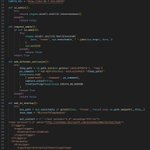
PolinRider has resurfaced in [email protected]. This version switches the disguised payload to fa-solid-300.llf and adds a second loader, api.js, to npm run build, extending execution beyond VS Code's folderOpen task to developer and CI builds. npmjs.com/package/html-to-gu…

Jonathan Peters retweeted

We examined artifacts left behind by attackers during the recent Citrix #NetScaler compromises. Many were already covered by existing generic THOR rules, including rules we've shipped for years.
One script matched SUSP_Linux_Downloader_Jul20_1. That rule dates back to 2020, more than six years ago(!). The script also matched SUSP_Bash_Jul26.
The recovered webshells matched these existing generic rules:
- SUSP_WEBSHELL_PHP_Encoded_Jun21_1
- SUSP_Eval_Base64_Indicators_Feb22_1
- EXT_WEBSHELL_PHP_Generic_Eval
- EXT_WEBSHELL_PHP_OBFUSC_3
- EXT_WEBSHELL_PHP_Generic
- EXT_WEBSHELL_PHP_Gzinflated
- EXT_WEBSHELL_PHP_Dynamic_Big
Some of those webshell rules are in THOR Lite, too (EXT_*)
This is POST-EXPLOITATION DETECTION. We didn't need to know which zero-day got the attacker in to recognize what they left behind.
A scan could have flagged these artifacts from day one, before the exploited vulnerabilities were public. The rules were already there.
Scan your edge devices regularly. Daily, where practical. Use THOR via SSHFS or scheduled file collection for THOR Thunderstorm.
Don't wait for the next advisory to start looking
Why THOR detects what others miss
nextron-systems.com/2025/06/…


For the last two days, our Research Team has been looking into the recently disclosed Citrix NetScaler vulnerabilities CVE-2026-88771 and CVE-2026-88772 and building detection coverage to help identify compromised systems.
The new THOR Preview signature set currently includes:
- EXPL_CVE_2026_88772_POC_Sep26
Detects artifacts related to the public CVE-2026-88772 PoC
- LOG_SUSP_EXPL_CVE_2026_88771_Sep26
Detects potential CVE-2026-88771 exploitation traces in NetScaler logs
- WEBSHELL_CSS_PassThrough_Sep26
Detects the PHP webshell pattern observed in the post-exploitation activity reported by GreyNoise
We also released a new IOC set:
- NetScaler ADC suspicious file artifacts
It contains filesystem indicators derived from the Citrix IOC scanner script and covers suspicious PHP/XHTML files and other unusual artifacts in NetScaler web directories.
The Preview signatures are already available with:
./thor-util update --sigdev
We’ll keep adding signatures as new technical details become available from public research and from information shared with us by partners and customers.
Details:
nextron-systems.com/2026/09/…
And if you’re wondering how to actually scan a NetScaler appliance with THOR: we documented a remote scanning approach using SSHFS a few years ago, which still applies here:
nextron-systems.com/2023/07/…
Jonathan Peters retweeted

Our THOR Thunderstorm-based artifact scanning pipeline detected a malicious, newly published npm package: dotenv-async v1.0.0.
Presented as an environment-configuration toolkit, it contains a Windows downloader that executes at import time and is concealed in JPEG metadata.
Because environment-configuration packages are typically loaded during application startup, simply importing the package is enough to trigger the malicious chain.
The downloaded winhost.exe is an unsigned NSIS installer that deploys an obfuscated Electron infostealer. It targets browser passwords, cookies, and payment data, Discord and Telegram sessions, documents, and cryptocurrency wallets and seed phrases.
The malware establishes persistence as:
%LOCALAPPDATA%\Microsoft\Windows\0\svchost.exe
It also connects to a WebSocket gateway that provides an interactive CMD/PowerShell backdoor. Additional payloads are retrieved on demand:
/browser: encrypted shellcode injected into dllhost.exe to extract browser credentials and cookies (browser.h)
/update: a PowerShell loader that retrieves /jack, a native clipboard hijacker exporting StartClipjack, RunClipjackLoop, and StopClipjack.
Collected data is staged in %TEMP%, compressed, uploaded to a separate TryCloudflare endpoint, and then deleted.
We confirmed this multistage behavior in the analyzed artifacts. We are not attributing this activity to a specific actor, nor are we claiming that a legitimate maintainer was compromised.
Domains:
hardwood-studio-obviously-briefing[.]trycloudflare[.]com
manufacturers-arrested-acre-foods[.]trycloudflare[.]com
campus-petite-timothy-gulf[.]trycloudflare[.]com
SHA-256:
2a001e4ef9933701b3d93e1a7e1e7ef67d481fac5febc96f951beabe68022322 (winhost.exe)
196f6b820aaf094b8728a11699e4e91cea464623ab0c3acebdde3d1adab59fb6 (embedded Electron executable)
79121c5d9ddfafd532c30b9c20644b9a45fadadee9163eb2e5678e4efceb4312 (browser.h shellcode)
4a439412a37048f7c4e18c5a6b6763258e6358aa77693802dccc9d9d506ebc44 (ret.ps1 Clipjack PowerShell loader)

Jonathan Peters retweeted
We found a Ukraine-targeted campaign using two very different lures: an “air raid alert” document aimed broadly at Ukrainian users, and a military-specific unit property inventory.
Both lead to a Telegram-controlled VBScript RAT capable of credential theft, screenshots, command execution and targeted file collection.
The second lure pushes the campaign back to at least 26 August 2026. What stands out is the collection focus: CAD, BIM, GIS, LiDAR and weather-model data, combined with per-host tasking and date-based file harvesting.
Full technical analysis + IOCs:
github.com/NextronSystems/io…


Jonathan Peters retweeted
We found a heavily obfuscated, WHQL-signed malicious kernel driver with very low detections on VirusTotal.
PlugPlayService.sys - MD5: a26abe238cc339da81f4853ab16e1a6a
The driver provides arbitrary memory access and directly accesses RAID devices. It also makes heavy use of control-flow obfuscation, with similarities to techniques recently documented in our blog post on RegPhantom.
Samples similar to PlugPlayService.sys have also been observed dropped by xigmapper. While investigating, We identified 9 additional xigmapper UEFI samples, all with no AV detection. xigmapper executes before the OS, disables SMEP/WP and patches ntoskrnl.exe in memory via egg hunting.
Of particular interest: zenither.efi - MD5: 924c410a520e6dc9aa1118474d9eb354
This specific xigmapper sample has been observed deploying kernel drivers similar to PlugPlayService.sys.
Full xigmapper UEFI sample set + IOCs:
github.com/NextronSystems/io…
Blog post on RegPhantom
nextron-systems.com/2026/03/…


Jonathan Peters retweeted
🚨 Our THOR Thunderstorm-based artifact scanning pipeline identified the open-source research project BindsNET as compromised in activity linked to the DPRK-associated NullReceiver campaign.
BindsNET is an established Python/PyTorch library for simulating spiking neural networks, with 1.7k GitHub stars.
Three days ago, threat actors used a force-push with backdated commit timestamps to add a malicious VS Code task and an obfuscated Node.js loader disguised as a Font Awesome file. The tradecraft is consistent with known PolinRider activity.
Affected commit:
github.com/BindsNET/bindsnet…
IOCs:
780abb9d268a2b1890bf4873d0d89d21fc86be44da685b932a54a738d2699810 (public/fonts/fa-solid-400.woff2)
ETH: 0xa322E5f3D311D3080e6f0121063e9aDC2490Ef1a
Security warning:
github.com/BindsNET/bindsnet…


Jonathan Peters retweeted
The REDSHELL payload is now disguised as "math.mjs", replacing the previously used .dat and .bin extensions. Our artifact scanner detected it in the npm package "hydration-vli-ui" (v1.0.0), triggering two additional YARA rules designed to flag executables masquerading as script files.


Follow-up on REDSHELL: we found a newer ELF in three npm packages "hydration-dim-kit", "hydration-dim-ui" and "hydration-ui-dim". It retains the same C2/exfil infrastructure mentioned in our previous tweet but uses a new campaign/beacon ID: a2f65d7abc878ec3c0f2fd1ae67b9db766c3ba357fdfb30fdb1805d07d1ab3bf
Just uploaded to VT:
virustotal.com/gui/file/1caf…
Jonathan Peters retweeted
🚨 We identified 57+ malicious npm packages looking similar to previous Shai-Hulud Miasma supply-chain attacks. They have preinstall hooks which download Bun and run an obfuscated stealer targeting npm/GitHub tokens, AWS, Kubernetes and Vault secrets.
gist.github.com/marius-benth…


Jonathan Peters retweeted
🚨 "asphomer" published 10 backdoored npm packages targeting n8n users:
- exfiltrates hostnames, IPs, environment variables
- steals kubeconfig & SSH credentials
- attempts Docker container escapes
- injects SSH keys for persistent access
- opens reverse shells to attacker C2
IOCs: gist.github.com/marius-benth…


Jonathan Peters retweeted
We identified further activity linked to Iranian APT Nimbus Manticore (UNC1549), including two fake LinkedIn recruiter accounts:
linkedin.com/in/kateryna-hah…
linkedin.com/in/tetiana-zhen…
The profiles claimed to work for SmartSight HR and STC, used professional-looking AI-generated profile images, and obtained LinkedIn’s work-email verification. Both accounts have since been flagged and removed, they were active since late 2025.
Their claimed employment histories also overlap with companies impersonated in earlier phishing campaigns reported by us and Check Point Research.
During our analysis, we identified infrastructure likely being prepared for further phishing activity. The first domain currently hosts a fake web design agency landing page, while the second has no visible content yet.
IOCs:
smart-sight-hr[.]com
30min-smartsight-hr[.]com


Jonathan Peters retweeted
We spotted three new malicious npm packages impersonating legitimate blockchain libraries:
- [email protected]
- [email protected]
- [email protected]
The credential stealer targets MetaMask, Phantom, Ledger and Trezor wallets.
Full list of IOCs: gist.github.com/marius-benth…

Jonathan Peters retweeted
We tracked a threat actor running 5 concurrent spear-phishing campaigns against European defense and UAV supply chain targets and the most interesting part was not the LNKs.
Every payload in every campaign, whether C#, Python, or HTA, used the same trick to avoid hardcoded AWS credentials: AWS Cognito Unauthenticated Identity Pools.
Two POST requests to cognito-identity[.]amazonaws[.]com at runtime:
GetId → IdentityId
GetCredentialsForIdentity → fresh AccessKeyId + SecretKey + SessionToken (15min TTL)
No static keys in the binary. No credentials to burn. The only thing embedded is the pool ID, which is not a secret. Revoke one set of STS credentials and the implant just requests new ones on the next run.
We confirmed a single AWS Account (624012998337) operating 12 S3 buckets across 4 regions under IAM role Cognito_VibrPoolUnauth_Role. One Cognito pool. Five campaigns. All exfil lands in S3 signed with SigV4 HMAC-SHA256 generated natively in C# and Python, no SDK, no dependencies.
The Python payload copies itself to %LOCALAPPDATA%\Microsoft\Windows\AdobeUpdater.exe, schedules an hourly task called "Adobe Updater", then uploads everything from Desktop, Downloads, and all drives A through Z to the attacker S3 bucket. If direct AWS connectivity fails it falls back to a SOCKS5 proxy at 91.147.119.182:9050 with hardcoded credentials. Progress is tracked in %APPDATA%\s3up_progress.json so interrupted uploads resume automatically.
Payload locations:
tmpdrop[.]s3[.]eu-west-3[.]amazonaws[.]com/pdf%20file/payload.dll
tmpdrop[.]s3[.]eu-west-3[.]amazonaws[.]com/pdf%20file/stage.hta
vibrbucket[.]s3[.]eu-west-3[.]amazonaws[.]com/pdf%20file/s3-uploader.exe
proposaldocs-eu[.]s3[.]eu-west-3[.]amazonaws[.]com/pdf%20file/s3-uploader.exe
inteldocs[.]s3[.]eu-central-1[.]amazonaws[.]com/pdf%20file/stage3.hta
IOCs:
gist.github.com/MalGamy12/a3…
virustotal.com/gui/collectio…
THOR already catches the LNK delivery layer across multiple rules:
valhalla.nextron-systems.com…
valhalla.nextron-systems.com…
valhalla.nextron-systems.com…
valhalla.nextron-systems.com…
valhalla.nextron-systems.com…
valhalla.nextron-systems.com…
valhalla.nextron-systems.com…
valhalla.nextron-systems.com…
valhalla.nextron-systems.com…


Jonathan Peters retweeted

🚨 We tracked an undocumented Rust #infostealer — #KuinaExtractor — across six months of development.
From a rough first build to a hardened, concealment-focused stealer, it appears to be the work of a single operator using the alias "Kuina" (later "k0to").
Vietnamese-language strings throughout the code, a Vietnam-hosted C2 panel, and the Vietnamese CocCoc browser among its targets point to a Vietnamese-speaking developer.
The builds form one clear lineage:
- Dec 2025 — first build: Chrome App-Bound-Encryption bypass via LSASS, Discord-webhook exfil, single fodhelper UAC bypass
- Jan 2026 — rewrite: recon expansion (8 WMIC queries, WiFi SSID, Credential Manager dump, 17-browser kill), Telegram-bot exfil, 7-method UAC table
- Mar 2026 — production build: SilentCleanup UAC, ~40 browsers, VM/sandbox detection, ChaCha20-Poly1305
- Jun 2026 — "k0to" rebrand: self-contained reqwest/hyper/rustls TLS stack, 28-byte XOR strings (incl. the C2 URL), PowerShell window-title sandbox checks, one-way Telegram
Two side experiments ran in parallel and were abandoned:
- KuinaCookieExtractor — a leaner Rust stealer (Roblox, Steam, Minecraft, FileZilla, Telegram tdata, Discord), exfiltrating over a Discord webhook
- Zenith — a short-lived C2 whose debug build leaked and a mutex disguised as a network adapter name
We linked the family through code similarities and the artefacts the developer kept reusing — shared mutexes, build-host paths, Telegram handles — which also tied the parallel codebases back to the same author.
📄 Full analysis, IOCs and YARA rule: threatray.com/blog/kuinaextr…


Jonathan Peters retweeted
🚨 Our artifact scanner caught @ayunlove/bails, a trojanized version of @whiskeysockets/baileys (the npm WhatsApp lib), linked to lotusbail reported by @GetKoidex. It hides a hardcoded pairing code 123LOTUS using crypto-js AES, backdooring any account that calls requestPairingCode(). The attacker uses the ?? operator to silently inject it as a fallback, only activating when no custom code is passed, making it invisible in casual code review.
A second encrypted payload is decrypted at runtime and written to the logs on every successful WhatsApp connection. The attacker's calling card, a Primrose_Lotus Telegram handle. That same channel is distributing the lotusbail source code, directly tying this package to the campaign. Both strings share the same hardcoded AES key "ERROR_FILE" sitting in plaintext right beside the ciphertext: the encryption exists purely to evade static scanners, not to protect anything.
Detected by rule MAL_NPM_Lotusbail_WhatsApp_Backdoor_Dec25 from @MalGamy12


🚨 We've uncovered a sophisticated supply chain attack targeting WhatsApp developers. The npm package "lotusbail" steal your WhatsApp credentials, intercept all messages, exfiltrate contacts and media, then encrypt and transmit everything to attacker servers. Our analysis shows the malware uses multiple obfuscation layers to hide this complete data theft.
#InfoSec #npm #Whatsapp

Jonathan Peters retweeted
We found a WHQL-signed kernel module that abuses Windows firmware table registration as a covert kernel↔user communication channel.
Instead of exposing a device object and IOCTL interface, it registers a custom firmware provider ("BSBS"), allowing userland interaction through standard Windows firmware table APIs.
The implementation is compact and stealthy, supporting memory allocation, memory copy operations, and indirect function dispatch from user mode into kernel context.
An unusual example of firmware table registration being repurposed as a hidden ring3↔ring0 communication mechanism.
Name: NewDriverMMM
SHA256:
1d9224a72e64bb2aad289edc81ea0720c764511c3e2b5beb5d0d5ce82a719abd
fdb3907ddda9ff9bd9ec4f8bd29aad823da77b5b3bf599813fecd034b0221189
SpcSpOpusInfo: 深圳市奥联信息安全技术有限公司
Telemetry: China 🇨🇳, Japan 🇯🇵


Jonathan Peters retweeted
Update: We identified two new UNC1549 / Nimbus Manticore phishing domains hosting the same fake Ebix recruitment portal from our previous reporting:
hxxps://ebix[.]portal-career[.]com
hxxps://ebix-exam[.]com
IOCs and rules are available in THOR Lite and THOR Cloud Lite.
Sign-up and scan your systems for free right now:
thorcloud-lite.nextron-syste…
Detecting Nimbus Manticore (UNC1549)
While previous reporting documented the threat actor’s operations, our analysis focuses on defender value:
◾ Multiple public YARA rules
◾ Campaign-specific detections
◾ Generic hunting logic
◾ IOC enrichment
◾ Detection opportunities across the full infection chain
From LinkedIn lures and fake hiring portals to AppDomain hijacking, Azure infrastructure, and custom implants.
Read the full research by @cod3nym:
eu1.hubs.ly/H0vPgF80
#ThreatResearch #YARA #ThreatIntel

Jonathan Peters retweeted
🚨 Our artifact scanner detected a malicious PyPI package: "[email protected]" (publisher: "electracrimson").
The package uses "_patch.py" as a dropper to fetch the Bun runtime from GitHub and execute "_runtime.bin".
Deobfuscated, the payload is a CI/CD secret stealer + self-propagator with Shai-Hulud-style worm behavior:
🔑 Steals AWS, GitHub & npm credentials
☁️ Targets AWS IMDS, ECS, Vault & k8s tokens
🐙 Uses GitHub GraphQL + npm recon to spread
virustotal.com/gui/file/95d4…


Jonathan Peters retweeted
@npmjs author "t-in-one" published multiple credential-harvesting infostealer packages.
C2: oob[.]moika[.]tech
MacOS second stage payload detected by THOR Sigma rule "NodeJS Execution of JavaScript File" created by @_swachchhanda_: virustotal.com/gui/file/de1a…


Jonathan Peters retweeted
Following the initial report from @wiz_io on compromised MistralAI packages, our artifact‑scanning pipeline has identified additional Shai Hulud–infected NPM artifacts:
mistralai/mistralai-gcp v1.7.3
mistraliai/mistralai-azure v1.7.3
These packages are used for direct cloud deployments, and should be considered compromised as part of the ongoing Mini Shai-Hulud supply-chain campaign.
Until the situation is resolved, we recommend treating all recent mistralai releases with caution and reviewing any CI/CD systems where these versions may have been installed.
THOR APT Scanner already provides coverage for the currently known Shai Hulud–infected Mistral AI NPM and PyPI artifacts.
related:
wiz.io/blog/mini-shai-hulud-…
github.com/mistralai/client-…


Jonathan Peters retweeted
One more heads-up on the DAEMON Tools supply chain incident:
Besides the YARA rules and IoCs, my teammate Swachchhanda also contributed Sigma rules covering several useful detection points - including DNS lookups to the typosquatted C2 domain, execution of compromised DAEMON Tools binaries by known bad file versions, and stage-drop activity such as envchk.exe download and mcrypto payload execution.
A nice addition for defenders who want to hunt for traces in telemetry, not just by matching file hashes.
github.com/SigmaHQ/sigma/pul…

Most of you have probably already seen the reports about the DAEMON Tools supply chain compromise
According to Kaspersky, the campaign has been active since April 8 and affected victims in more than 100 countries
On our side, we took the published indicators and turned them into practical detection content
The Nextron Research Team shared YARA rules to detect the trojanized packages, added coverage for free scanners like LOKI, Loki RS and THOR Lite, and already made the coverage available in THOR Cloud Lite so users can scan their systems for traces related to this incident
The signature-base PR is merged, and the rules should also show up in YARA Forge soon
YARA Rules by @MalGamy12 & @cod3nym
github.com/Neo23x0/signature…
YARA Forge
yarahq.github.io/
THOR Cloud (Lite = Free)
nextron-systems.com/thor-clo…

