

Intersections: stablecoins, emerging markets, credit, and AI. Art of being human + the art of craft. Double Sharp, founder/ceo; Field Co, ironman / founder
astral projection
Joined December 2006
- Tweets8.8K
- Following5.5K
- Followers7.6K
- Likes35.6K



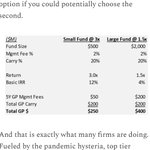





Context: AI built game around Lagos, Nigeria goes mega hype fast.
More context: Africa is the future of youth on planet earth.
Adjust your priors on what the future of culture might look like. This is fun.

5 MILLION PLAYERS IN JUST 9 DAYS!!! 😭🇳🇬👑🔥
WHAT IS HAPPENINGGGG!!! 🚀🚀🚀
We just crossed 5,000,000 players on Lagos Life!
👑 5M+ players
🔥 110,000+ playing right now
🌍 34 MILLION+ visits
ALL IN JUST 9 DAYS!!!
What started as an idea is becoming something bigger than I ever imagined.
To every single person playing, sharing, building, and making noise about Lagos Life, THANK YOU! ❤️
And the craziest part? WE ARE JUST GETTING STARTED!
5M DOWN. 10M NEXT! 🚀👑🇳🇬
lagoslife.app/stats
#LagosLife

The theme of private gain / public cost is already deeply important for understanding current political climate—it's going to become more so


No comment on his policy positions—but pay attention, you're watching a next level political talent on the come up. Cute moustache

Never been to the opera before?
Now’s your chance. We’re giving away 70,000 free tickets to the @MetOpera at the iconic Lincoln Center. Go to on.nyc.gov/opera to enter the lottery. There’s not a bad seat in the house.
The degree to which it is frustratingly not possible to have an adult conversation about the inadequacy of current KYC/AML for the future (agents) and the present (2/3 of the world where the primitives are wrong) cannot be overstated


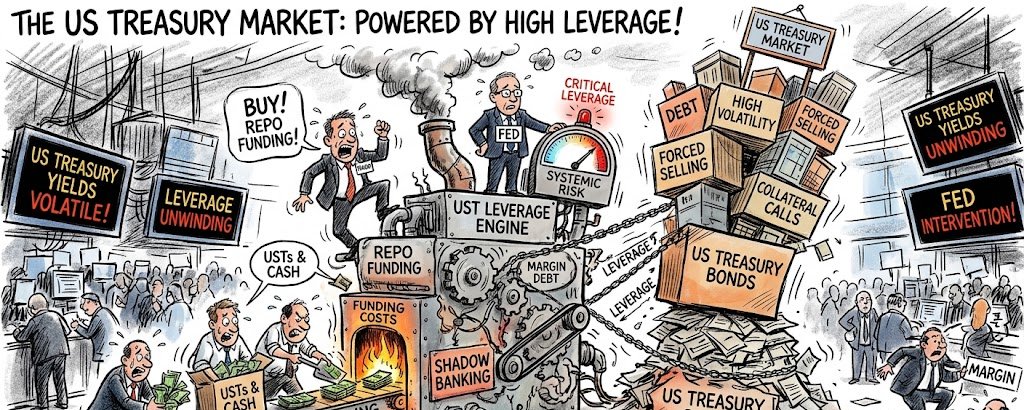
There are people who turn a combat sport into a problem in epistemology and engineering (John Danaher), and then it seems there are those who are intent on turning epistemology / engineering problems into a combat sport.
The way @Substack is just as user hostile to unsubscribing as the NYT shouldn't be a surprise... but it is. All the user admin UX is genuinely terrible (which doesn't matter that much when you mainly deliver email).
Also genuinely curious about what hostile UX / dark patterns become in an era of AI agents... small-scale warfare where things like chargebacks go through the roof?
chris muscarella retweeted

The More Modest the Definition of Heaven, the Oftener We're There by Albert Goldbarth

Beautiful.

Following the amazing reaction to the Marble Curriculum yesterday, we've decided to make it open source 🛰️👇
Everything a child learns in primary school. 1,590 concepts. 3,221 connections across 8 subjects, from Math and Science to Computing and Life Skills. Anchored in the US and UK curriculums, standard by standard (NGSS, Common Core, DfE).
What you will find in the repo: every concept as structured JSON with its age band and the evidence a child must show to master it. Every prerequisite link marked hard or soft, with a written rationale. It's a true DAG you can compute learning paths on. Open license, you can build whatever you want with it.
Now is a unique time in history to be building in education. Getting AI and kids education right is likely one of the hardest and most important problems to crack over the next decade and we need as many smart and creative minds behind it.
We think a common solid basis, accessible to all and that can be built upon, is critical to move fast. That's why we're making this curriculum open source.
It's not perfect but we know it's a robust basis, and we believe that sharing it openly is the fastest way to progress in this field. If you're building in education, share this around you and tell us in comments if you find this useful and if you want to contribute.
We'll keep working and investing on it @withmarbleapp. Credit goes to @guillaume_boni for building this. I just made it look pretty.
Links below 👇
A milestone on a long journey down—for posterity here. Temperamentally I don't really celebrate wins, the upside to that is non-fatal losses are also taken in stride. Onward.
Proposition people. The only way you find your humans that are game for the most absurd adventures is to parlay.
chris muscarella retweeted

Le mathématicien Daniel Litt sur le problème d'Erdős récemment résolu par GPT-5.5 :
"Une autre explication est que la solution exigeait des idées venues de domaines que la plupart des chercheurs travaillant sur ce problème ne connaissaient pas. Si elles sont justes, ces explications devraient nous mettre mal à l’aise. Elles suggèrent que les incitations à la spécialisation et au cloisonnement, si compréhensibles soient-elles, nous ont privés de travaux scientifiques de grande qualité."
Le retour des polymathes à la Leibniz à travers les LLM ? Ce serait une bonne nouvelle.


chris muscarella retweeted

"The interviewer, @DouthatNYT, broke down crying during the conversation. And when he did, Sasse laughed. Not unkindly, but the way a man laughs when the heaviness and the lightness of something are both true at the same time and he’s decided not to pretend otherwise."


chris muscarella retweeted

This is so beautiful. And so important to study. This phenomena (emergent coherence) is central to much of life, and most people don't even imagine it could happen.

Dream come true: have built libraries of papers and semi well catalogued digital exhaust for 20+ years waiting for this

LLM Knowledge Bases
Something I'm finding very useful recently: using LLMs to build personal knowledge bases for various topics of research interest. In this way, a large fraction of my recent token throughput is going less into manipulating code, and more into manipulating knowledge (stored as markdown and images). The latest LLMs are quite good at it. So:
Data ingest:
I index source documents (articles, papers, repos, datasets, images, etc.) into a raw/ directory, then I use an LLM to incrementally "compile" a wiki, which is just a collection of .md files in a directory structure. The wiki includes summaries of all the data in raw/, backlinks, and then it categorizes data into concepts, writes articles for them, and links them all. To convert web articles into .md files I like to use the Obsidian Web Clipper extension, and then I also use a hotkey to download all the related images to local so that my LLM can easily reference them.
IDE:
I use Obsidian as the IDE "frontend" where I can view the raw data, the the compiled wiki, and the derived visualizations. Important to note that the LLM writes and maintains all of the data of the wiki, I rarely touch it directly. I've played with a few Obsidian plugins to render and view data in other ways (e.g. Marp for slides).
Q&A:
Where things get interesting is that once your wiki is big enough (e.g. mine on some recent research is ~100 articles and ~400K words), you can ask your LLM agent all kinds of complex questions against the wiki, and it will go off, research the answers, etc. I thought I had to reach for fancy RAG, but the LLM has been pretty good about auto-maintaining index files and brief summaries of all the documents and it reads all the important related data fairly easily at this ~small scale.
Output:
Instead of getting answers in text/terminal, I like to have it render markdown files for me, or slide shows (Marp format), or matplotlib images, all of which I then view again in Obsidian. You can imagine many other visual output formats depending on the query. Often, I end up "filing" the outputs back into the wiki to enhance it for further queries. So my own explorations and queries always "add up" in the knowledge base.
Linting:
I've run some LLM "health checks" over the wiki to e.g. find inconsistent data, impute missing data (with web searchers), find interesting connections for new article candidates, etc., to incrementally clean up the wiki and enhance its overall data integrity. The LLMs are quite good at suggesting further questions to ask and look into.
Extra tools:
I find myself developing additional tools to process the data, e.g. I vibe coded a small and naive search engine over the wiki, which I both use directly (in a web ui), but more often I want to hand it off to an LLM via CLI as a tool for larger queries.
Further explorations:
As the repo grows, the natural desire is to also think about synthetic data generation + finetuning to have your LLM "know" the data in its weights instead of just context windows.
TLDR: raw data from a given number of sources is collected, then compiled by an LLM into a .md wiki, then operated on by various CLIs by the LLM to do Q&A and to incrementally enhance the wiki, and all of it viewable in Obsidian. You rarely ever write or edit the wiki manually, it's the domain of the LLM. I think there is room here for an incredible new product instead of a hacky collection of scripts.